Receipt of Articles of Impeachment... Proving 'Serious Legal Violations' is Key
'Ruling Party Impeachment Commissioners and Judges Retiring'... Impeachment Trial Expected to Face Difficulties
[Asia Economy Reporter Heo Kyung-jun] With the impeachment motion against Minister of the Interior and Safety Lee Sang-min passing under the opposition party's leadership, the Constitutional Court is set to judge the impeachment of a minister for the first time in constitutional history. The key issue is whether the opposition can prove the "serious legal violations" cited as grounds for impeachment.
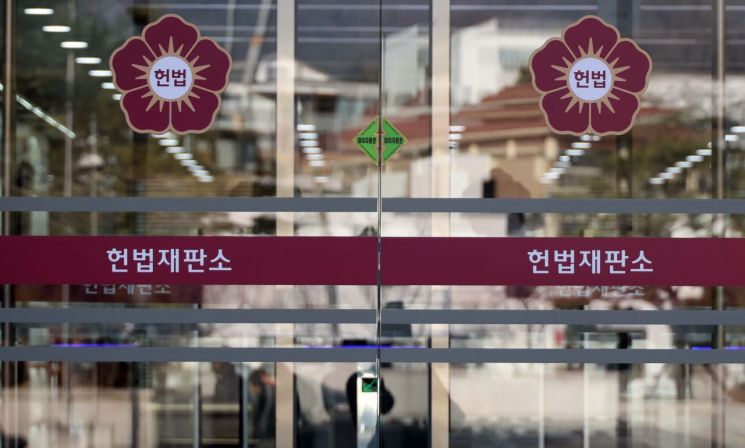
On the morning of the 9th, Jeong Seong-hee, senior expert member of the National Assembly Legislation and Judiciary Committee, who was delegated by Kim Do-eup, chairman of the same committee and the impeachment prosecution committee member, submitted the impeachment resolution to the Constitutional Court.
In impeachment trials, the chairman of the National Assembly Legislation and Judiciary Committee acts as the prosecutor, and the prosecutor or their representative must submit the official copy of the impeachment resolution to the Constitutional Court to request the trial. This procedure is similar to a general criminal trial where a prosecutor indicts a suspect in court. In impeachment trials, the prosecutor (impeachment committee member) must prove the grounds for dismissal of the respondent (the impeached official), and the Constitutional Court conducts hearings and reaches a conclusion.
The Constitutional Court, having received the case, is expected to select the presiding justice soon. The presiding justice is automatically assigned through a computer random allocation. The presiding justice leads the deliberation process, which is the discussion procedure for the case. While the presiding justice's opinion carries significant weight in typical cases such as constitutional review or constitutional complaints, it holds less influence in impeachment trials.
All nine justices participate in the impeachment trial, and if six or more agree, dismissal can be decided. If dismissed, the individual cannot serve as a public official for five years.
The Constitutional Court Act stipulates that the court should deliver a verdict within 180 days from the date of case acceptance, but this is not mandatory, so a verdict can be given after 180 days. The court took 63 days for the impeachment trial of former President Roh Moo-hyun, 92 days for former President Park Geun-hye, and 267 days for former Chief Judge Lim Seong-geun.
The core of the impeachment trial is whether the respondent violated the Constitution and laws to an extent warranting dismissal from public office. The opposition party, which proposed the impeachment motion, cited the following grounds for Minister Lee's impeachment: ▲Negligence in disaster prevention and safety management (violations of Article 34, Paragraph 6 of the Constitution, Article 4 of the Disaster and Safety Management Act, etc.) ▲Violation of obligations for post-disaster response measures (violation of Article 14 of the Disaster and Safety Management Act, etc.) ▲False testimony during a national audit (violations of the Constitution and Article 56 of the State Public Officials Act).
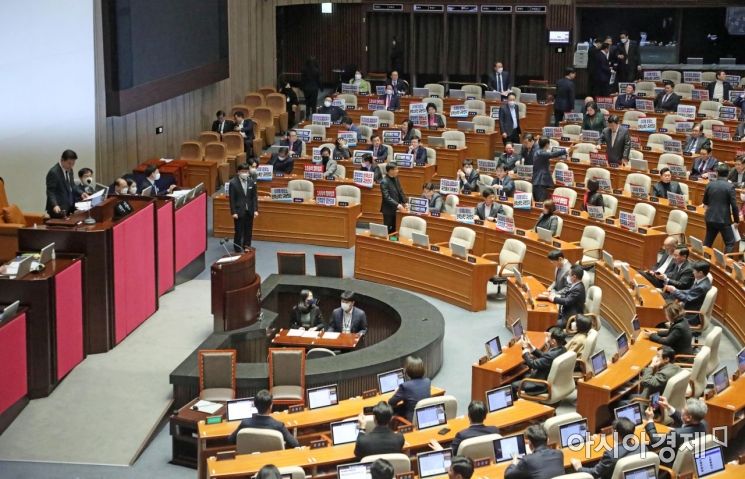 Speaker of the National Assembly Kim Jin-pyo announced the passage of the impeachment motion against Minister of the Interior and Safety Lee Sang-min on the 8th at the plenary session of the National Assembly in Yeouido, Seoul. Photo by Kim Hyun-min kimhyun81@
For the impeachment trial to be accepted, the facts of constitutional and legal violations constituting grounds for impeachment must be proven. Whether Minister Lee's failure to properly perform disaster prevention or safety management during his tenure constitutes a serious legal violation will be the central issue of the impeachment trial.
The problem is that difficulties are expected during the impeachment trial proceedings. Chairman Kim, the prosecutor, must form a legal team to handle the impeachment trial, but there is a possibility that they may not actively engage in the trial led by the opposition party.
Moreover, there is a prevailing expectation that the Constitutional Court's impeachment trial will be prolonged. Article 52 of the Constitutional Court Act states that if a party (prosecutor or respondent) does not attend the hearing date, a new date must be set, and if the party again fails to attend, the trial may proceed without them. It is uncertain whether Chairman Kim will attend the hearing. However, if a lawyer (representative) is appointed, neither Minister Lee nor the National Assembly side needs to attend the hearing in person.
The fact that Justices Lee Seon-ae and Lee Seok-tae are scheduled to retire in March-April this year also supports the possibility of a prolonged impeachment trial. According to the Constitutional Court Act, the quorum of justices is seven or more, so even if these two justices retire, there will be no significant disruption to hearings and rulings. However, the court has traditionally reached conclusions on important decisions like impeachment trials with all nine justices present.
Therefore, it is highly likely that hearings and decisions will be postponed until successors to Justices Lee Seon-ae and Lee Seok-tae are appointed. Ultimately, it is expected to take some time from the appointment of successor candidates through confirmation hearings, review of records, and participation in hearings.
© The Asia Business Daily(www.asiae.co.kr). All rights reserved.


















