Slowing Wage Growth Amid Core Inflation
From 8% in March Last Year to 5.2% in January
Fed Notes Positive Turn as Service Wage Inflation Eases
[Asia Economy Reporter Kwon Haeyoung] It has been revealed that wage inflation in the U.S. service sector is slowing down. Although key Federal Reserve (Fed) officials have recently made hawkish remarks following strong employment data releases, this is interpreted as a positive signal given that wage inflation in the service sector, which the Fed closely monitors, has eased.
The U.S. White House Council of Economic Advisers (CEA) announced on the 8th (local time) that the wage increase rate included in the super core inflation measure slowed from an annualized 8% in March last year to 5.2% in January this year for non-supervisory workers. Core inflation excludes volatile items such as food and energy from the Consumer Price Index, and super core inflation further excludes housing costs from core inflation. The wage increase rate within this super core inflation is separately tracked. This figure provides insight into wage inflation in the service sector and its future direction. During the same period, the wage increase for all private sector workers also slowed from 5.9% to 4.4%, and for non-supervisory workers from 7% to 5.1%.
The slowdown in wage increases within super core inflation became more pronounced from the end of last year. Tracking wage increases over the recent three months shows that wages rose 9.7% in October 2021 but only 4% as of January this year. This is also lower compared to the overall private sector wage increase rate of 4.6% and the private production workers’ wage increase rate of 4.4%.
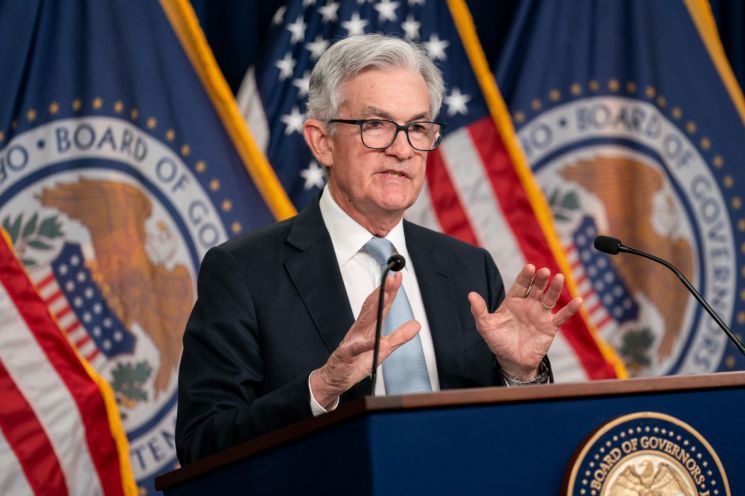
The deceleration in wage increases within super core inflation is expected to influence the U.S. monetary policy stance. This indicator is one of the key figures the Fed watches closely, and Chairman Jerome Powell emphasized the importance of super core inflation last November when mentioning service prices. He noted that other service sectors include a wide range such as haircuts, dining out, healthcare, education, and lodging, which have a high labor cost component, thus warranting attention.
However, the robust employment market momentum has not weakened. According to the U.S. Department of Labor’s January employment report, nonfarm payrolls increased by 517,000, three times the market expectation. The unemployment rate stood at 3.4%, the lowest since May 1969, effectively indicating a state of 'full employment.' Due to these strong employment figures, Fed Chair Jerome Powell stated the day before that "additional rate hikes are necessary, and policy should be maintained at a restrictive level for some time."
The Wall Street Journal reported, "A 4% wage increase rate is higher than the Fed’s inflation target of 2%," but added, "This supports the view that inflation could slow to an acceptable level without the Fed raising rates further until the unemployment rate rises sharply."
© The Asia Business Daily(www.asiae.co.kr). All rights reserved.

















