Domestic Serving Robots Increase to 5,000 Units in 3 Years
Over 10,000 Units and 300 Billion KRW Market Expected This Year
Intense Competition Among VD Company, Bi Robotics, and Others
#. Kim Jeongju (alias), who runs a meat restaurant in Seoul, recently introduced serving robots and significantly reduced labor costs. Previously, he employed two part-time workers who worked five days a week. Including the four major social insurances, the labor cost per person was over 2 million won. By reducing one person and instead acquiring a serving robot for 300,000 won per month, he was able to save 1.7 million won in labor costs. This amounts to a cost reduction effect of over 40%. In addition to easing concerns about the labor shortage, he also gained promotional benefits as a robot-operated store.
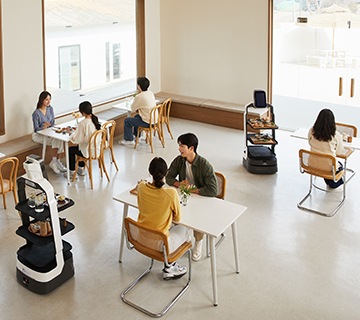
Serving robots are rapidly increasing in the domestic food service industry. Starting at around 50 units in 2019, the number grew to 5,000 units in just three years. Self-employed business owners, who face difficulties in managing staff due to the combined burden of labor costs and labor shortages, are turning their attention to serving robots.
On the 9th, VD Company announced plans to supply 3,000 new serving robots this year. Founded in 2019 and the first to commercialize serving robots, the company had supplied a cumulative total of about 3,000 robots to over 2,000 stores nationwide as of the end of last year. Last year's performance was 1,400 units. They expect more than double growth compared to the previous year this year. Woowa Brothers, which forms the leading group in this market along with VD Company, also has a new supply target of over 1,300 units this year. They operated about 1,200 robots in 700 stores last year and plan to increase that number to over 2,500 units by the end of this year.
Based on such industry data, Eugene Investment & Securities predicted that the domestic serving robot market will reach a scale of 11,000 units this year. From 3,200 units in 2021 and 5,300 units last year, it is expected to grow more than twice compared to the previous year. In terms of value, it amounts to about 300 billion won.
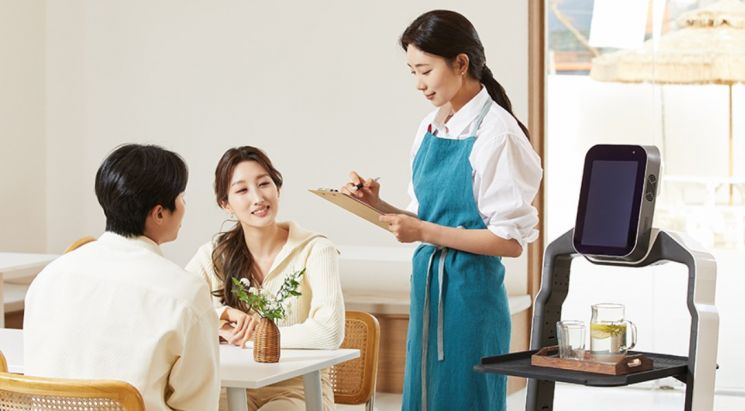
The rise of serving robots coincides with the increasing burden of labor costs, with the minimum wage approaching 10,000 won, while it is becoming difficult to find workers to work in restaurants. Although the demand for labor in the food service industry is high, it is not easy to find people due to the high work intensity and other factors. As of the first half of last year, the labor shortage rate in domestic restaurants and pubs was 6.6%, nearly double the overall industry average of 3.6%. Labor shortages and rising labor costs are consistently cited as major issues in management surveys of restaurants. Serving robots are said to be a solution to this problem. Yang Seungyun, a researcher at Eugene Investment & Securities, said, "By assigning robots to simple repetitive tasks and having people focus more on customer service and other tasks that robots cannot perform, store operation efficiency can be improved." He also explained, "There are qualitative effects that cannot be measured in money, such as reduced employee fatigue and decreased risk of injury."
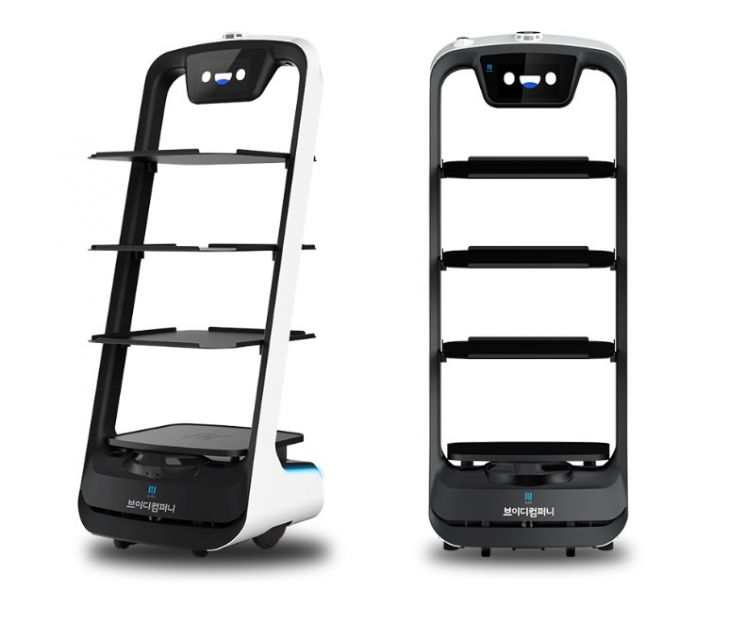
As the market grows, competition among companies has intensified. VD Company’s recent launch of a product priced in the 200,000 won per month range is a representative example of popularizing serving robots. They support various types of stores not only in the food service industry but also in screen golf centers, hospitals, schools, and rest areas. Ham Pansik, CEO of VD Company, said, "Maximizing store operation efficiency and reducing employees' work intensity improves the quality of customer-facing services."
Woowa Brothers recently spun off their serving robot business to establish Be Robotics. They aim to respond quickly and flexibly to the growing serving robot market and are considering overseas market expansion in the mid to long term. Kim Minsu, CEO of Be Robotics, said, "We will increase touchpoints so that serving robots can be used not only in food and beverage stores but also in various establishments such as billiard halls, beauty salons, and PC rooms."
© The Asia Business Daily(www.asiae.co.kr). All rights reserved.
!["The Woman Who Threw Herself into the Water Clutching a Stolen Dior Bag"...A Grotesque Success Story That Shakes the Korean Psyche [Slate]](https://cwcontent.asiae.co.kr/asiaresize/183/2026021902243444107_1771435474.jpg)


















