Bain & Company Releases Report on China's Luxury Market
Luxury Consumption Market Down 10% Last Year
Korean Duty-Free Product Demand Decreased but Still 'Influential'
[Asia Economy Beijing=Special Correspondent Kim Hyunjung] An analysis has emerged that China's 'luxury consumption' experienced a slump last year due to the impact of zero-COVID quarantine measures. However, this year, supported by policies to revitalize tourism and consumption, the existing market growth trend is expected to recover within the first quarter.
On the 7th, Chinese economic media Caixin cited the '2022 China Luxury Market Report' released that day by global consulting firm Bain & Company, reporting that "China's luxury market ended five years of high growth, with the market size decreasing by 10% compared to the previous year." According to the report, China's luxury market recorded an average annual growth rate of 42% from 2019 to 2021.
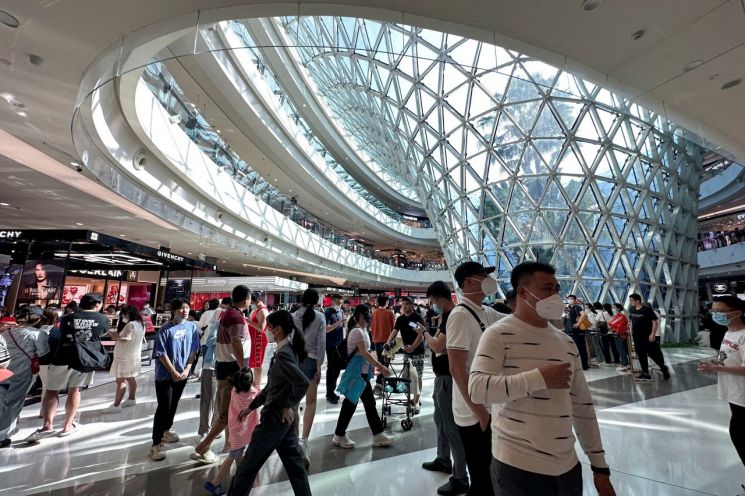
Bain & Company identified the causes of the decline in China's luxury consumption as restrictions on tourism and consumption due to zero-COVID, cooling of the real estate market and negative economic outlook, rising unemployment, and increased uncertainty in disposable income. In particular, it was analyzed that the number of visitors to shopping facilities decreased overall by about 30-35% due to the zero-COVID impact. By product category, consumption declines were diagnosed at approximately 20-25% for watches, 15-20% for fashion and lifestyle, and 10-15% for jewelry and leather goods.
However, Bain & Company predicted that China's luxury consumption would show a positive trend before the end of the first quarter this year. Specifically, sales volume is expected to recover to 2021 levels around mid-year.
Major recent changes in the Chinese luxury market include an increase in the concentration of Very Important Customers (VIC) and duty-free shopping. VIC concentration refers to the proportion of top-spending customers, which is a trend rising globally. Bain & Company noted that due to a decrease in new customers caused by fewer mall visitors and an expansion in purchases of mid-to-low priced products amid economic downturn, the top 2% of global customers accounted for 40% of total luxury sales as of last year.
The duty-free market, which mainly sells luxury goods, was also significantly affected by COVID-19 within China. Last year, sales at Hainan duty-free shops in China were estimated to have decreased by 30% year-on-year to 35 billion yuan (approximately 6.4767 trillion won), and the number of shoppers from the first to third quarters was observed to have dropped by 35% compared to the previous year. The report predicted that the share of Hainan duty-free sales in China's personal luxury consumption rose from 6% in 2018 to 11% in 2021, then slowed down to the 8% range last year.
Bain & Company also paid attention to the correlation between the Korean duty-free market and Chinese luxury consumption. Although visitors have sharply decreased compared to the past, the influence of Chinese consumers remains significant. The report stated that the number of Chinese tourists visiting Korea last year decreased by more than 90% compared to 2019, but at the same time, their duty-free consumption maintained 70% of the 2019 level. It explained, "This means that cross-border transactions through proxy purchasing were active even during the COVID-19 period."
© The Asia Business Daily(www.asiae.co.kr). All rights reserved.

















