 Photo by Asia Economy DB
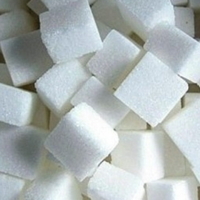
Bloomberg reported on the 6th (local time) that global sugar prices have surged to their highest level in six years, raising concerns about rising food prices.
Sugar futures traded on the New York Mercantile Exchange reached 21.86 cents per pound on the 1st. This is more than a 27% increase compared to the 17.19 cents low point in September last year. Although sugar futures prices have slightly adjusted since then, they still remained above 20 cents on the 6th.
Sugar futures prices, which reached 24 cents in 2016, hovered around 10 cents until 2018 and have been on the rise again since 2020. Last week's prices marked the highest level in six years.
Signs of rising sugar prices are already appearing in grocery stores in the United States and Europe. Bloomberg viewed the export volume from India, a major producer, as a key factor. The Indian Sugar Mills Association lowered its sugar shipment forecast for this season to about 6 million tons last week, citing poor crop conditions due to bad weather, raising the possibility that the Indian government may control sugar exports. There is also speculation that as India aims to increase ethanol production, more sugarcane, the raw material for sugar, may be diverted to ethanol production.
Europe has increased sugar imports due to poor harvests caused by heat and drought. Recently, the ban on neonicotinoid insecticides may further reduce production. In the United States, refined sugar prices have risen due to supply disruptions of sugar beets, and Mexico's harvest volume has also decreased. If sugar demand in China increases following the end of the 'Zero COVID' policy, it could be an additional factor driving prices up.
Brazil, the world's largest sugar exporter, is expected to have a bumper crop this year, raising the possibility of oversupply after the Brazilian harvest season in April. However, if export volumes concentrate at Brazilian ports, logistics delays may occur as this coincides with soybean shipment periods. There are also opinions that, amid recent fuel price increases, Brazil may divert sugarcane to ethanol production.
© The Asia Business Daily(www.asiae.co.kr). All rights reserved.
![Clutching a Stolen Dior Bag, Saying "I Hate Being Poor but Real"... The Grotesque Con of a "Human Knockoff" [Slate]](https://cwcontent.asiae.co.kr/asiaresize/183/2026021902243444107_1771435474.jpg)










