Korean Researchers Develop Circular Energy System
Simultaneous Freshwater and Lithium Extraction from Desalination Brine
[Asia Economy Reporter Kim Bong-su] Domestic researchers have developed a technology that processes seawater discarded after desalination once more to produce freshwater and lithium, a key material for secondary batteries known as 'white oil.' This technology is gaining attention as a 'two birds with one stone' solution that reduces environmental burden while securing rare resources.
The Korea Institute of Industrial Technology announced on the 7th that the research team led by Dr. Jeong Da-woon at the Korea-Russia Innovation Center has developed a 'circular energy system' that can obtain freshwater and high-purity lithium from concentrated brine discarded after the desalination process.
While conducting research on seawater desalination, the team focused on the fact that the discarded high-salinity brine disrupts marine ecosystems and simultaneously pursued research on its recycling. They developed an 'evapotranspiration power generation device' based on the insight that electrodialysis desalination systems do not require high current. When water is injected on one side, it flows toward the dry side due to capillary action, generating electricity from this difference. This energy harvesting device is inspired by the principle of transpiration, where plants absorb water through roots and release it through stomata in leaves. By injecting water only once, the system automatically absorbs moisture from the air and self-generates power in a circular manner. The power generated depends on the water movement speed and evaporation rate within the device. The team fabricated a cylindrical device favorable for water movement and evaporation by vertically aligning hydrophilic cellulose fibers and coating each fiber with nanoscale carbon particles to increase surface area.
Each evapotranspiration power generation device produces 0.4 to 0.5 V of electricity, which corresponds to the power of one 1.5 V battery when three devices are connected. Although the power from a single device is small, the output can be adjusted by modularizing devices connected in series and parallel and stacking these modules continuously. Because it uses a stacking method, it does not require large facilities or wide land areas, and since energy is obtained through water-based evapotranspiration power generation, it does not emit carbon dioxide, which is another advantage.
The research team then succeeded in developing a 'circular energy system' that obtains high-yield freshwater and lithium by connecting the developed evapotranspiration power generation device to an electrodialysis apparatus. Utilizing electricity generated by evapotranspiration for the electrodialysis device is a world first. Inside the device, two special membranes are inserted; when seawater is injected into the center, it continuously circulates, producing freshwater on one side and lithium-concentrated brine on the other. The entire desalination process separating Na+ and Cl- ions can be monitored on a screen. This achievement applied the 'ion behavior visualization technology,' a proprietary technology of Professor Kwak No-gyun's research team at Hanyang University's Department of Mechanical Engineering, through joint research.
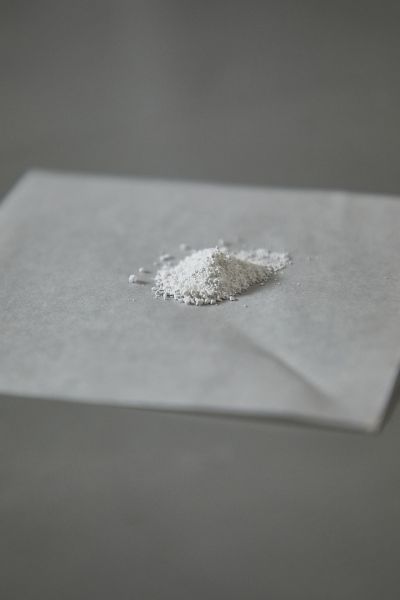
The lithium concentration system incorporates a membrane that selectively separates lithium (Li), producing Li, Cl2, and H2 gases. The team also developed a process to separate and powder the lithium. The produced lithium powder showed a high purity level of 99.6%, certified by the Korea Institute of Ceramic Engineering and Technology, indicating practical usability. Currently, research is underway with companies to scale up lithium production. The team is also planning to develop applied technology to selectively separate lithium from black powder obtained by crushing waste batteries and electronic devices, in addition to seawater.
Dr. Jeong stated, “The developed circular energy system can simultaneously obtain electricity and drinking water, making it applicable in water-scarce regions or special environments such as spacecraft.” He added, “It can extract high-purity lithium at a lower cost than other production methods, and we are promoting scale-up R&D with companies for economically viable lithium production.”
© The Asia Business Daily(www.asiae.co.kr). All rights reserved.
!["The Woman Who Threw Herself into the Water Clutching a Stolen Dior Bag"...A Grotesque Success Story That Shakes the Korean Psyche [Slate]](https://cwcontent.asiae.co.kr/asiaresize/183/2026021902243444107_1771435474.jpg)
















