Tyson Foods' Net Profit Plummets 70%
Feed, Transportation Costs, and Profits Surge Due to Inflation... Inventory Also Rises Amid Slowing Demand
Rush to Dollar Stores in Search of Cheap Groceries
[Asia Economy Reporter Haeyoung Kwon] The soaring inflation in the United States has caused the largest meat processing company, Tyson Foods, to suffer a sharp decline in earnings. Due to recession concerns, consumers are tightening their wallets while the company's operating costs have surged, resulting in a significant drop in profits. As food prices soar, there is even analysis suggesting that "consumers are flocking to dollar stores, the American version of Daiso."
On the 6th (local time), Tyson Foods announced that its net profit for the first quarter of fiscal year 2023 was $316 million (earnings per share $0.88), down more than 70% compared to the same period last year (respectively $1.12 billion, $3.07). This figure fell short of market expectations.
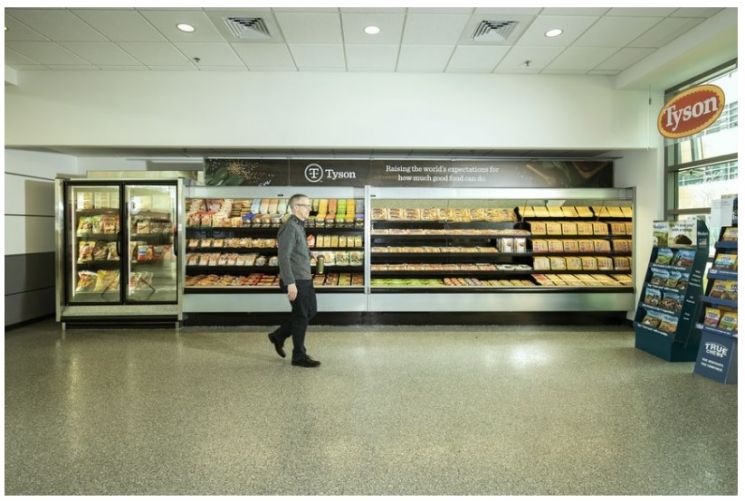
The cause of Tyson Foods' profit plunge, which accounts for 20% of the supply of beef, pork, and chicken in the U.S., is inflation. Rising costs of animal feed, transportation, and worker wages have significantly increased the company's operating expenses. This led to wholesale price increases, which restaurants and supermarkets passed on to retail prices, causing consumers to close their wallets. Recession fears also contributed to the slowdown in consumption. As meat demand decreased, inventories increased, creating a vicious cycle of further profit declines. According to the U.S. investment firm Stevens, in January this year, the processing margins for U.S. beef and pork shrank by 50% and 40%, respectively, compared to the same period last year. Donnie King, CEO of Tyson Foods, said during a conference call after the earnings announcement, "This is the first time I've seen all markets act unfavorably at once," and added, "We expect performance to improve in the second half of this year."
As he mentioned, with the inflation rate slowing down, there may be momentum for Tyson Foods' earnings improvement in the second half of this year. In December last year, the Consumer Price Index (CPI) rose 6.5% compared to a year earlier, below the previous month's increase of 7.1%. However, the price increase rate for essential consumer goods such as groceries remains in double digits at 11.8%. Grocery prices rose more than 10% on an annual basis last year. Eggs increased by 60%, butter by 31%, and lettuce by 25%.
As prices for essential consumer goods rise like this, there are forecasts that the hardships of the lower-income class in the U.S. will intensify. According to market research firm CoreSite Research, the share of dollar stores such as Dollar General and Dollar Tree in total U.S. grocery spending is gradually increasing, and already one in five people purchase groceries at dollar stores. Amazon is selling "The Dollar Store Cookbook," which provides recipes using products purchased from dollar stores. Struggling with soaring prices, the lower-income class in the U.S. is turning to dollar stores instead of restaurants and supermarkets to save even a penny on living expenses.
U.S. CNBC reported, "Due to rising food costs, consumers have started to find groceries in more creative ways," and "savings experts are sharing tips on how to reduce costs regardless of location."
As Americans tighten their belts, consumption?which accounts for two-thirds of the U.S. real economy?has begun to be affected. In December last year, consumption fell 1.1% compared to the previous month, marking the fastest slowdown since the beginning of 2022.
© The Asia Business Daily(www.asiae.co.kr). All rights reserved.

















