[Asia Economy Reporter Yujin Cho] Demand in the U.S. housing market is reviving due to a decline in mortgage rates. There is an analysis that the mood among investors looking to purchase homes is strengthening, as the number of transactions is turning upward amid expectations that the peak of interest rate hikes is near.
According to the Mortgage Bankers Association (MBA) and real estate information firm Redfin on the 6th (local time), U.S. mortgage applications have increased by about 25% as of February compared to the end of last year. Applications for mortgages to purchase new homes rose by 15%, and refinancing applications, where borrowers replace existing loans with new ones as they mature, surged by 50%. The number of signed purchase contracts broke a six-month downward trend and has rebounded since December last year.
The Wall Street Journal (WSJ) analyzed that the U.S. housing market, which soared to record-high prices during the pandemic, fell into a severe slump due to the Federal Reserve's (Fed) aggressive tightening but has now hit bottom and is recovering. The average mortgage rate announced by Freddie Mac hit a low of 2.65% in January 2021, after the pandemic began, and rose to 7.08% last year.
Market participants are saying that expectations of the end of tightening are warming up the real estate market. Steven Centrella, a real estate agent at Redfin, said, "Homebuyers are focusing on the fact that mortgage rates will no longer rise beyond the current level." The expectation that the Fed's tightening is nearing its end is leading to a rapid recovery in the real estate market, which was the asset most affected by rate hikes.
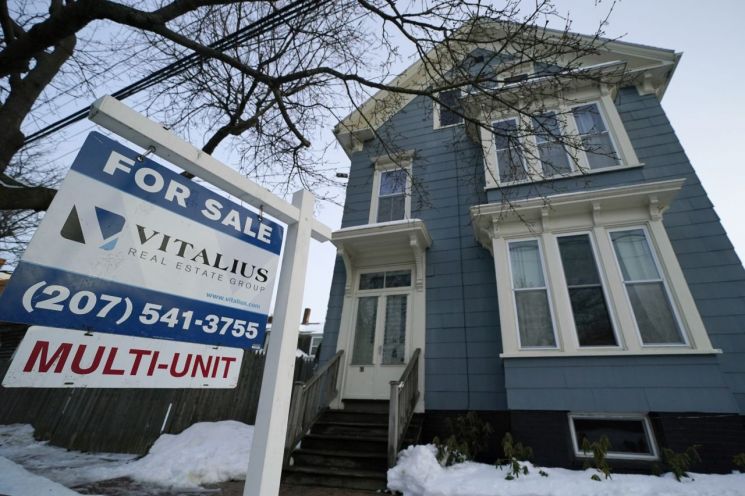
If the Fed raises rates further this year, mortgage rates will also rise, but with signals that the Fed's rate hikes are nearing their peak, there is growing optimism that the decline in mortgage rates will be greater. U.S. mortgage rates move in tandem with the yield on 10-year Treasury bonds. The 10-year U.S. Treasury yield fell from 3.75% last month to 3.37%. Along with this, the 30-year fixed mortgage rate, which hit a 20-year high in November last year at the 7% level, has since dropped by 1 percentage point.
WSJ reported that economic indicators showing easing inflation and improving employment are being interpreted as signals that the Fed's rate hike peak is near, thereby boosting demand for new home purchases.
The Pending Home Sales Index, a leading indicator of housing transactions, also rose 2.5% month-over-month in December last year. According to the National Association of Realtors (NAR), the U.S. Pending Home Sales Index hit a record high of 52.70% in April 2021 but fell to -37.10% in October last year due to rate hikes. CNN evaluated, "The rise in the Pending Home Sales Index is the first since May last year," and said, "The U.S. real estate market has passed its bottom."
Although the Fed’s announcement of additional rate hikes suggests that the impact of rate fluctuations on the housing market will continue this year, the market and experts remain optimistic. Some forecasts suggest that mortgage rates could fall nearly 2 percentage points from the all-time high of 7.08%. NAR expects mortgage rates to range between 5.5% and 6.5% this year. CNN reported, "Although economic uncertainties remain, easing inflation and a rapid recovery in the labor market are key drivers of increased housing demand, leading to continued growth in transaction volume."
© The Asia Business Daily(www.asiae.co.kr). All rights reserved.
![Clutching a Stolen Dior Bag, Saying "I Hate Being Poor but Real"... The Grotesque Con of a "Human Knockoff" [Slate]](https://cwcontent.asiae.co.kr/asiaresize/183/2026021902243444107_1771435474.jpg)
















