3 out of 10 Middle and High School Homeroom Teachers Are Temporary
Emotional Labor from Student and Parent Complaints
"Allowances Are Unrealistic... Even a Lottery System"
As the tendency to avoid homeroom teacher duties worsens day by day, it has been revealed that 3 out of 10 homeroom teachers in middle and high schools are contract teachers.
In schools, the biggest reasons cited are that while the workload increases, teacher authority declines, making dealing with students and parents an 'emotional labor'; especially, with various disputes increasing responsibilities, the protection mechanisms for teacher authority are insufficient.
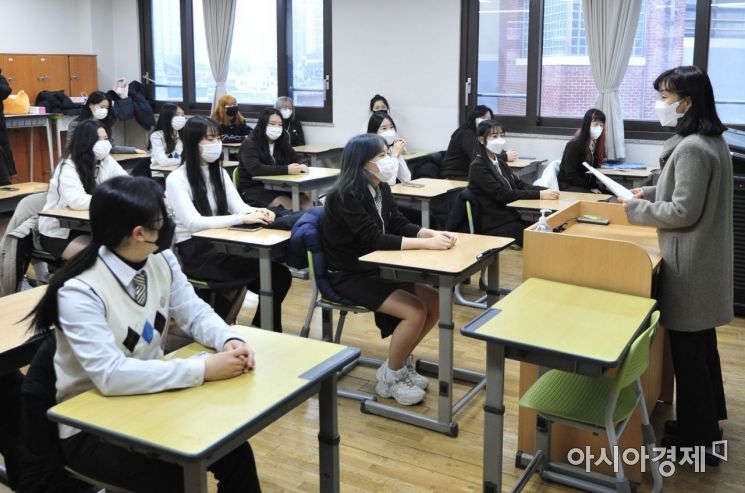
According to Yonhap News and the Korea Educational Development Institute's education statistics on the 7th, among 110,295 homeroom teachers nationwide in middle and high schools as of April 1, 2022, contract teachers accounted for 27.4% (30,173 teachers).
This ratio was only 15.1% in the 2013 academic year, 10 years ago, but the proportion of contract teachers has significantly increased since the mid-2010s. It has been rising by 2-3% annually recently, and it is expected to approach 30% this year.
Breaking it down by school level, among 54,373 homeroom teachers in middle schools, 28.5% (15,494 teachers) are contract teachers. Considering that fewer than 23,000 contract teachers work in middle schools, two out of three contract teachers are assigned homeroom duties.
In high schools, among 55,922 homeroom teachers, 26.2% (14,679 teachers) are contract teachers. In elementary schools, where homeroom teachers mostly handle subject classes, the proportion of contract teachers (3.9%) is significantly lower than in middle and high schools, but this is also on the rise.
In early 2020, the Ministry of Education urged 17 metropolitan and provincial education offices not to assign contract teachers to positions with heavy responsibilities or homeroom duties, nor to allocate tasks unfavorably compared to regular teachers. The intention was not to burden contract teachers, who have unstable employment, with 'difficult tasks.' However, as seen in the statistics, there has been no noticeable change.
In the education sector, it is viewed that the heavy workload homeroom teachers must handle, along with the recent decline in teacher authority increasing the burden of student guidance and communication with parents, is deepening the 'homeroom teacher avoidance phenomenon.' Additionally, the homeroom allowance has been frozen at 130,000 KRW per month since 2016 for eight years despite the burden, and the number of contract teachers itself is increasing, which also seems to have an impact.
A high school teacher in the Seoul area said, "Managing the class and handling complaints is 'emotional labor,' unlike in the past," adding, "There is a lot of work and many responsibilities, but the allowance is 'unrealistic,' so sometimes (department heads or homeroom teachers) are decided by drawing lots or voting."
In the education field, protecting teacher authority in the mid to long term is seen as the fundamental remedy.
© The Asia Business Daily(www.asiae.co.kr). All rights reserved.

















