Restoration Using Image Processing Technology and New Materials
Complete Recovery and Seismic Resistance Enhancement by 2052
[Asia Economy Reporter Jeon Jinyoung] Various digital technologies, including image processing models, are being utilized in the restoration work of Kumamoto Castle, which collapsed due to the earthquake in 2016, attracting attention both inside and outside Japan. Japan, which had insisted on traditional restoration methods and planned a long-term restoration until 2052, has announced the use of new technologies, which is expected to influence cultural heritage restoration projects in other countries as well.
This deployment of digital technology aims to enhance the accuracy of restoration and significantly reduce the time by adding digital elements to Japan's traditional stone wall construction methods. There is growing interest in whether this Kumamoto Castle restoration case will become a testing ground for the combination of new and old technologies in future cultural heritage restoration projects.
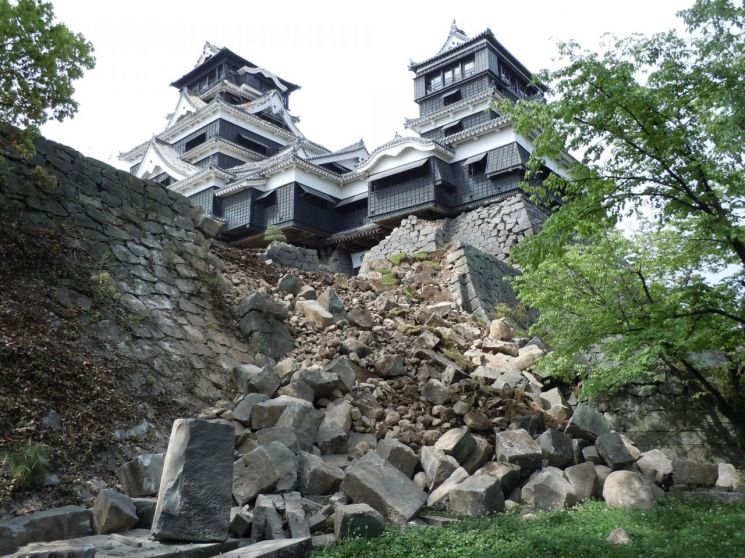 The collapsed walls of Kumamoto Castle due to the earthquake. [Image source=Kumamoto Castle Facebook]
On the 6th, Asahi Shimbun directly covered the Kumamoto Castle restoration site. Built in the 1600s, Kumamoto Castle suffered damage with more than half of its stone walls collapsing due to the Kumamoto earthquake in 2016. The goal is full restoration by 2052, with approximately 100,000 stones needing to be rebuilt.
The restoration of Kumamoto Castle involves new technology that allows stones originally in the walls to be fitted back into their places while securing earthquake resistance.
Image processing technology is used to identify where the fallen stones were located. This involves comparing photos taken before the earthquake damage with the shapes of the walls and stones after the damage. Previously, this was a time-consuming process where personnel visually matched stones one by one, but now a model that mathematically calculates the matching rate of stone contours through image processing technology has been introduced. Asahi Shimbun reported, "Using the program, 337 out of 370 stones (91%) can be matched to their original positions within one hour."
To enhance earthquake resistance, a net-shaped sheet combining stainless steel and resin fibers has also been developed. This preserves the traditional technique of interlocking stones while preventing them from moving easily.
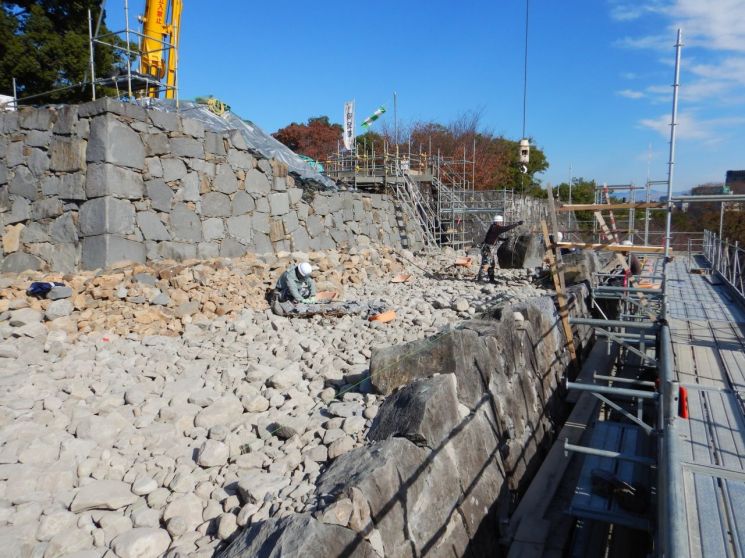
Alongside the development of new technologies, efforts are also underway to pass down the skills of the craftsmen who built the stone walls at that time. The 'Cultural Heritage Stone Wall Preservation Technology Council,' composed of stone wall craftsmen and researchers, regularly holds training programs to improve wall preservation techniques and pass them on to future generations. In October last year, they conducted training on the traditional Japanese technique of stacking natural stones.
Although there are not many opportunities to build stone walls nowadays, the craftsmen insist that they must not neglect honing their skills. Wakio Tomita, director of the Kanazawa Castle Research Institute, emphasized to Asahi Shimbun, "To preserve stone walls, it is essential to thoroughly understand the skills of the craftsmen from that time."
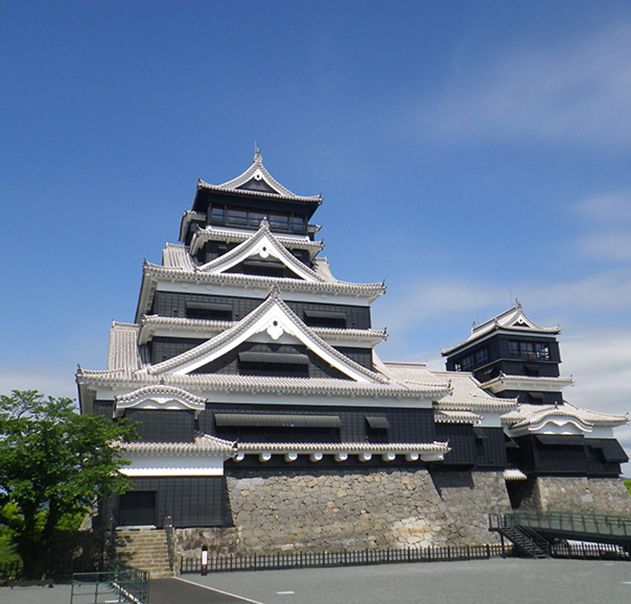 The tenshukaku of Kumamoto Castle, which has been almost fully restored. [Image source: Official Kumamoto Castle website]
According to Asahi Shimbun, the current restoration rate is 20%, and the main building, Tenshukaku, was restored in 2021. However, since the stone walls have a three-layer structure, surveying and design are expected to take a considerable amount of time. The target year for full restoration, 2052, is 15 years later than the original plan, and the cost is estimated to be about 63.4 billion yen (5.892 billion KRW).
Nevertheless, under the determination to restore the castle as close to its original form as possible, those involved are proceeding with caution. Koji Mawata, a city official in charge of civil engineering maintenance, told Asahi Shimbun, "Kumamoto Castle is a cultural asset that has been passed down for 400 years. Thinking that this restoration will last 100 or 200 years, we must work carefully so that future generations will not ridicule us."
© The Asia Business Daily(www.asiae.co.kr). All rights reserved.



















