Court: "Not Selling Manufactured Cigarettes... Customers Manufacture Them Themselves"
[Asia Economy Reporter Heo Kyung-jun] The Supreme Court has made its first ruling that "handmade cigarette businesses" equipped with cigarette manufacturing machines and selling materials do not violate the Tobacco Business Act.
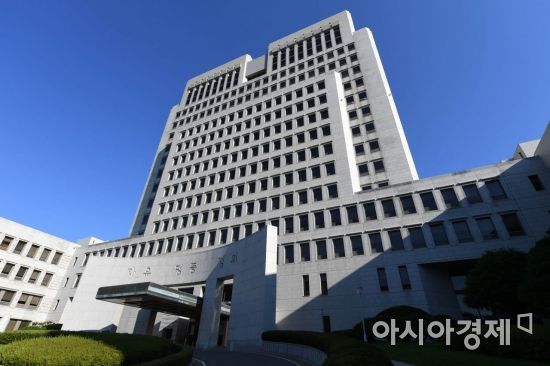
The Supreme Court's 2nd Division (Presiding Justice Min Yoo-sook) and 3rd Division (Presiding Justice Oh Seok-jun) announced on the 6th that they overturned the lower court's guilty verdict against food distribution company CEO A (51) and franchise owner B (67), who were charged with violating the Tobacco Business Act, and remanded the case to the Uijeongbu District Court.
A was prosecuted on charges of recruiting franchisees for tobacco leaf sales from 2016 to 2017 without obtaining a tobacco manufacturing license or designation as a tobacco retailer, and supplying tobacco leaves, cigarette paper, filters, cigarette packs, and cigarette manufacturing machines to 19 franchise owners including B.
B and others were prosecuted for providing tobacco leaves, filters, and cigarette packs received from A to customers.
It was investigated that A explained while recruiting franchisees such as B that "it is illegal for franchise owners or employees to manufacture and sell cigarettes directly to customers, but it is not illegal to sell tobacco leaves to customers and then have the customers manufacture cigarettes themselves using cigarette manufacturing machines."
At trial, the issue was whether purchasing and stocking cigarette manufacturing machines and selling cigarette materials to allow customers to manufacture cigarettes themselves constitutes manufacturing and selling "cigarettes" prohibited under the Tobacco Business Act without manufacturing permission and retailer designation.
The first trial court acquitted business owners who sold cigarettes directly manufactured by customers, and sentenced business owners or employees who manufactured and sold cigarettes directly to a fine of 500,000 KRW. However, the second trial court viewed it as licensed cigarette manufacturing and sales and imposed fines on all business owners, including those acquitted in the first trial.
However, the Supreme Court ruled that since the defendant sold tobacco materials such as tobacco leaves to customers and provided cigarette manufacturing facilities, it is difficult to regard this as "manufacturing cigarettes."
The Supreme Court judged, "There are no special circumstances to consider the work done by customers as equivalent to the defendant's activities, and it is difficult to see that the defendant manufactured cigarettes or sold manufactured cigarettes to consumers."
© The Asia Business Daily(www.asiae.co.kr). All rights reserved.
![Clutching a Stolen Dior Bag, Saying "I Hate Being Poor but Real"... The Grotesque Con of a "Human Knockoff" [Slate]](https://cwcontent.asiae.co.kr/asiaresize/183/2026021902243444107_1771435474.jpg)











