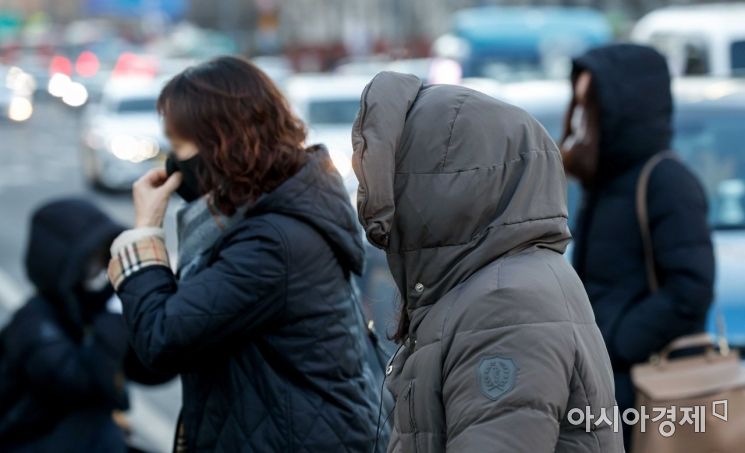
[Asia Economy Reporter Byun Seon-jin] This winter, as a powerful cold wave sweeps through, the number of patients suffering from cold-related illnesses such as hypothermia and frostbite is rapidly increasing. Even in February, which marks the beginning of spring, mornings in major areas including Seoul are below freezing, resulting in cases of cold-related illnesses.
According to the Korea Disease Control and Prevention Agency on the 4th, from December 1st last year to February 2nd this year, a total of 388 cold-related illness cases were reported nationwide. This is a 68.0% increase compared to the same period last year (231 cases). Among them, 12 deaths were recorded. The unusual surge in cold-related illnesses is due to the weakening of the 'jet stream' that usually blocks the strong Arctic cold air from moving south, causing the Korean Peninsula to freeze like an ice rink. Even on February 1st and 2nd, when spring should have been approaching, 4 cases of cold-related illnesses occurred each day.
Among the cold-related illness patients, 62.1% suffered from hypothermia, 35.0% from frostbite, and the rest from immersion foot and chilblains. Hypothermia refers to a condition where core body temperature drops below 35℃ due to exposure to cold, while frostbite damages areas such as the nose, ears, cheeks, fingers, and toes due to freezing. Immersion foot occurs when hands are exposed to water below 10℃ for a prolonged period, and chilblains are inflammatory skin reactions caused by continuous exposure to damp and mild cold conditions.
To prevent these cold-related illnesses, it is essential to follow health guidelines properly on cold days. When going outside, wear multiple layers of thermal underwear or thin clothing, and equip yourself with gloves, scarves, hats, and masks to keep your body warm. If clothes or shoes become wet in cold weather, quickly change into dry items such as blankets. People with chronic diseases such as cardiovascular and cerebrovascular diseases, diabetes, and hypertension should avoid physical activity in extremely cold weather as rapid temperature changes can cause sudden increases in blood pressure.
This winter, 19.8% (77 people) of cold-related illness cases occurred indoors, such as at home. If it is difficult to maintain an appropriate temperature indoors, consider temporarily staying at 'cold wave shelters' such as community centers provided by local governments. Information about cold wave shelters can be found on the National Disaster Safety Portal website.
© The Asia Business Daily(www.asiae.co.kr). All rights reserved.

















