Tried HiteJinro's 'Jinro Red Wine'
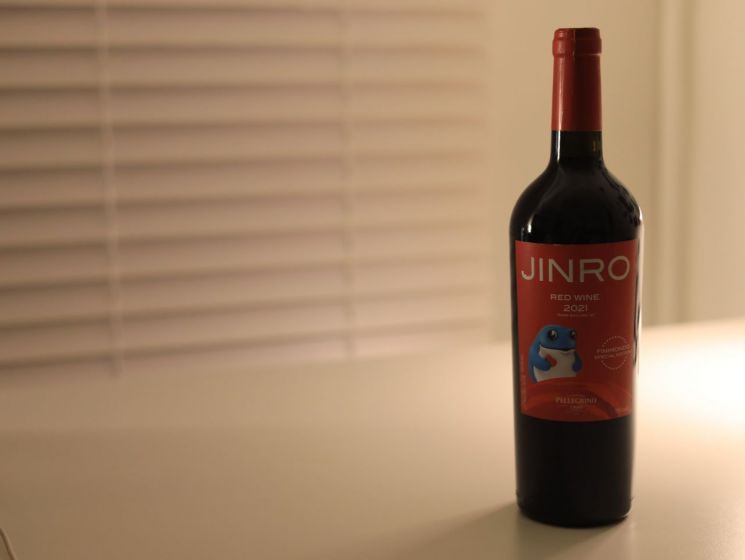
HiteJinro's first premium wine, 'Jinro Red Wine,' is a wine that Koreans can comfortably enjoy. It secures popularity with its intuitive and straightforward sweet fruit aroma, and above all, its high acidity and tannins make it promising to pair with various foods, including meat. However, it may be a somewhat unsuitable choice for consumers who prefer elegant and complex wines.
On the 3rd, when opening the cork for tasting and pouring the wine into a glass, a wine with a deep purple-red color, somewhere between ruby and violet, appeared. The intensity of the aroma was as strong as the deep color. When the glass was brought close to the nose, the scent strongly surged into the nostrils even without inhaling. The first detected aroma was undoubtedly fruity; while the official tasting notes mentioned red fruit scents like cherry and pomegranate, the sweet black fruit aromas such as black plum, black currant, and blueberry were more dominant.
Jinro Red Wine uses the 'sun-dry method,' where grapes are harvested slightly late as if dried in the sun. Since dried grapes were fermented and brewed, the black fruit aroma became richer over time, especially the scent of dried plums stood out. Besides the fruit aroma, spice notes like pepper also emerged, giving a slight Shiraz nuance, and a yogurt scent developed during the brewing process subtly contrasted with the spiciness. However, since the fruit flavor is dominant and the wine is young, aromas and flavors derived from aging were not strongly felt.
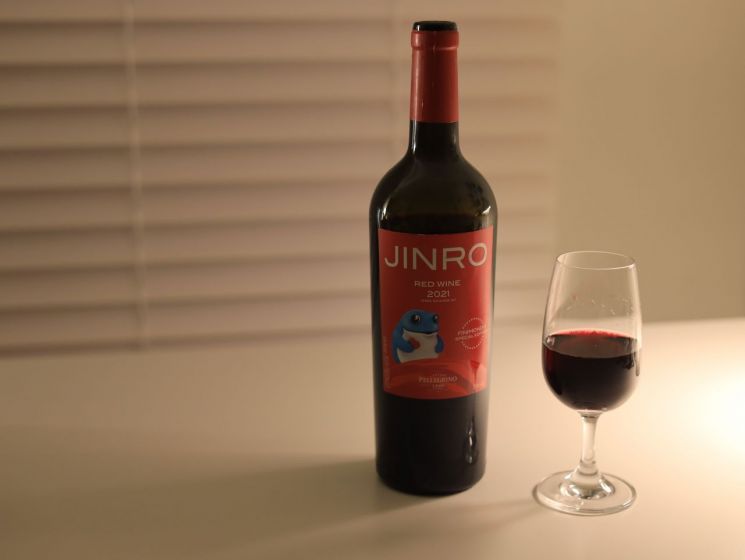
The first thing welcomed when taking a sip of the wine is acidity. The high level of acidity instantly stimulates the salivary glands, filling the mouth. The presence of tannins is also considerable; the amount of tannins made the gums and teeth feel very tight. However, the texture felt on the tongue is not rough, so it is not unpleasant. Due to the high acidity and abundant tannins, it naturally seemed that pairing with meat would be the best. Among them, samgyeopsal (pork belly) came to mind first, as the wine's high acidity can cut through the greasy taste of samgyeopsal, creating a clean palate?a wonderful combination.
Additionally, the body was medium to slightly heavy, but the high acidity seemed to lighten the wine's weight. On the other hand, the 14% alcohol content was quite stimulating, which was an interesting aspect. The overall intensity of flavor and finish was moderate; oak flavors were not easily detected by smell but occasionally reached the nose through the mouth. However, the intensity was mild and too faint to fully enjoy the oak aroma.
Jinro Red Wine is a product that HiteJinro directly participated in developing over three years, from selecting partner wineries to grape varieties, taste, and design. Although HiteJinro has imported and exported various wines, this is the first time they have been directly involved in development. It was made with the indigenous grape variety 'Nero d'Avola' in collaboration with the 'Carlo Pellegrino' winery in Sicily, Italy.
© The Asia Business Daily(www.asiae.co.kr). All rights reserved.


















