Special Heating Cost Support for Senior Centers, Gangseo-style Postpartum Care Expenses, and Care for People with Developmental Disabilities
Emphasizing Creative Work Processes to Break Workplace Customs
Operating ‘Budget Reduction Cost Analysis Advisory Meetings’ This Year to Prevent Budget Waste at the Source
[Asia Economy Reporter Park Jong-il] “We will carefully manage the budget wasted on unnecessary replacements of perfectly fine sidewalks at the end of the year and use it to support socially vulnerable groups such as children, the elderly, and people with disabilities.”
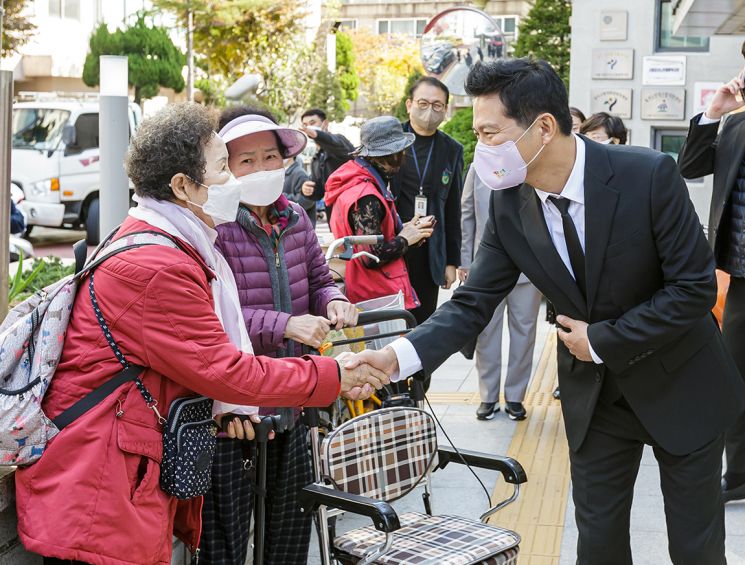
At the New Year’s meeting for Dong (neighborhood) leaders welcoming the Year of the Black Rabbit, Kim Tae-woo, Mayor of Seoul’s Gangseo-gu, made this promise to residents wherever he went across the district’s 20 neighborhoods.
When he cited typical examples of budget waste that residents had long felt, the residents present at the scene burst into applause at his vow to correct these issues during his term.
Gangseo-gu, Seoul (Mayor Kim Tae-woo) allocates 62.3% of its total budget this year to social welfare expenses. This indicates that there are many socially vulnerable groups and those in need of care, such as low-income residents, people with disabilities, and the elderly. Especially during cold winter months like these, the heating cost burden on low-income residents becomes even heavier, making their lives more difficult.
Although Gangseo-gu’s budget size grows every year, the so-called 3 Highs (high inflation, high interest rates, high exchange rates) phenomenon and recent concerns about economic recession have made the finances of this district with low fiscal independence increasingly tight.
◆ “True Budget Reduction Means Not Spending on Unnecessary Things but Using Funds Only Where Needed”
- Breaking the Year-End Spending Rush to Avoid Budget Non-usage
- Strengthening Contract Cost Reviews, Recovering Bid Price Differences, and Creative Work Improvements Save About 6.8 Billion KRW
In this situation, Mayor Kim Tae-woo, who took office in July last year, first began by thoroughly reviewing every decision and execution process related to the budget and identifying points where taxpayers’ money was leaking.
He put into practice his long-held belief that “true budget reduction means not spending even a single won unnecessarily and using funds only for necessary projects” right after taking office.
He identified inefficiencies and problems in budget execution practices that had been done conventionally, such as year-end construction projects, duplicate or excessive investments, lax contract and construction management, and subsidy management issues, and has been making bold efforts to improve them.
First, he eliminated the year-end construction practice of rushing to spend allocated budgets that were not urgent just to avoid non-usage, instructing that leftover funds be used as resources for new projects in the following year.
Also, since Mayor Kim’s inauguration, strengthening contract cost reviews has saved about 1.76 billion KRW in budget last year, which is a representative example.
Before bidding or contracting for about 790 projects including various construction, services, and goods purchases, the audit department re-examined the appropriateness of cost estimates presented by the ordering departments to prevent waste in advance.
In addition, by emphasizing employees’ proactive and creative work processes to respond to changing times and environments, small but meaningful budget savings have been achieved.
These include recovering unexecuted labor costs from outsourced household waste collection services (860 million KRW), sending mobile New Year’s cards instead of paper ones (20 million KRW), sending text messages instead of delinquent notices for 57,892 cases of local taxes and non-tax revenues annually (20 million KRW), and designing repairs for damaged old sidewalks using in-house technology (30 million KRW), totaling 16 cases and saving about 1.25 billion KRW.
◆ “No Matter How Difficult the District’s Finances Are, We Will Not Neglect Walking Together with Socially Vulnerable Groups”
The approximately 6.8 billion KRW saved will be intensively invested this year in key pledges of the 8th local government administration, such as ‘Gangseo, a Good Place to Raise Children’ and ‘Walking Together with Socially Vulnerable Groups.’
These include ▲special heating cost support for senior centers ▲Gangseo-style postpartum care expense support ▲creation of Seoul-style kids cafes ▲construction of comprehensive social welfare centers for people with disabilities ▲care support for people with developmental disabilities ▲operation of a mobile civil complaint team supporting vulnerable groups, among others. These projects are either newly launched or strengthened to provide more robust support for low-income and socially vulnerable residents, ensuring more residents benefit.
Amid ongoing national economic difficulties and increasing welfare demands, Mayor Kim Tae-woo stated, “Managing finances soundly and continuously striving to reduce the budget is the natural duty and task of public officials.” He emphasized, “Depending on circumstances, we may have to squeeze even the driest towel, but we will continuously block budget waste factors and focus on finding ways to save even small amounts of budget together with our staff.”
He also did not forget to say, “No matter how difficult the financial conditions are, we will never neglect walking together with socially marginalized neighbors and vulnerable groups in the community.”
This year, Gangseo-gu plans to newly organize the ‘Budget Reduction Cost Analysis Advisory Meetings’ to maximize the effect of budget savings by receiving advice from external experts with rich field experience in accounting and technical areas.
© The Asia Business Daily(www.asiae.co.kr). All rights reserved.

















