Chinese Food Companies Accelerate Entry into US Agricultural Market
"Security Threat" Raised Over Construction Plans Near US Air Force Base
The mayor of Grand Forks, North Dakota, USA, has put the brakes on a Chinese company's investment to establish a corn factory. This came after the U.S. Air Force designated the factory's location as a 'national security threat.'
According to the U.S. media outlet Wall Street Journal (WSJ) on the 31st of last month (local time), Mayor Brandon Bochenski of Grand Forks stated, "The federal government has requested that our city halt the factory construction project," adding, "Since the project began, international political tensions have intensified."
According to Mayor Bochenski, the corn factory planned for construction in Grand Forks was an investment project by the Chinese company 'Pufeng Group.' Pufeng is China's largest unlisted agricultural company, primarily selling fermented foods, fertilizers, and sugar substitutes.
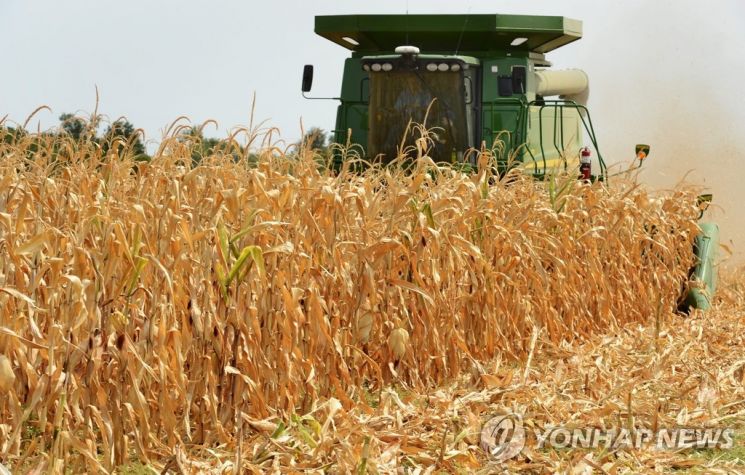
Pufeng owns a 370-acre (approximately 450,000 pyeong) site in Grand Forks, where it planned to build a processing plant that would produce starch or extracts using corn as the raw material.
Why did what seemed like an ordinary rural factory suddenly face political pushback in the United States? Behind this decision was the concern expressed by the U.S. Air Force.
WSJ reported that in December last year, Andrew Hunter, the U.S. Air Force Deputy Assistant Secretary, sent a letter to the Committee on Foreign Investment in the United States (CFIUS), warning, "This factory will pose a significant security threat not only in the near future but also in the long term for Air Force operations," because the factory's location is near an Air Force base.
Controversy has recently heated up in U.S. political circles surrounding Pufeng's corn factory project. Initially, the city expected that the factory would increase temporary jobs in the short term and provide employment for factory production workers in the long term, thereby greatly benefiting the local economy.
Mayor Bochenski also expressed dissatisfaction in a statement, saying, "The federal government's response during the handling of this investment case was inevitably slow and contradictory."
However, some in the political sphere are increasingly wary of Chinese corporate investments in the U.S. For example, the U.S. Congress is recently cooperating in a bipartisan manner to prepare legislation to monitor foreign investors, including those from China, purchasing American farms. This aims to strengthen the U.S. agricultural and livestock supply chains against external interference.
Meanwhile, Chinese companies' entry into the U.S. agricultural market is also accelerating. According to the federal investment panel, Chinese companies have made investments worth hundreds of billions of dollars acquiring U.S. food companies. Representative cases include the 2013 acquisition of Virginia-based food company Smithfield Foods ($4.7 billion, approximately 5.78 trillion KRW) and the 2017 acquisition of seed company Syngenta AG ($43 billion, approximately 52 trillion KRW).
© The Asia Business Daily(www.asiae.co.kr). All rights reserved.

















