[Asia Economy Reporter Hyunjin Jung] "(I have) fallen in love with ChatGPT."
Christian Terwiesch, a professor at the University of Pennsylvania's prestigious Wharton School MBA program, said this on the 31st of last month (local time) during an appearance on 'Wharton Business Daily,' a live radio program produced by Wharton. On the 17th of last month, Professor Terwiesch published a white paper titled "Can ChatGPT3 earn a Wharton MBA?" analyzing that the AI chatbot ChatGPT achieved passing grades of B or B- on exams essential for graduating from Wharton School.
Alongside Professor Terwiesch, Professor Lee Sun Molik at Wharton recently declared, as reported by NPR and others, that for the first time this year, AI policies have been introduced into the syllabus, encouraging active use of ChatGPT for studying and homework. While requiring students to specify how they used ChatGPT, he emphasized that its use should be mandatory.
Since its release in November last year, ChatGPT has thrown the education field into chaos. AI answering homework and exams that students are supposed to do themselves, with no way for graders to identify this, has sparked controversy. Plagiarism and other dishonest acts using ChatGPT have occurred. In this situation, why are Wharton professors instead bringing AI into the school?
◆ "We are just at the beginning... You can't put toothpaste back into the tube"
Professor Terwiesch emphasized that while utilizing ChatGPT, students should be encouraged to do new things they are capable of. According to 'Knowledge at Wharton,' Wharton's business journal, Professor Terwiesch, who appeared on the radio, acknowledged concerns about plagiarism and the need for improvement in ChatGPT-generated writing. Nevertheless, he said, "At this point, this is an opportunity to increase productivity for me and my students."
 Professor Christian Terwiesch of the Wharton School, University of Pennsylvania (Photo by Christian Terwiesch's Twitter)
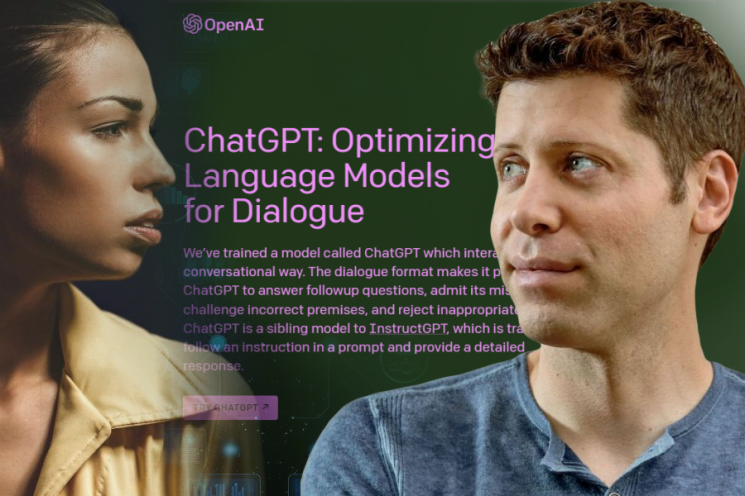
In the white paper released last month, he stated, "ChatGPT3 has shown remarkable ability to automate some of the skills held by highly paid knowledge workers such as analysts, managers, and consultants," emphasizing the need to change exam policies and curriculum design to focus on human-AI collaboration. Sam Altman, CEO of OpenAI, which created ChatGPT, recently compared the current educational chaos to the development of calculators and the resulting changes in math exams, and Professor Terwiesch appears to share a similar view on how AI can be utilized.
Professor Terwiesch said, "We have a new technology in the game. It would be unfortunate if society could do everything the same way as before this technology," adding, "This (ChatGPT technology) is very significant, and we are only seeing the very beginning."
He also pointed out that regarding concerns about cheating using AI, teachers need to seriously reconsider why exams are conducted. He believes the purpose of exams is to ▲demonstrate skills, ▲customize education for each student, and ▲develop students' critical perspectives. He added that software similar to ChatGPT could actually help with these goals, enabling students and workers to think of new things by utilizing it.
He said, "Don't try to put toothpaste back into the tube once it's out. This technology is already here," emphasizing, "The idea of going back to the past will never work."
◆ "Companies that act first will benefit... but there are limits"
Professor Molik, who declared the use of ChatGPT in this year's classes, recently evaluated ChatGPT as the AI's 'tipping point.' In an article published in December last year in the Harvard Business Review (HBR), he said, "Companies that understand the importance of this change and take early action will gain significant benefits," noting that although ChatGPT might seem like a 'smart toy' at first glance, it has great potential.
 Professor Lee Sun Molik, Wharton School, University of Pennsylvania (Photo by Wharton School)
In the article, Professor Molik shared his direct experience using ChatGPT in class. When he introduced ChatGPT during an undergraduate class, one student used ChatGPT's ability to write computer code to complete a project that normally takes four hours in less than one hour. He also mentioned that he quickly wrote his own syllabus, assignments, and grading criteria using ChatGPT.
Professor Molik predicted that productivity could be increased by saving time and resources through utilizing ChatGPT's various writing capabilities. He suggested industries such as marketing, advertising, consulting, finance, publishing, and journalism as applicable fields.
However, Professor Molik also pointed out the clear limitations of ChatGPT. He criticized that if asked to provide evidence of civilization in the dinosaur era, ChatGPT would present seemingly credible but fabricated information, calling it a "complete nonsense generator." He said that although ChatGPT has many issues, collaboration is possible as long as humans can verify its outputs.
Conscious of these points, Professor Molik stated in this year's 'Entrepreneurship and Innovation' syllabus that "AI is a new technology and can be wrong. Students must verify results by comparing them with other sources, and students are responsible for errors or omissions caused by AI." He added, "Everyone thinks everyone else is cheating. What I require from my students is honesty," and requested, "Please tell me what you did with ChatGPT and what conversations you had to get the answers."
© The Asia Business Daily(www.asiae.co.kr). All rights reserved.


















