From the 1st to February 10th, a total of 480 plots will be leased at Haengdang-dong Rainbow Garden and Dasan Farm
This year, 32 additional half-sized plots for single-person households... Twice a year, eco-friendly fertilizers and seedlings will be provided
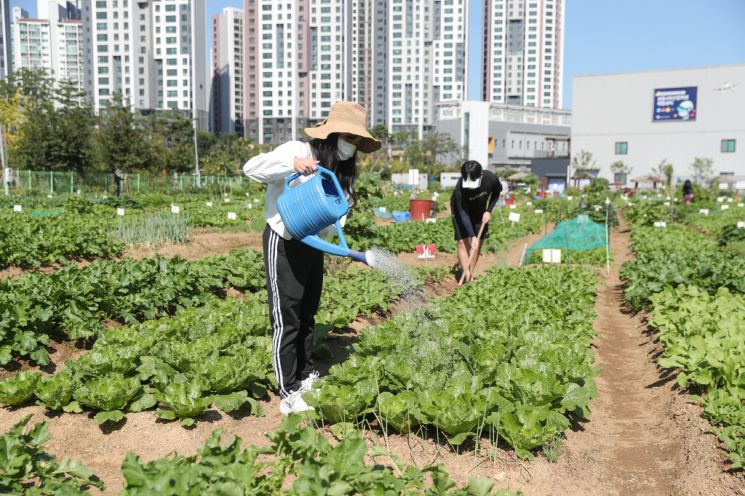
[Asia Economy Reporter Park Jong-il] Seongdong-gu (Mayor Jung Won-oh) announced that from the 1st, a total of 480 plots, including 380 plots at Seongdong Rainbow Garden and 100 plots at Dasan Farm, will be leased to provide residents with healthy leisure activities through urban agriculture.
Operating since 2012 and now in its 12th year, the Rainbow Garden located in Haengdang-dong consists of 380 plots, divided and leased into 334 general type plots and 46 consideration type plots.
Especially from this year, 32 additional S-type plots (approximately 5.5㎡) have been added for single-person households and small-scale cultivators, which are half the size of the existing L-type plots (approximately 11㎡).
Various cultivation options and 46 consideration plots for socially vulnerable groups have been separately organized. The consideration plots are a separate selection for people with disabilities, families with three or more minor children, national veterans, and low-income elderly living alone aged 65 or older. The leasing fee is 60,000 KRW for general L-type plots, and 30,000 KRW for general S-type and consideration plots.
In addition to the Rainbow Garden, Dasan Farm located in Namyangju, Gyeonggi-do, has expanded from the existing 88 plots to a total of 100 plots (approximately 16㎡ per plot) this year, with a leasing fee of 50,000 KRW.
Garden cultivators will receive eco-friendly fertilizers twice a year in spring and autumn, as well as seedlings such as lettuce and cabbage, and farming tools will also be lent. The gardens are cultivated in an eco-friendly manner without using synthetic pesticides or chemical fertilizers, and soil heavy metal and pesticide residue safety tests conducted by the Seoul Institute of Health and Environment confirmed all results were within standards.
Anyone who is a resident of Seongdong-gu or an institution/organization located in Seongdong-gu can apply, but only one type of garden plot is allowed. Applications for garden plots will be accepted on the Seongdong-gu Office website for ten days from the 1st to the 10th of this month. Winners will be selected by random computerized drawing and announced on the 17th.
Jung Won-oh, Mayor of Seongdong-gu, said, "I hope residents dreaming of becoming urban farmers will heal their tired minds in daily life with nature," adding, "I hope a healthy and vibrant local community will be formed through communication and sharing in the process of cultivating and sharing crops."
Gwangjin-gu accelerates personnel management and organizational culture improvement... Operating ‘T/F Task Force’
50 participants formed considering rank, job series, gender, age, etc., to be promoted throughout February
First meeting held on the 1st in a flexible and free atmosphere led by grades 8-9
Transparent and fair personnel management and desirable organizational culture expected through communication among employees
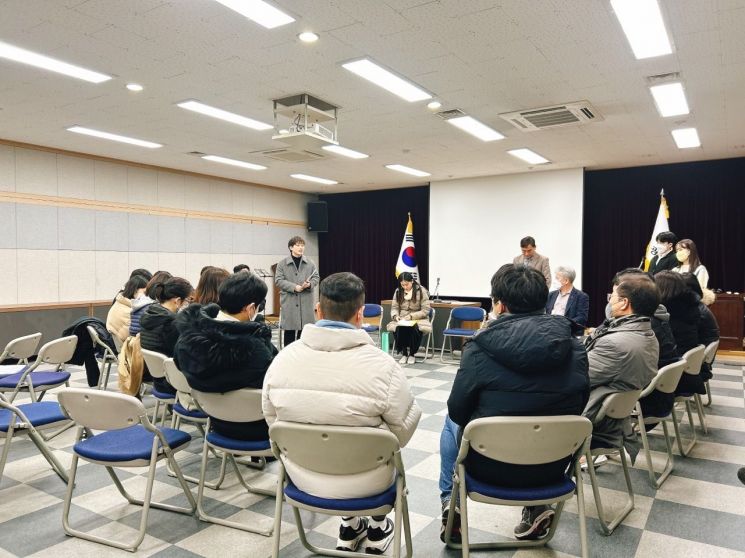
Gwangjin-gu (Mayor Kim Kyung-ho) formed a ‘T/F Task Force’ to improve personnel management and organizational culture in the 8th elected administration and held its first meeting on the 1st.
With the practical first year of the 8th elected administration, a wind of innovation has also blown inside the district office. To promote transparent and fair personnel management and a desirable organizational culture, the district formed a ‘T/F Task Force’ led by the deputy mayor.
This task force, operating throughout February, consists of two subcommittees: personnel management and organizational culture. Since January, participants for each subcommittee were publicly recruited, and 50 participants were selected considering rank, job series, gender, and age to hear diverse voices.
The personnel management subcommittee establishes basic principles for personnel operations such as performance evaluations, promotions, practical clerk position reviews, and regular personnel changes, while the organizational culture subcommittee works toward a horizontal and creative organizational culture and changes in working methods to communicate with new generations.
The Gwangjin-gu branch of the public officials’ labor union will actively participate by presenting employees’ thoughts and opinions to the task force through committee meetings and surveys.
Related departments such as the Audit Officer, General Affairs Division, and Planning and Budget Division will only provide support roles and will not participate in task force activities.
The first meeting of the T/F Task Force held on the 1st was conducted in a free atmosphere. Lower ranks, grades 8-9, flexibly led the meeting, and it was especially notable to see senior officials such as department heads and team leaders nodding in agreement. Participants sat in a circle, shared current materials related to personnel management and organizational culture, and divided roles by subcommittee.
Regular meetings will be held once or twice a week without restrictions on location or time, using methods such as brainstorming to freely exchange opinions. The final proposals from the T/F Task Force after multiple regular meetings will be reflected in personnel plans after reviewing related laws and cases from other districts.
Kim Kyung-ho, Mayor of Gwangjin-gu, said, “We plan to actively reflect the opinions proposed by the task force and fundamentally improve the personnel system and organizational culture,” adding, “We will strive even more to create a developing organization through communication among employees based on diverse voices.”
© The Asia Business Daily(www.asiae.co.kr). All rights reserved.


















