Rural Economy Institute Report on "Current Status and Implications of Kimchi Procurement by Food Service Companies"
Use of Domestic Commercial Kimchi Stands at 25.3%
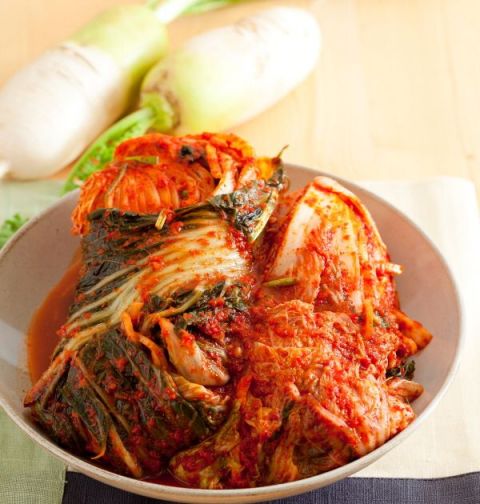
Kimchi, a representative Korean food, is actively expanding into the global market thanks to the popularity of K-food. However, it has been found that domestic dining establishments actually use imported kimchi more often than domestically produced kimchi for cooking.
According to the report "The Actual Conditions and Implications of Kimchi Procurement by Dining Establishments" by the Korea Rural Economic Institute on the 31st, the proportion of domestic dining establishments using imported kimchi to cook dishes such as kimchi jjigae is 49.3%, approaching the majority. In contrast, the purchase and use of domestically produced commercial kimchi is 25.3%, and the proportion of those making kimchi themselves is only 17.3%.
For kimchi provided as side dishes to customers, 41.5% is made in-house, 28.1% is purchased imported kimchi, and 25.2% is purchased domestic commercial kimchi. This survey was conducted face-to-face with a sample of 1,500 dining establishments nationwide from November 1 to December 31, 2021.
Dining establishments rated imported kimchi as equal or better than domestic commercial kimchi in terms of taste, color, and seasoning more often than the opposite. The institute analyzed that this indicates little resistance to imported kimchi. In particular, side dish kimchi tends to have a higher proportion of homemade or domestic kimchi because it allows customers to experience the authentic taste of kimchi. However, cooking kimchi, which involves boiling or stir-frying, can alter the flavor during the cooking process, so relatively cheaper imported kimchi is preferred.
This phenomenon is expected to become more pronounced in the current high-inflation environment. As prices of kimchi ingredients such as napa cabbage, radish, and red pepper powder rise, the price of domestic kimchi also increases, leading to a growing demand for relatively cheaper foreign kimchi. According to customs trade statistics, kimchi imports last year were 263,434 tons, a 9.5% increase from the previous year (240,606 tons).
Moreover, combined with a high exchange rate trend, kimchi import value last year reached a record high of $169.4 million, a 20.4% increase from the previous year. On the other hand, kimchi export value was $140.82 million, down 11.9% from the previous year ($159.91 million). This is the first decline in kimchi export value in seven years.
Senior Research Fellow Park Ki-hwan of the Korea Rural Economic Institute stated, "Dining establishments and kimchi have an inseparable relationship. When making kimchi in-house, most main ingredients except red pepper powder are domestically sourced, thus supporting domestic agricultural product demand. However, about half of the total kimchi demand relies on imported kimchi." He advised, "To foster the growth of the kimchi industry, a symbol of K-food, measures to minimize imported kimchi in the dining industry are necessary."
© The Asia Business Daily(www.asiae.co.kr). All rights reserved.
![Clutching a Stolen Dior Bag, Saying "I Hate Being Poor but Real"... The Grotesque Con of a "Human Knockoff" [Slate]](https://cwcontent.asiae.co.kr/asiaresize/183/2026021902243444107_1771435474.jpg)
















