Divergent Opinions on Lifting Isolation Mandate and 3-Day Reduction
Concerns Raised Over Infringement of 'Right to Rest When Sick'
[Asia Economy Reporter Park Hyun-joo] As masks can now be removed except in infection-vulnerable facilities and public transportation, attention is also focused on the lifting of the mandatory 7-day quarantine for confirmed COVID-19 cases, another quarantine measure. Similar to the earlier lifting of restrictions on private gatherings, opinions are emerging that the mandatory quarantine for confirmed cases should be abolished or shortened to about 3 or 5 days.
From January 30, health authorities shifted the indoor mask-wearing mandate to a recommendation. Accordingly, citizens can now remove masks in various spaces such as large supermarkets, shopping malls, kindergartens, and schools, except in infection-vulnerable facilities, public transportation, medical institutions, and pharmacies. The next step, a complete lifting of indoor mask requirements, is expected around May.
Initially, quarantine measures such as limits on private gathering sizes, shortened business hours for restaurants and cafes, and mandatory outdoor mask-wearing, which were established by health authorities at the early stage of the COVID-19 outbreak, have now disappeared. In addition, with the mask-wearing mandate changing to a recommendation from this day, it is predicted that health authorities may also revise the mandatory quarantine period for confirmed cases, another quarantine measure.
Currently, the mandatory quarantine period for confirmed COVID-19 cases is 7 days. At the beginning of the pandemic, it was 14 days, but it was eased to 10 days from November 2021, and since February last year, it has been reduced to 7 days regardless of vaccination status.
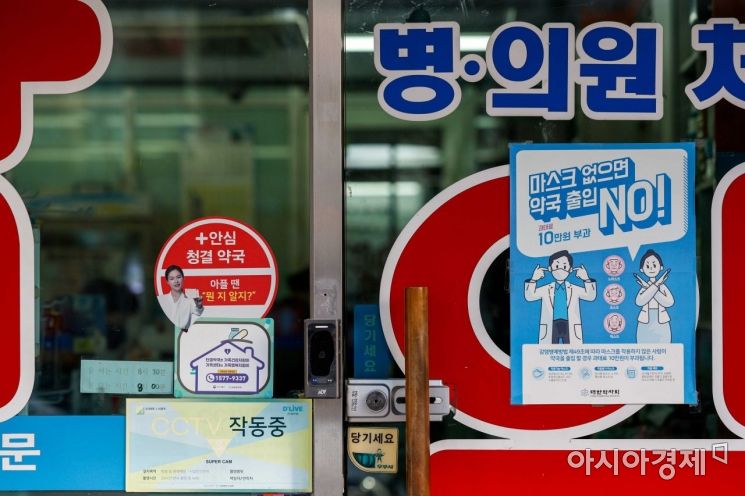 On the 30th, when indoor mask-wearing was changed from mandatory to recommended except for some facilities, a notice regarding mask-wearing upon entry was posted at a pharmacy in Seoul. Photo by Jinhyung Kang aymsdream@
There is also much debate about the quarantine period. Various opinions have been raised, such as shortening the mandatory quarantine period to 3 or 5 days, or abolishing the quarantine obligation altogether or lowering it to a recommendation level.
Discussions about the mandatory quarantine for confirmed cases also arose in April last year when the legal classification of COVID-19 as an infectious disease was downgraded from Level 1 to Level 2, but no conclusion was reached. It was considered necessary to have more social consensus in preparation for a surge in confirmed cases due to factors such as the influx of variant viruses.
There are also concerns that lifting the mandatory quarantine for confirmed cases could infringe on the 'right to rest when sick.' The 'right to rest when sick' began to be seriously discussed during the COVID-19 pandemic, but there are worries that if the legal obligation for quarantine is removed, more citizens will have to return to workplaces or schools while still ill.
Dr. Park Geon-hee, a preventive medicine specialist who served as the head of the Gyeonggi-do Infectious Disease Management Support Group, said on MBC Radio's "Kim Jong-bae's Focus" program, "If self-quarantine is implemented, treatment costs will become the individual's responsibility, and especially for precarious workers and non-regular employees, it will be difficult to rest at home when symptomatic," adding, "More social discussions are needed on creating an environment where people can rest when sick and other related issues."
However, health authorities are cautious about shortening the mandatory quarantine period for confirmed cases. Jeong Ki-seok, head of the COVID-19 Special Response Team and member of the National Infectious Disease Crisis Response Advisory Committee, said, "The quarantine obligation will eventually be lifted," but added, "Research on BA.1.1 virus infection cases showed that even on the 8th day after quarantine release, 1 out of 10 people could still infect others. We need safer evidence." He also said, "In the case of BA.5, results show that on the 5th day, 4 out of 10 people can still infect others. It is not a stage where we can feel safe yet."
The health authorities' review of adjusting the mandatory quarantine for confirmed cases is expected to begin when the World Health Organization (WHO) lifts the COVID-19 public health emergency and the domestic crisis level is adjusted. However, as the WHO announced on this day that it will maintain the international public health emergency status for COVID-19, discussions on adjusting the domestic mandatory quarantine for confirmed cases seem premature.
WHO stated that although global immunity to COVID-19 is high, it will maintain the international public health emergency status due to reasons such as higher mortality rates compared to other respiratory infectious diseases, insufficient vaccination coverage in low-income countries and high-risk groups, and the potential emergence of new variants.
© The Asia Business Daily(www.asiae.co.kr). All rights reserved.

















