Forced Labor Compensation Plan: Korea-Japan Director-Level Talks on 30th
Broad Discussions on Japan's Apology Responsibility and Method
Disagreement Remains on Compensation Participation by Nippon Steel and Mitsubishi
Additional Ministerial and Director-Level Meeting Schedule Undecided
Foreign Ministry Proposes Meetings with Victims and Bereaved Families
[Asia Economy Reporter Koo Chae-eun] South Korea and Japan discussed finding a solution to forced labor issues, but failed to narrow differences over the key issue of whether wartime companies (Mitsubishi and Nippon Steel) would voluntarily participate in compensation. The government plans to pursue not only director-level but also high-level talks, and directly visit and persuade forced labor victims and their families.
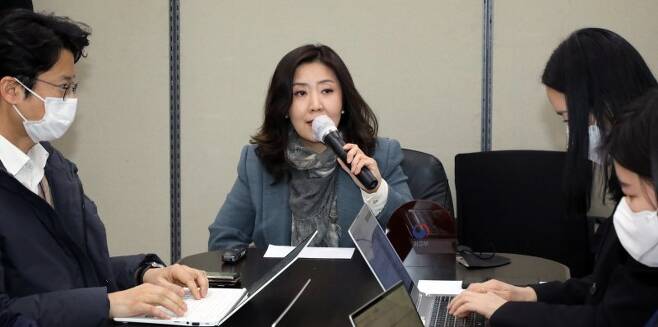 Director Seo Min-jeong giving a back briefing after Korea-Japan director-level talks (Seoul=Yonhap News) Photo by Hwang Kwang-mo = Seo Min-jeong, Director of the Asia-Pacific Bureau at the Ministry of Foreign Affairs, is giving a back briefing on the afternoon of the 30th at the Government Seoul Office Building after director-level talks between Japan's Takehiro Funakoshi, Director of the Asia and Oceania Bureau at the Ministry of Foreign Affairs, and Korea regarding compensation for forced labor during the Japanese occupation. 2023.1.30 [Joint Coverage] hkmpooh@yna.co.kr (End)
On the 30th, Seo Min-jung, Director of the Asia-Pacific Bureau of the Ministry of Foreign Affairs, held talks for about three hours from 2:30 p.m. at the Ministry of Foreign Affairs building with Takehiro Funakoshi, Director of the Asia and Oceania Bureau of Japan’s Ministry of Foreign Affairs. The meeting lasted more than an hour longer than the originally scheduled two hours.
Clear Differences in Mitsubishi and Nippon Steel’s Stance on Compensation Participation
It was reported that the two countries had clear differences regarding the participation of wartime companies in compensation payments. A Foreign Ministry official referred to “the donation participation of Mitsubishi Heavy Industries and Nippon Steel” as “the most critical issue,” adding, “There are differences in perception, so further discussions are needed.”
However, regarding Japan’s form of apology, the two sides are closely consulting on which of the two approaches is better: the plaintiffs’ demand for a “direct apology from the Japanese government” or the 1995 Murayama Statement, which includes “deep remorse and heartfelt apology.”
Regarding Japan’s claim of “waiving subrogation rights,” the official explained, “We are exchanging opinions on various legal issues beyond subrogation rights,” and “From a historical perspective, apology and response are the main concerns. We continue to present our position and listen to Japan’s views.”
The talks did not cover Japan’s easing of export restrictions. A Foreign Ministry official said, “If a fundamental solution to forced labor issues is reached, (export restrictions) will naturally return to normalization.”
The two countries agreed to continue consultations at various levels, including high-level and working-level officials. However, no additional schedule has been set yet.
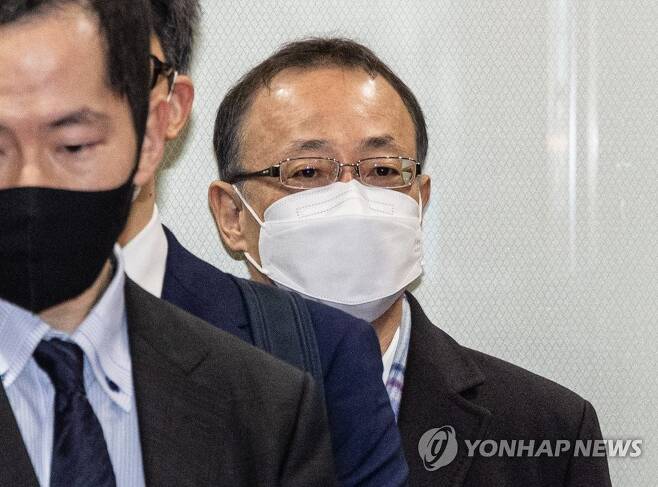 Director Funakoshi of the Japanese Ministry of Foreign Affairs Arrives at the Ministry of Foreign Affairs for Korea-Japan Consultations (Seoul=Yonhap News) Photo by Hwang Kwang-mo = Takehiro Funakoshi, Director of the Asia-Pacific Bureau of the Japanese Ministry of Foreign Affairs, arrived and is moving at the Ministry of Foreign Affairs building in Jongno-gu, Seoul, on the afternoon of the 30th for Korea-Japan director-level consultations. 2023.1.30 hkmpooh@yna.co.kr
Ministry of Foreign Affairs: "Will Continue Persuasion of Victims and Their Families"
The Ministry of Foreign Affairs also plans to continue persuading victims and their families. It is known that they plan to directly meet with three surviving forced labor victims (out of 15 who won the 2018 Supreme Court ruling) and their families to explain the results of Korea-Japan consultations so far.
Meanwhile, at a public forum on the 12th, the Ministry of Foreign Affairs proposed that the ‘Foundation for Supporting Victims of Japanese Forced Labor,’ a public institution under the Ministry of the Interior and Safety, pay compensation on behalf of Japanese companies ordered by the 2018 Supreme Court ruling to compensate forced labor victims, with the funds sourced from private donations.
However, the domestic forced labor victims’ side has expressed the position that participation in compensation by Japanese companies and an apology from Japan are necessary.
© The Asia Business Daily(www.asiae.co.kr). All rights reserved.
![Clutching a Stolen Dior Bag, Saying "I Hate Being Poor but Real"... The Grotesque Con of a "Human Knockoff" [Slate]](https://cwcontent.asiae.co.kr/asiaresize/183/2026021902243444107_1771435474.jpg)

















