[Asia Economy New York=Special Correspondent Joselgina] Reports have emerged that China's top nuclear weapons research institute has circumvented U.S. export controls to purchase advanced American semiconductors at least 12 times over the past two and a half years.
The Wall Street Journal (WSJ) reported on the 29th (local time) that after reviewing procurement documents from the state-owned China Academy of Engineering Physics (CAEP), which is on the U.S. export blacklist, it was found that since 2020, the institute has secured a substantial amount of semiconductors from U.S. companies such as Intel and Nvidia.
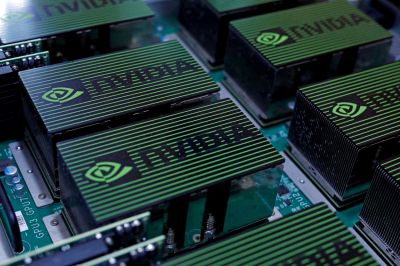
These American-made chips are types used in data centers and personal computers (PCs), and it was confirmed that CAEP purchased them through resellers within China. Some were procured as components for computing systems, and many were used for computational fluid dynamics research applied in a wide range of scientific fields, including nuclear explosion modeling.
This violates the U.S. administration's export control measures designed to prevent foreign nuclear weapons research from using American products. CAEP, which contributed to the development of China's first hydrogen bomb, was placed on the U.S. blacklist in 1997.
Analysis of research papers published by CAEP revealed that American semiconductors were used in at least 34 studies over the past decade. Nuclear experts pointed out that at least seven of these studies could be applied to nuclear weapons maintenance. This exposes the insufficiency of the U.S. administration's efforts to prevent advanced American technology from flowing to China. CAEP did not respond to WSJ's request for comment.
WSJ described this as "a challenge faced by the Joe Biden administration, which sought to respond more aggressively to China's use of American advanced technology." Earlier, the Biden administration strengthened export controls in October to prevent China from acquiring high-performance cutting-edge semiconductors used in artificial intelligence and supercomputers.
The American chips secured by CAEP were mostly high-performance products in the 7-nanometer to 14-nanometer range, which are difficult to mass-produce in China. WSJ reported that in November 2020, CAEP procured 60 Intel processors and 49 Nvidia chips, including Nvidia's high-performance V100 graphics processing units (GPUs) that accelerate large-scale data analysis. Additionally, Intel's Xeon Gold and Nvidia's GeForce RTX chips purchased by CAEP were also easily available through China's e-commerce platform Taobao.
Kevin Wolf, a former U.S. Department of Commerce official now working as an international trade lawyer, pointed out the loophole, saying, "Applying U.S. regulations to overseas transactions is very difficult." According to the Semiconductor Industry Association, China's purchases accounted for more than one-third of global chip sales in 2021.
The U.S. Department of Defense also expressed concern in its annual report submitted to Congress in November last year that China has been accelerating its nuclear power enhancement in recent years. According to the Department of Defense, the Chinese People's Liberation Army is expected to increase its nuclear warhead stockpile from the current level of about 400 to more than 1,500 by 2035.
© The Asia Business Daily(www.asiae.co.kr). All rights reserved.
![User Who Sold Erroneously Deposited Bitcoins to Repay Debt and Fund Entertainment... What Did the Supreme Court Decide in 2021? [Legal Issue Check]](https://cwcontent.asiae.co.kr/asiaresize/183/2026020910431234020_1770601391.png)
















