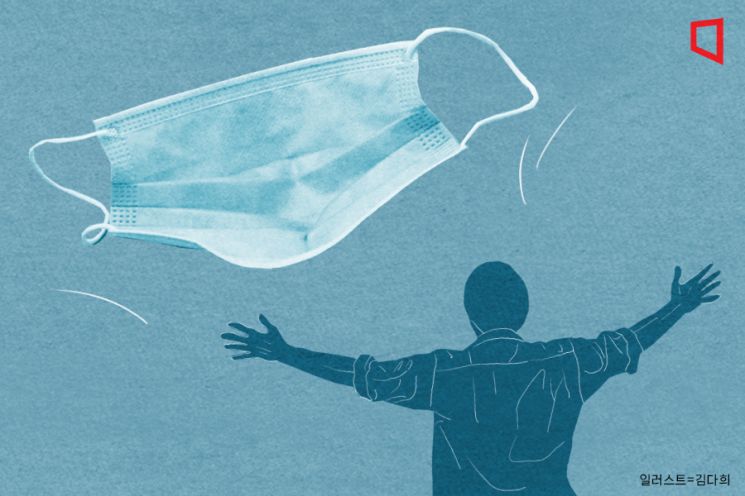
[Asia Economy Reporter Yoo Hyun-seok] From the 30th, except for some facilities such as public transportation and hospitals, masks will no longer be required indoors.
According to the Central Disaster and Safety Countermeasures Headquarters on the 29th, the government-level mask-wearing mandate introduced in October 2020 as a COVID-19 prevention measure will be changed to a 'recommendation' starting from the 30th, after about 27 months.
Mask-wearing will be voluntary, not mandatory, in schools, kindergartens, daycare centers, as well as senior centers, gyms, and swimming pools.
As the winter resurgence of COVID-19 has passed its peak and is declining, and the number of severe cases and deaths has stabilized, mask-wearing has shifted from a 'regulation' to a matter of personal choice. However, indoor mask-wearing remains mandatory in medical institutions, pharmacies, vulnerable facilities, and public transportation.
According to the new 'Mask-Wearing Prevention Guidelines' by the health authorities, masks are not required in large supermarkets, department stores, and shopping malls, but masks must be worn in pharmacies located within large supermarkets.
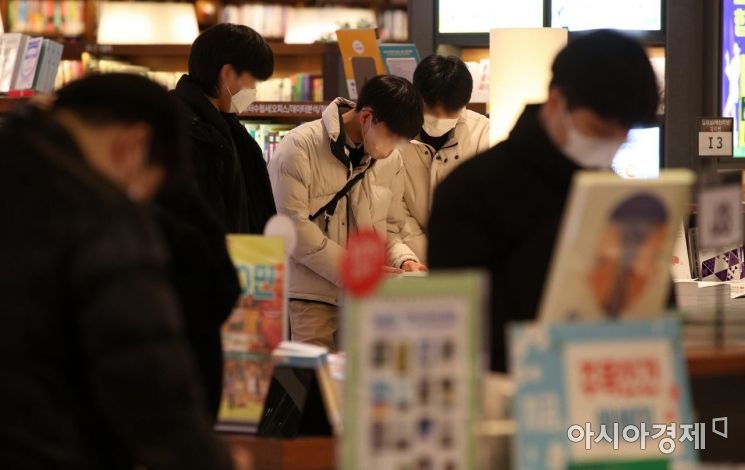
On the other hand, hospitals and vulnerable facilities are spaces where masks must be worn in principle, including gyms and changing rooms within those institutions. However, single rooms in hospitals and private spaces in residential-type vulnerable facilities are exempt from fines, so masks can be removed there.
While mask-wearing is not mandatory in kindergartens, schools, and academies, masks must be worn on school transportation vehicles, which are considered public transportation.
Additionally, since local governments may add more places where fines are imposed for not wearing masks indoors, the mandatory indoor mask-wearing facilities may vary by region, so checking is necessary.
To prevent confusion, the health authorities have instructed that mask-wearing prevention guidelines be posted at mandatory mask-wearing facilities to inform that they are 'mandatory mask-wearing facilities.'
Furthermore, even in spaces where indoor mask-wearing is no longer mandatory, the health authorities strongly recommend wearing masks in cases such as ▲ having suspected COVID-19 symptoms or contact with someone showing symptoms ▲ being in a high-risk group or in contact with high-risk individuals ▲ contact with confirmed cases within the past two weeks ▲ being in poorly ventilated, crowded, and enclosed indoor environments (the 3Cs: Close contact, Crowded places, and Confined spaces) ▲ and situations where many people are densely gathered and engage in droplet-generating activities such as shouting, singing, or talking.
Now, except for the remaining indoor mask-wearing mandates on public transportation and some other places, the '7-day isolation for confirmed cases' remains the only COVID-19 prevention measure.
The government plans to review the isolation mandate for confirmed cases at the time when the World Health Organization (WHO) lifts the COVID-19 public health emergency and the domestic crisis level is adjusted.
© The Asia Business Daily(www.asiae.co.kr). All rights reserved.


















