[Asia Economy New York=Special Correspondent Joselgina] The inflation indicator preferred by the U.S. Federal Reserve (Fed) is also showing a slowdown in its upward trend. With the Fed likely to slow down its pace with a baby step (0.25 percentage point interest rate hike) next week, there are also expectations that the rate hike could stop as early as spring. Consumer spending has also decreased, raising concerns about an economic recession.
On the 27th (local time), according to the U.S. Department of Commerce, the Personal Consumption Expenditures (PCE) price index in December last year rose 5.0% compared to the same month the previous year. This figure clearly slowed down from the 5.5% increase in November, marking the smallest increase in 15 months. The PCE price index, which approached 7% in June last year, has steadily slowed over the past six months and is now approaching the 4% range. The PCE price index rose 0.1% compared to the previous month.
The core PCE price index, which excludes the highly volatile energy and food sectors, rose 4.4% year-over-year and 0.3% month-over-month. This level is in line with Wall Street analysts' forecasts. The core PCE price index, which the Fed watches as the most accurate inflation indicator, also recorded the smallest increase in 14 months.
These figures came ahead of next week's Federal Open Market Committee (FOMC) regular meeting. It further confirms through data that inflationary pressures are easing. This is interpreted as a result of stabilized energy prices, which had surged due to Russia's invasion of Ukraine early last year, and the visible effects of the Fed's monetary tightening.
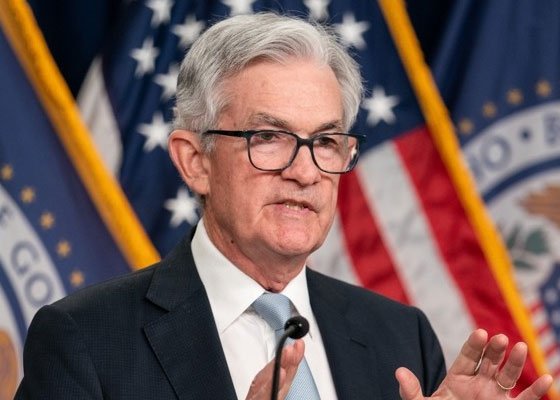
Concerns about an economic recession due to the Fed's tightening are also increasing. The personal consumption expenditures announced on this day turned to a decline. According to the Department of Commerce, December's personal consumption expenditures decreased by 0.3% compared to the previous month, with goods consumption expenditures plunging by 0.9%. This is below Wall Street's expectations. The November figure, initially reported as a 0.1% increase, was also revised downward to negative.
Paul Ashworth, Chief Economist at Capital Economics, said, "The real consumption growth rate in the first quarter will be close to zero," and predicted that the real Gross Domestic Product (GDP) growth rate in the first quarter could contract at an annualized rate of 1.5%.
In the market, as signs of easing inflation have been confirmed one after another in recent indicators, it is expected that the Fed will narrow the rate hike to 0.25 percentage points at this FOMC. According to the Chicago Mercantile Exchange (CME) FedWatch, the federal funds (FF) rate futures market currently reflects more than a 99.6% probability of a 0.25 percentage point rate hike in February.
There are also expectations that the Fed could stop raising rates as early as spring. Earlier, the Wall Street Journal (WSJ) reported that the Fed's rate hikes are nearing the end, and discussions about when to stop raising rates could take place at this meeting. Prior to the Fed, the Bank of Canada recently indicated a pause in rate hikes, becoming the first major central bank to do so. The market's concern that excessive monetary tightening could cause an unnecessary economic recession is also a burden for the Fed.
However, since inflation indicators still far exceed the Fed's 2% target and labor market overheating and service-centered inflationary pressures continue, there are also concerns that the Fed could take a more hawkish stance than market expectations at this meeting.
© The Asia Business Daily(www.asiae.co.kr). All rights reserved.
![From Hostess to Organ Seller to High Society... The Grotesque Scam of a "Human Counterfeit" Shaking the Korean Psyche [Slate]](https://cwcontent.asiae.co.kr/asiaresize/183/2026021902243444107_1771435474.jpg)
















