[Asia Economy Reporter Suyeon Woo] Kia surpassed 7 trillion KRW in operating profit last year, setting a new record for its best-ever performance. This was the result of efforts to improve profitability, including a sales mix focused on high value-added vehicle models and reductions in incentives.
On the 27th, Kia held an investor relations (IR) conference call and announced its cumulative annual management performance for the previous year. Revenue reached 86.559 trillion KRW, and operating profit was 7.2331 trillion KRW, increasing by 23.9% and 42.8% respectively compared to the previous year. Net profit was 5.409 trillion KRW, up 13.6% year-on-year. Global sales volume was 2,901,849 units, a 4.5% increase from the previous year.
Joo-Jeong Joo, Vice President of Kia, stated, "Sales increased due to expanded available inventory from improved parts supply, and profitability improved with a sales structure centered on high-profit vehicles based on enhanced product competitiveness, along with price increases and incentive reductions. Favorable exchange rate effects also continued, significantly expanding revenue and profitability."
For the fourth quarter, revenue was 23.1642 trillion KRW and operating profit was 2.6243 trillion KRW, representing increases of 34% and 123% year-on-year, respectively. Wholesale sales volume rose about 12% year-on-year to 730,259 units. Domestic sales increased 10.7% to 145,768 units, while overseas sales grew 13.2% to 584,491 units.
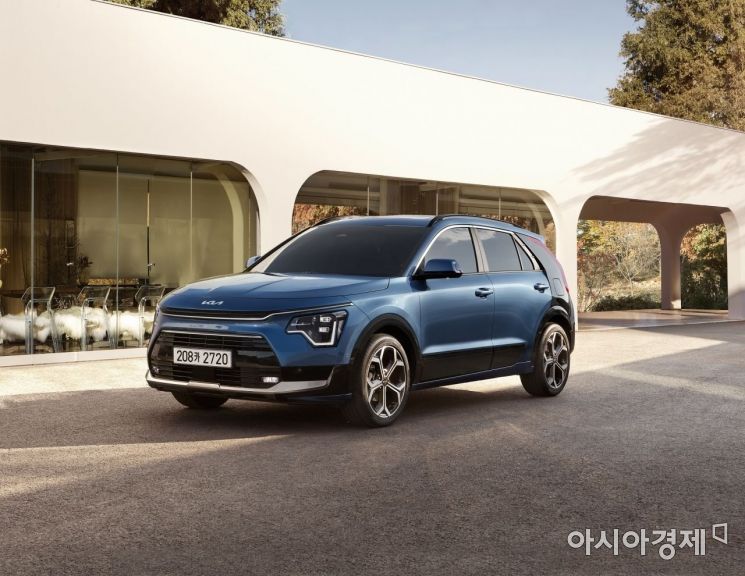
Domestic sales recorded double-digit growth, supported by the new car effect of the new Niro, increased sales of popular SUVs such as Seltos, Sorento, and Carnival due to improved parts supply, and the base effect from the previous year when semiconductor shortages had a significant impact.
Overseas sales were affected by the continued suspension of sales in Russia, but increased volume from the shift to a three-shift system at the India plant, the new car effect of the Carens (India) and the new Sportage, and expanded supply due to improved semiconductor availability helped partially resolve waiting demand, achieving double-digit growth rates in most regions.
Fourth-quarter revenue increased 34.8% year-on-year to 23.1642 trillion KRW, driven by increased sales volume from improved parts supply including semiconductors, higher average selling prices per vehicle, and continued favorable exchange rate effects.
The cost of sales ratio improved by 2.5 percentage points year-on-year to 77.7%, despite increased raw material costs, due to significant revenue growth and exchange rate effects. The selling and administrative expense ratio also declined by 2.1 percentage points year-on-year to 10.9%, as the substantial increase in revenue offset most cost increases.
Fourth-quarter operating profit rose 123.3% to 2.6243 trillion KRW, despite increased costs such as material expenses, thanks to expanded sales, improved sales mix focused on high-spec and high-priced vehicles, price increases, and significant incentive reductions based on a "getting the right price" policy supported by enhanced product quality and brand trust.
Additionally, the average KRW-USD exchange rate in the fourth quarter was 1,359 KRW, a 14.9% increase from the previous year, which also contributed significantly to revenue growth and profitability improvement.
© The Asia Business Daily(www.asiae.co.kr). All rights reserved.

















