The COVID-19 Pandemic Continues Through the 7th Wave
COVID Cases Rise Again After Seollal Holiday
Persistent COVID-19: Managing It Like the Flu?
[Asia Economy Reporter Byeon Seon-jin] Following the impact of the Lunar New Year holiday, the number of COVID-19 confirmed cases, which had been declining, has been rising again. Infectious disease experts and health authorities view this as a temporary rebound due to the holiday effect and expect the downward trend of the winter wave to continue. While the COVID-19 fatality rate has significantly dropped, the number of confirmed cases has fluctuated, leading some to argue that COVID-19 should be managed like the flu, but there are also many opposing views.
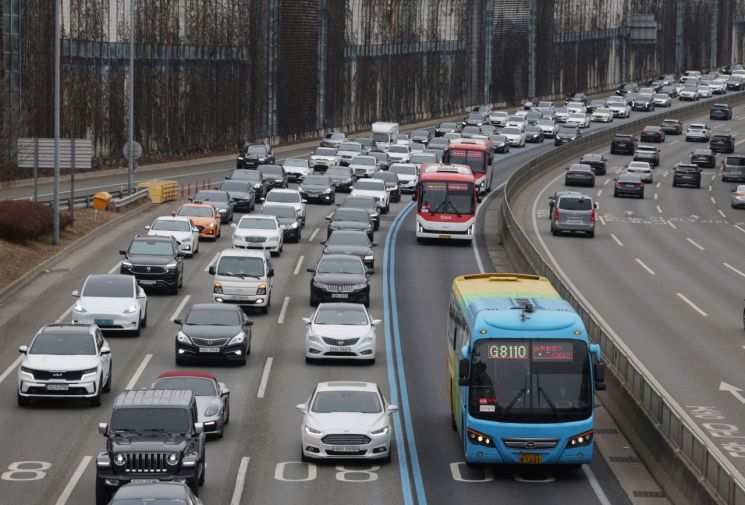 Roads congested due to increased traffic during Seol without social distancing
 [Image source=Yonhap News]
Confirmed Cases Rise Again Due to Lunar New Year Holiday
According to the Central Disease Control Headquarters (CDCH) on the 27th, as of midnight on the 26th, the number of new COVID-19 confirmed cases was 35,096, an increase of 15,558 from the previous day (19,538). Compared to a week earlier on the 19th (29,806), the number also rose by 5,290. This is the first time in 30 days since December 27 last year that the number of confirmed cases has increased compared to the previous week.
This is attributed to a significant increase in movement during the Lunar New Year holiday period and a surge in diagnostic testing after the holiday ended. Health authorities believe that the increase in confirmed cases due to holiday movement will not affect the downward trend of the winter wave.
Professor Kim Woo-joo, an infectious disease specialist at Korea University Guro Hospital, said, “Since the winter wave is in its declining phase, the impact of the Lunar New Year holiday will not be significant,” but he also predicted, “As the dominant Omicron variant is soon shifting from BA.5 to BN.1, and one in five confirmed cases is a reinfection, there is a possibility of an increase again around late February to early March.” The detection rate of BN.1 in the third week of January (15?21) was 46.3%, up 7.1 percentage points from the previous week (39.2%), while the detection rate of the previously dominant BA.5 dropped to 22.0%. The estimated reinfection rate in the second week of January (8?14) was 21.48%, the highest since the outbreak of COVID-19 in February 2020. Coupled with this, if the indoor mask-wearing mandate is changed to a recommendation on the 30th, confirmed cases may rise again.
COVID-19 Fluctuates Like This... Is It Time to Manage It Like the Flu?
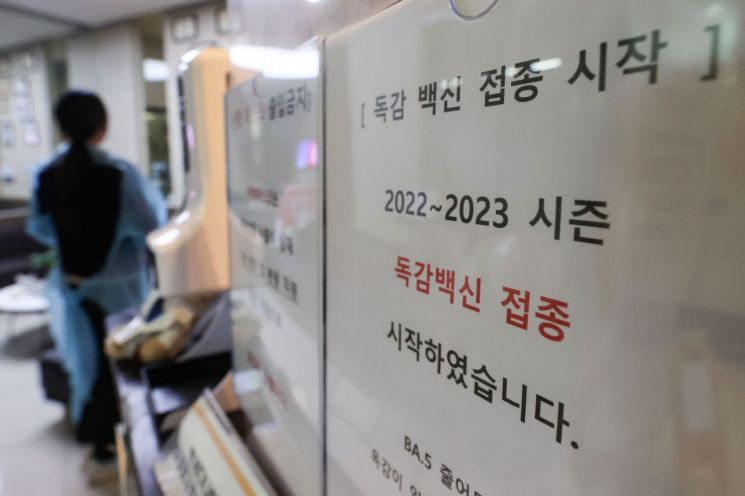
It has been four years since COVID-19 emerged, and with the epidemic named up to the “7th wave,” there are calls to manage quarantine measures at the level of the flu. The initial COVID-19 fatality rate, which was in the 2% range, has dropped to 0.08% as of the first week of January due to vaccination and antibody acquisition. At one point, COVID-19 was classified as a first-class legally designated infectious disease, but it was downgraded to second-class in April last year, and now there are suggestions to manage it as a fourth-class disease, the same level as the flu. For second-class diseases, cases must be reported within 24 hours and mandatory isolation periods are required, whereas for fourth-class diseases, reporting is within seven days and isolation is recommended but not mandatory.
Regarding this, health authorities say it is a matter that can be reviewed after the World Health Organization (WHO) lifts the international public health emergency status for COVID-19, which has been in place since late January 2020. The WHO’s International Health Emergency Committee is scheduled to meet on the 27th. If the WHO lifts the emergency status, health authorities will adjust the current domestic COVID-19 crisis level from “serious” to “alert” or “caution.” Authorities believe that to manage COVID-19 at the flu level, the following key indicators must be met: ▲ an average daily death toll of 10?20 or fewer, weekly deaths of 50?100 or fewer, and ▲ a fatality rate of 0.05?0.1%.
Expert: "COVID-19 Still Causes Over 20 Deaths a Day Even With Masks"
Experts say that based on current health indicators, COVID-19 should not be compared to the flu.
Professor Eom Jung-sik of Gachon University Gil Medical Center’s Infectious Diseases Department said, “COVID-19 is more than 10 times more transmissible than the flu, and oral antiviral treatments are more than 10 times more expensive than flu medications. While the flu is seasonal, COVID-19 still results in tens of thousands of confirmed cases daily even with mask-wearing, and at least 20 deaths per day. The argument to manage it like the flu is mostly made by people who do not prioritize protecting the lives of the public,” he stated. Professor Kim Woo-joo added, “COVID-19 still has a transmission period of seven days, and if it is managed like the flu, it means that COVID-19 patients and cancer patients could be in the same hospital wards in general hospitals. This is not a claim based on scientific quarantine measures at all.”
© The Asia Business Daily(www.asiae.co.kr). All rights reserved.


















