Food Industry Continues Price Increase Trend at Start of Year
Beverages, Ice Cream, and Food Prices Rise One After Another
Consumers Complain... Industry Says "Unavoidable Increase"
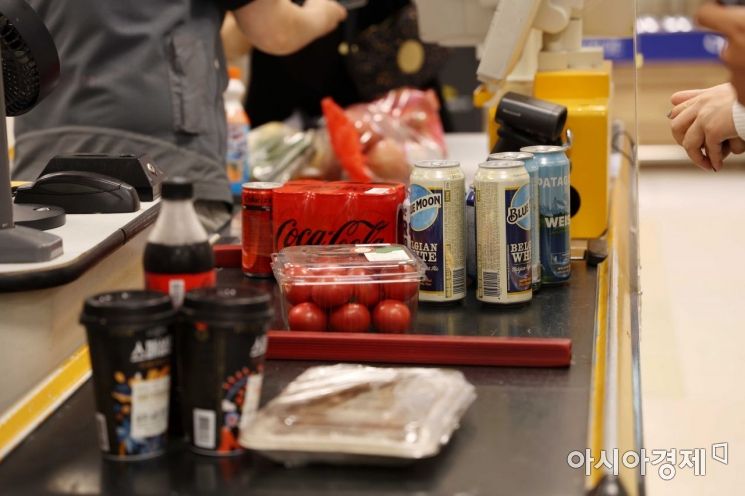
Price increases in the food industry, which continued throughout last year, are starting again from the beginning of this year. Major food companies plan to raise product prices one after another after the Lunar New Year holiday. Following heating costs, widespread food price hikes are expected, making it even harder for ordinary people to manage their finances.
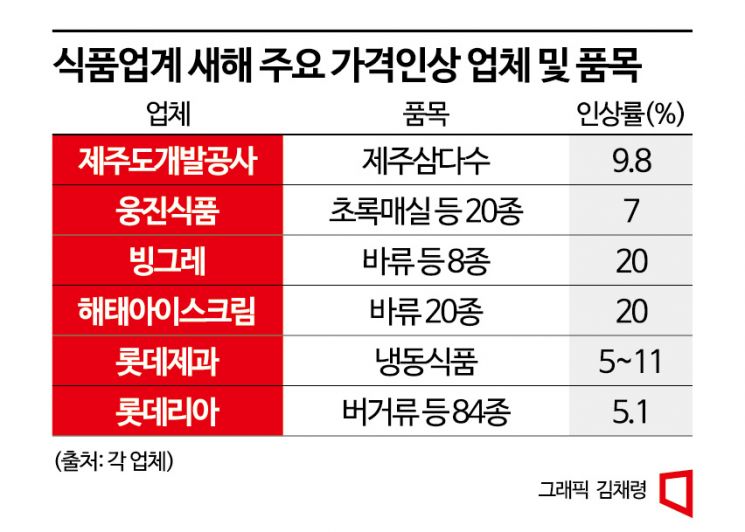
According to the industry on the 27th, the wave of product price increases at the beginning of the year has started mainly in the beverage sector after the Lunar New Year holiday. Jeju Development Corporation will raise the ex-factory price of Samdasoo by an average of 9.8% starting next month on the 1st. This is the first price increase in five years since 2018. After the increase, Samdasoo will be sold at 480 won for 500ml and 1,080 won for 2ℓ at major supermarkets. Woongjin Foods also plans to raise convenience store prices of 20 beverage items by at least 100 won and up to 300 won starting next month. The flagship product, Chorok Maesil, will increase by 7.6%, from 1,300 won to 1,400 won for the 180ml product, and Achim Hetsal will rise by 7.5%, from 2,000 won to 2,150 won for the 500ml product.
Since the raw milk price increase last year, prices of milk, dairy products, and ice cream have been rising one after another. With the raw milk price hike in November last year, milk prices rose simultaneously, leading Seoul Milk Cooperative to increase milk product prices by an average of 6%. Namyang Dairy Products and Maeil Dairies also raised prices of white milk products by an average of 8% and 9.6%, respectively. Other companies such as Dongwon F&B and hy also consecutively raised prices of milk and dairy products. As a result, 'milkflation,' where prices of dairy-based products like dairy products, bread, and ice cream rise, has become full-fledged. Binggrae plans to raise ice cream prices starting next month. This is a price adjustment occurring one year after last year. Accordingly, seven types of ice cream including Melona and Bibibig, as well as Super Cone, will increase by 200 won from 1,000 won to 1,200 won. Haitai Ice Cream will also raise prices of 20 varieties of Barleyu ice cream by an average of 20% starting next month.
Food prices are also on the rise. Lotte Confectionery will raise convenience store prices of frozen products such as pork cutlets and dumplings by 5-11% starting next month on the 1st. After the increase, Chewy Roll Dumplings and Kimchi Roll Dumplings will rise from 3,500 won by 400 won to 3,900 won, and Meat Tong Gyoja and Kimchi Tong Gyoja will increase from 5,400 won to 5,900 won. Fast food is no exception. Lotte GRS's burger franchise brand Lotteria will raise product prices by an average of 5.1% starting next month on the 2nd. A total of 84 items, including 14 types of burgers, will be subject to price increases, with prices rising by an average of 200 to 400 won per product. In addition, prices of other dining-out items are also rising one after another. According to the Korea Consumer Agency's comprehensive price information portal Chamgagyeok, as of December last year, the price of pork belly (converted to 200g) in the Seoul area rose by more than 12% in one year, from 16,897 won to 19,031 won, and gimbap became 13% more expensive, rising from 2,731 won to 3,100 won. Samgyetang also increased by 11%, reaching 15,923 won compared to 14,231 won in the same period last year.
Price increases in the alcoholic beverage industry are also anticipated. The liquor tax, which is levied on alcoholic beverages, is scheduled to increase in April. The liquor tax on beer and Makgeolli (traditional Korean rice wine) will rise by 3.57%, with beer increasing by 30.5 won per liter to 885.7 won, and Makgeolli rising by 1.5 won per liter to 44.4 won. Typically, liquor companies raise prices immediately after liquor tax hikes, so it is expected that liquor companies will simultaneously adjust prices right after the tax increase this time as well.
The industry collectively cites internal and external environmental changes such as rising raw material, logistics, and labor costs due to the prolonged COVID-19 pandemic as reasons for the price hikes, stating that the increases were unavoidable because it became difficult to bear the costs. Although it has been customary to raise product prices at the beginning of the year, last year saw continuous price increases throughout the food industry, with some companies adjusting prices twice a year, leading to greater consumer dissatisfaction. Office worker Ryu Jong-hyun (34) said, "With the heating cost bomb and interest rate hikes, food prices have also become more expensive, making the felt inflation burden even heavier," adding, "My salary remains the same, but nothing is not rising, so it seems I will have to worry all year again."
An industry insider said, "Since last year, raw material prices have been rising along with the exchange rate, and it seems this impact will continue this year as well," adding, "From a corporate perspective, companies have no choice but to consider consumers' reactions, but the accumulated production cost burden has become unbearable."
© The Asia Business Daily(www.asiae.co.kr). All rights reserved.


















