[Asia Economy Yang Nak-gyu, Military Specialist Reporter] The military has repeatedly emphasized that the North Korean drone that violated airspace last month likely did not capture images of the Yongsan area in Seoul, where the presidential office is located. This contradicts the National Intelligence Service's statement that "there is a possibility," and the controversy is expected to continue.
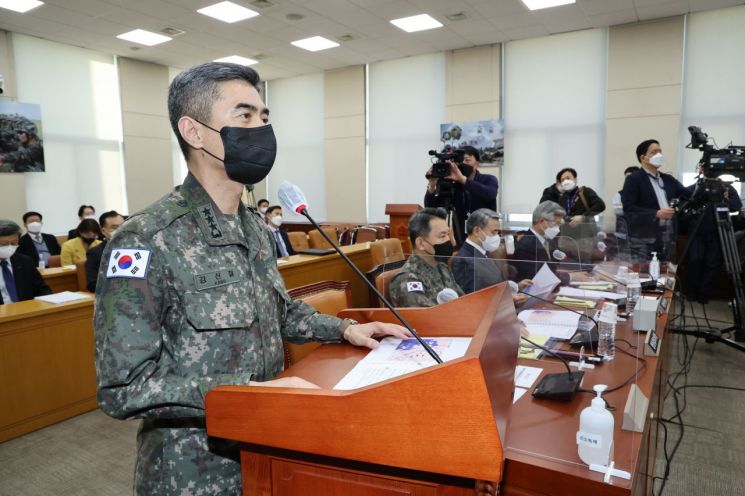
The Joint Chiefs of Staff reported the interim results of the readiness inspection related to the North Korean drone to the National Defense Committee of the National Assembly on the 26th, stating that the drone likely carried a commercial camera, similar to past cases.
In the past, North Korean drones were equipped with cameras such as the Canon EOS 550D (crashed in Paju on March 24, 2014), Nikon D800 (crashed in Baengnyeongdo on March 31, 2014), and Sony A7R (crashed in Inje on June 9, 2017).
Military: "High possibility of carrying commercial cameras as before, but likely did not capture images"
It is presumed that, as before, the drone flew using a pre-input flight path and captured video, likely using vertical downward shooting. However, considering the flight altitude and the performance of commercial cameras previously mounted on drones, the Joint Chiefs judged that capturing images of the Yongsan area was likely restricted.
However, the National Intelligence Service stated in a report to the National Assembly Intelligence Committee on the 5th of last month that "the possibility of capturing images cannot be excluded," presenting a stance different from the military's view that "considering distance, altitude, and enemy capabilities, it is still believed that capturing images of the presidential office, etc., was not possible."
At that time, there were claims both inside and outside the military that since the drone was estimated to have flown about 2 to 3 km above Seoul, it was highly possible that the Yongsan presidential office and the Ministry of National Defense and Joint Chiefs of Staff buildings were sufficiently captured. It remains unclear whether the North Korean drone that temporarily entered P-73 was equipped with cameras or other devices. The drone was not shot down until it returned to North Korea, resulting in failure to secure the drone.
Meanwhile, the Joint Chiefs assessed that the current North Korean drone is similar in size and shape to past drones. They evaluated that the gasoline engine and propeller at the front of the aircraft, the V-shaped tail wing, and the tapered straight wings narrowing toward the tips are similar. The performance is presumed to have been partially improved.
© The Asia Business Daily(www.asiae.co.kr). All rights reserved.

















