2021 National Gender Equality Index Rises 0.5 Points to 75.4 Compared to Last Year
Seoul, Busan, Daejeon, Sejong, Jeju Top Rankings... Chungnam, Jeonbuk, Jeonnam, Gyeongbuk Bottom
[Asia Economy Reporter Yoo Byung-don] The national gender equality index for 2021 was 75.4 points, showing an increase of 0.5 points compared to the previous year.
On the 26th, the Ministry of Gender Equality and Family held the Gender Equality Committee meeting to review and approve the '3rd Basic Plan for Gender Equality Policy' and discussed the 'National Gender Equality Index,' which quantitatively measures the level of gender equality in South Korea.
In accordance with the Framework Act on Gender Equality, the Ministry of Gender Equality and Family has been announcing the level of gender equality since 2010 to understand the nation's gender equality status and to establish and monitor policy directions.
The National Gender Equality Index quantifies the level of women compared to men within a country, with a perfect equality state scored as 100 points.
The index consists of three areas: gender-equal social participation, women's rights and welfare, and gender equality awareness and culture. The sectors include eight fields: economic activity, decision-making, education, welfare, family, health, safety, and culture.
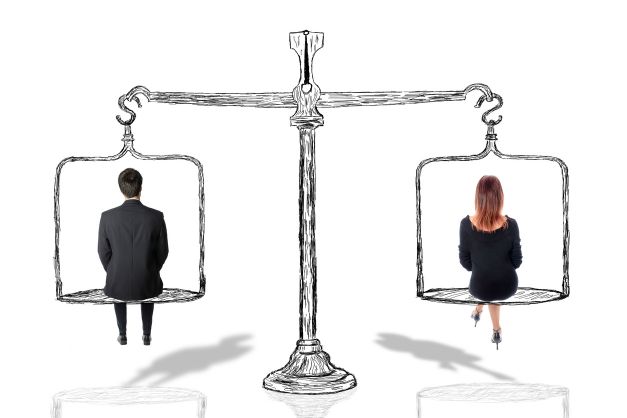
The 2021 National Gender Equality Index scored 75.4 points, with the highest scores by area being ▲women's rights and welfare (82.9 points) ▲gender equality awareness and culture (74.9 points) ▲social participation (69.7 points).
By sector, health (96.7) showed the highest level of gender equality, while the decision-making sector (38.3 points) remained low.
The decision-making sector increased the most among the eight sectors, rising from 36.4 to 38.3 points, influenced by the increased proportion of female public officials at grade 4 and above and female members of the National Assembly, but it still remained the lowest sector.
The family sector rose from 63.6 to 65.3 points due to the continuous increase in male parental leave takers, and the safety sector improved from 72.1 to 73.1 points as overall safety awareness indicators regarding social safety improved.
The regional gender equality index, reflecting regional characteristics, was 77.1 points, up 0.3 points from the previous year.
Analyzing the gender equality levels of 17 regions nationwide into four tiers?top, upper-middle, lower-middle, and bottom?the top regions were Seoul, Busan, Daejeon, Sejong, and Jeju, while the bottom regions were Chungnam, Jeonbuk, Jeonnam, and Gyeongbuk.
The regions where the gender equality index increased compared to the previous year were Sejong and Gyeonggi, while it decreased in Gwangju and Incheon.
By sector, Jeju had the highest gender equality index in economic activity, Daejeon in decision-making, and Seoul in education and vocational training.
However, similar to the National Gender Equality Index, the regional gender equality index showed that the decision-making and family sectors scored lower than other sectors, indicating a need for improvement.
© The Asia Business Daily(www.asiae.co.kr). All rights reserved.

















