Humanities and Social Sciences Allocated 417.2 Billion KRW · Science and Engineering 538.4 Billion KRW
Stepwise Support Measures Including Research Incentives for Doctoral Students
[Asia Economy Reporter Yoo Byung-don] Support for researchers in the humanities, social sciences, and science and engineering fields is expected to be significantly strengthened. Support measures tailored to the growth stages of researchers, starting from doctoral students, have been prepared.
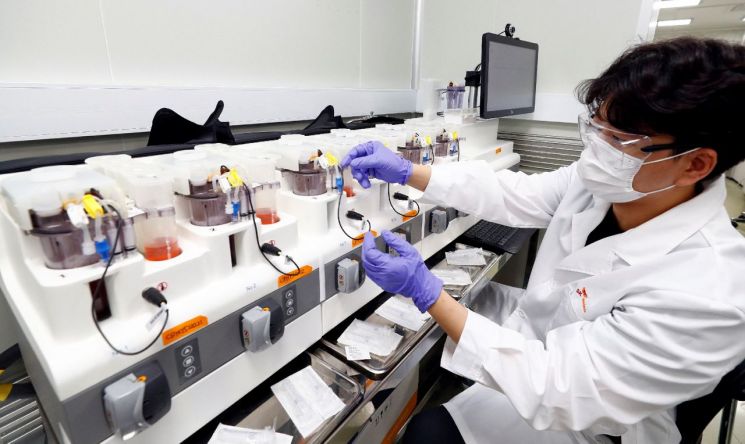
On the 26th, the Ministry of Education announced that it has established and will implement the "2023 Comprehensive Plan for Academic Research Support Projects" to promote balanced development of academic disciplines and build a healthy academic ecosystem in the rapidly changing future society.
This comprehensive plan was finalized through review by comprehensive deliberation committees for each field in the humanities, social sciences, and science and engineering sectors, with a total budget of 955.6 billion KRW allocated for 15,925 projects. Compared to last year, the number of projects increased by about 4%, and the budget increased by about 5%. By field, 8,609 projects in the humanities and social sciences were allocated 417.2 billion KRW, and 7,316 projects in science and engineering were allocated 538.4 billion KRW.
Humanities and Social Sciences Field
◆ Promotion of Humanities and Social Sciences Academic Research (Individual Research) = The budget and support projects have been greatly expanded so that non-permanent researchers at the early stages of academic and research activities can immerse themselves in research in a stable environment. Support increased from 2697 projects with 58.2 billion KRW last year to 3452 projects with 95.2 billion KRW this year. Additionally, a new "Doctoral Student Research Incentive" has been established to support doctoral students to grow into core national research personnel, providing 30 million KRW per person to 300 recipients.
◆ Building Research Infrastructure in Humanities and Social Sciences (Group Research) = Emphasis was also placed on establishing and strengthening research foundations so that research institutes and universities can serve as hubs for academic research. First, the number of convergence and interdisciplinary research projects ("Future Sharing Type") within the Humanities and Social Sciences Research Institute Support Project will be doubled to 4 projects with a budget of 2 billion KRW. A new agenda research field will be established within the Social Science Research Support Project (SSK), with about 3 projects receiving a total of 270 million KRW. The "Humanities and Social Sciences Convergence Talent Cultivation University" project, which supports the establishment of convergence education and research foundations centered on the humanities and social sciences, will also be newly launched. The Ministry of Education plans to select about 5 university consortia and provide a total of 15 billion KRW in support.
◆ Korean Studies Promotion Project = Since last year, the Ministry of Education has been gradually building the "Korean Studies Data Integration Platform" to solidify Korean studies by providing one-stop services for sharing, linking, and integrating Korean studies materials, and collecting and providing important domestic and international ancient books and documents. A total budget of 22.6 billion KRW has been invested in this project. Furthermore, strategic support will be strengthened for regions with weak Korean studies foundations, and foreign language translations of major classical Korean texts selected based on overseas interest and research demand will be supported. Additional points will be awarded for new Korean studies projects selected in regions vulnerable to Korean studies, such as the Middle East, Latin America, and Africa.
◆ Building Academic Research Foundations = In addition, the Ministry of Education plans to strengthen academic research foundations by establishing a joint management system for academic resources and alleviating information gaps in academic research. In particular, the support for voice services of theses applying Optical Character Recognition (OCR) technology will continue to expand specialized services for the visually impaired. Until last year, the service was limited to PDF files (1.03 million cases), but the target has been expanded to all file formats, including image files (estimated 1.7 million cases).
Science and Engineering Field
◆ Support for Next Generation Scholars = Research opportunities will be provided according to the growth stages of the next generation of scholars, from doctoral students to outstanding postdoctoral researchers. Research incentives of 9 billion KRW will be provided to 600 doctoral students, and domestic and overseas training expenses of 46.3 billion KRW will be supported for 971 postdoctoral researchers.
◆ Building University Research Foundations = Support plans have also been prepared for 160 university-focused research institutes (123.2 billion KRW) and 68 core research support centers (40.2 billion KRW) to establish sustainable research hubs within universities and provide stable research environments for researchers. Especially this year, the university-focused research institute project will be partially reorganized to autonomously establish and operate a system that supports universities in comprehensively managing university research institutes and supporting innovative joint research by young faculty and young postdoctoral researchers, launching the new LAMP (Leading Academic Multi-Platform) project. Through the LAMP project, 4 billion KRW per year will be provided to 8 universities located outside the metropolitan area.
◆ Support for Balanced Academic Development = Research funding of 294.3 billion KRW will be provided for 5,038 projects in relatively disadvantaged researchers and academic fields, such as non-permanent research personnel and researchers outside the metropolitan area. Specifically, 164.6 billion KRW for 3,236 projects in creative and challenging research foundations, 27.4 billion KRW for 269 protection research projects, 95.6 billion KRW for 1,508 outstanding scientists at regional universities, and 6.7 billion KRW for 25 interdisciplinary convergence projects have been allocated.
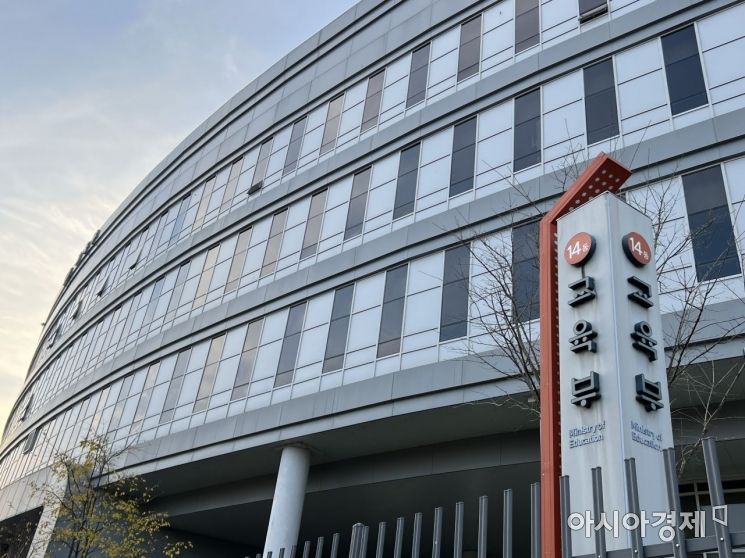
The Ministry of Education, together with specialized institutions such as the National Research Foundation of Korea, will establish detailed implementation plans for academic research support projects in the humanities, social sciences, and science and engineering fields, and will professionally and systematically manage and operate all aspects of the projects, including project selection, agreements, and performance management. The ministry plans to continuously listen to difficulties faced by participating institutions or researchers during project implementation and actively reflect them in project promotion.
Lee Ju-ho, Deputy Prime Minister for Social Affairs and Minister of Education, emphasized, "It is important to nurture core talents in basic academic fields to solve the challenges of future society," adding, "We will systematically support the strengthening of academic research capabilities to induce creative knowledge creation by researchers and expand investment in basic academic fields in the humanities, social sciences, and science and engineering to support balanced academic development."
© The Asia Business Daily(www.asiae.co.kr). All rights reserved.
![Clutching a Stolen Dior Bag, Saying "I Hate Being Poor but Real"... The Grotesque Con of a "Human Knockoff" [Slate]](https://cwcontent.asiae.co.kr/asiaresize/183/2026021902243444107_1771435474.jpg)

















