December Bills... Complaints of 'Heating Cost Bombs' Continue
Concerns Grow Amid 'Strongest Cold Wave'... More Problems Ahead
Additional Increases in City Gas and Electricity Rates in Q2
[Asia Economy Reporter Yoon Seul-gi] Citizens' worries over heating costs are deepening during the winter season. Following last month, the sudden cold wave at the end of January caused a sharp increase in heating usage, and with additional hikes in city gas and electricity rates likely, there are concerns about receiving another shockingly high heating bill.
Citizens began to feel the impact of the city gas and electricity rate increases when they received their December bills, as heating usage became fully active. As the bills were issued to each household, numerous appeals about the "heating bill bomb" appeared across various online communities and social networking services (SNS). In particular, the perceived rate increase was greater in older apartments with poor insulation or homes using central heating systems.
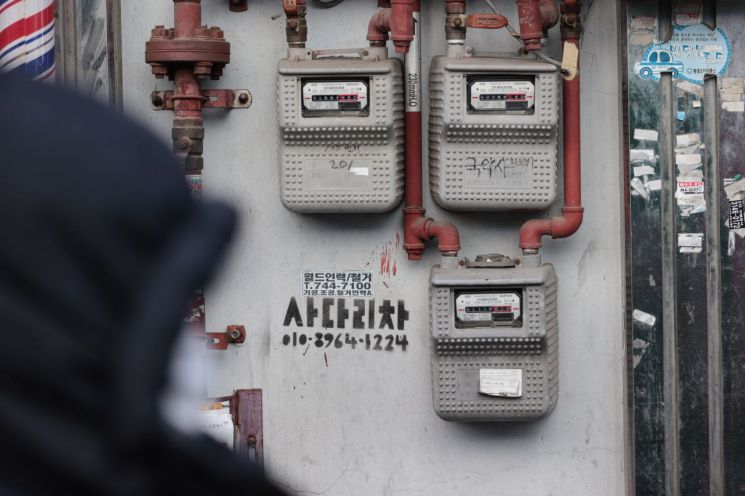
Heating costs are divided into city gas (for central and individual heating households) and heat charges (for district heating), with city gas rates soaring 38.4% over the past year. The government raised city gas rates for residential and industrial use by 5.47 KRW per megajoule (MJ, a unit of gas heat energy) four times last year (in April, May, July, and October).
Heat charges (district heating) jumped 37.8% compared to last year. According to Korea District Heating Corporation, residential heat charges per 1 megacalorie (Mcal) were raised three times in 2022: 66.98 KRW in April, 74.49 KRW in July, and 89.88 KRW in October.
The main cause of the increase in public utility rates such as city gas and electricity is the Russia-Ukraine war that began in February last year. Amid the endemic phase of COVID-19, the war triggered instability in the energy supply chain, prompting rate hikes. According to the Ministry of Trade, Industry and Energy, the price of liquefied natural gas (LNG), the raw material for city gas, rose 128% year-on-year to 34.24 USD per MMBtu (a unit of heat energy) from 15.04 USD.
The higher LNG import price directly influenced the rise in heating costs. City gas wholesale rates are set by Korea Gas Corporation, which imports LNG, and each city and province determines retail rates considering supply costs. For heat charges, district energy providers adjust rates linked to city gas prices.
The problem is that the strongest cold wave of this winter hit after the Lunar New Year holiday. Due to the cold weather, heating demand has increased, making the heating cost burden heavier than in previous years.
Moreover, with the possibility of additional increases in city gas and electricity rates in the second quarter (April to June) of this year, household difficulties are expected to continue for the time being. The Ministry of Trade, Industry and Energy froze gas rates in the first quarter considering the winter heating cost burden, but since Korea Gas Corporation's cumulative losses have reached 9 trillion KRW, it plans to raise heating costs starting from the second quarter.
© The Asia Business Daily(www.asiae.co.kr). All rights reserved.
![User Who Sold Erroneously Deposited Bitcoins to Repay Debt and Fund Entertainment... What Did the Supreme Court Decide in 2021? [Legal Issue Check]](https://cwcontent.asiae.co.kr/asiaresize/183/2026020910431234020_1770601391.png)
















