From Original Flower Boy Actor to Entrepreneur
Created Innovative Products but Collapsed Due to Counterfeits
Patents Useless, Proper Protection Measures Needed

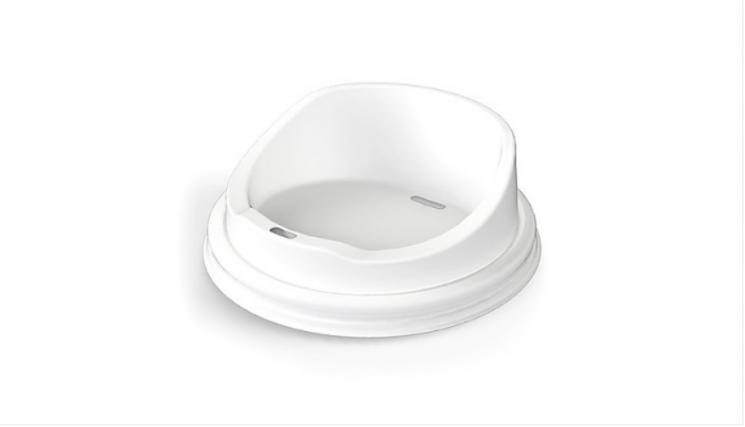
[Asia Economy Reporter Choi Donghyun] Kim Seong-il, CEO of K&Lab Sales, who developed the 'Meogrid' (a disposable coffee cup lid with an extended drinking spout) for the first time in Korea. Many coffee shops use the Meogrid developed by Kim. When asked about his current business status, he sighed deeply. "It's very difficult because of counterfeits. People who buy counterfeit products even though they know are more unscrupulous than those who make them. The policy authorities who know this fact but remain indifferent are an even bigger problem."
Kim's original profession was an actor. He debuted as an MBC 13th batch public recruitment talent in 1981. He was active across dramas and films, including his role as Nak-hwa-yu-su in the drama 'Mupungjidae' (1989). He was once called the 'original flower boy actor of the 1980s.' After deciding to leave the entertainment industry temporarily due to conflicts with his wife, Kim went to study in the United States in 1995. It was then that he transformed into a businessman. He developed the world's first 5.1 channel headphones and grew the company to 50 billion KRW in sales within three years. However, due to a contract mistake, he became credit-impaired overnight and had to wind down the business. That was in 2012.
Kim's Meogrid was born by chance during a business trip to the U.S. in 2002 when his headphone business was thriving. While drinking hot coffee, he burned his lips and immediately thought of an image of a Meogrid that could prevent this. He quickly sketched it on a napkin and developed it, receiving a patent in 2004. After the headphone business failed, he supplemented the patent and added designs to relaunch the Meogrid, re-registering the patent in 2014. At that time, there were three registered Meogrid patents and 74 design registrations.
At first, it went well. Self-employed individuals and a famous coffee franchise company A, operated by a major corporation at the time, sought Kim's products. They also exported to coffee shops in the U.S. The production method involved OEM at a factory located in Sancheong-gun, Gyeongnam Province, then supplying to an online shopping mall selling coffee specialty products. A box of 1,000 pieces costs 25,000 KRW, or 25 KRW per piece.
Then, in 2020, Kim participated in a coffee expo. While setting up a booth and actively promoting his products, a coffee shop owner approached him to inquire about the price. When Kim answered, the owner clicked his tongue, saying that the same product was sold much cheaper elsewhere and asked who would buy it. Kim said, "Counterfeit products made domestically and abroad began to flood the market, and existing clients gradually demanded price reductions." He added, "Even when I warned that using counterfeits could lead to legal problems later, they ignored it, saying they would deal with it then."
This was also when company A's demands increased. Kim revealed, "Supplying to a large corporation already has low profit margins, but if even a small defect was found in the product, we had to write a report and prepare measures to prevent recurrence. It was too demanding."
Kim tried to resolve the counterfeit issue legally but soon gave up. The multi-million won litigation costs and years-long lawsuits were too burdensome. There were dozens of counterfeit product types, and even lawyers and patent attorneys around him advised that responding to each one individually would cause more harm than good. Kim explained, "At that time, punitive damages for patent infringement had not been introduced, so even if patents were infringed, paying a few tens of millions of won in fines was enough." He added, "Even after the system was introduced in 2019, the requirements for proving intentional infringement are interpreted too strictly, and rights holders are often burdened with excessive proof obligations."
Kim reduced the number of patents because he could not afford the huge patent costs. Currently, he holds two Meogrid patents and about 40 designs. He still pays several tens of millions of won annually for patent maintenance fees. Kim said, "Even if we spend hundreds of millions of won developing products and pay tens of millions annually for patent maintenance, small business owners like us find it difficult to properly respond to patent infringement. I hope the government establishes proper protection measures so that a single creative idea can become a product and a business that defines an era and supports many people."
© The Asia Business Daily(www.asiae.co.kr). All rights reserved.













