Elderly and Children Especially Vulnerable
Avoid Outdoor Activities During Cold Waves
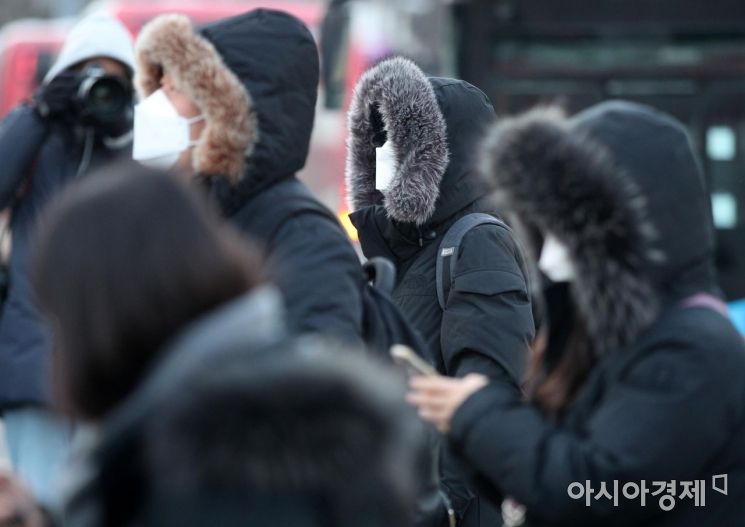 In the cold wave hitting Seoul, citizens are hurrying on their way to work on the streets of Gwanghwamun. Photo by Hyunmin Kim kimhyun81@
[Asia Economy Reporter Lee Gwan-joo] This winter, the number of patients visiting emergency rooms due to cold-related illnesses has significantly increased amid severe cold waves. As a strong cold wave is forecasted during the Lunar New Year holiday, the Korea Disease Control and Prevention Agency (KDCA) has urged caution regarding cold-related illnesses.
The KDCA announced on the 20th that from the 1st of last month to the 18th of this month, 251 cases were reported through the "Cold-Related Illness Emergency Room Surveillance System," marking a 34% increase compared to the same period last year.
Cold-related illnesses are conditions caused directly by cold temperatures that harm the human body, with hypothermia, frostbite, and chilblains being representative examples. During this period, hypothermia was the most frequently reported illness, accounting for 69% of all patients, and it was most common among the elderly aged 80 and above (25%). There were a total of 10 deaths, all of which were presumed to be due to hypothermia.
During sudden cold waves, the body's adaptability decreases, making individuals vulnerable to cold-related illnesses. It is necessary to refrain from outdoor activities and thoroughly prepare for warmth by using hats, scarves, gloves, and other protective clothing. Elderly people and children are more vulnerable to maintaining body temperature than the general adult population, so special caution is required during cold waves. Additionally, if heating is unavailable, cold-related illnesses should be watched for even indoors.
Furthermore, patients with chronic diseases such as cardiovascular and cerebrovascular diseases, diabetes, and hypertension may experience worsening symptoms, such as a rapid increase in blood pressure due to sudden temperature changes. Therefore, they should avoid sudden exposure to cold and excessive physical activity. Also, since drinking alcohol causes body heat to rise and then body temperature to drop rapidly, impairing the perception of cold and increasing risk, it is advisable to avoid excessive drinking.
Ji Young-mi, director of the KDCA, stated, "Cold-related illnesses can be prevented with appropriate measures in advance, so please follow health guidelines to prepare for cold waves." She added, "As severe cold is expected nationwide from the last day of the Lunar New Year holiday, special attention and care are needed for vulnerable groups such as the elderly, patients with underlying diseases, homeless people, children, and outdoor workers."
© The Asia Business Daily(www.asiae.co.kr). All rights reserved.

















