Ahead of February Monetary Policy Meeting, 'Interest Rate Freeze' Gains Weight
Governor Lee Chang-yong Also Hints at 'Dovish' Remarks
The Bank of Korea has stated that it will continue to operate its monetary policy with a focus on price stability this year, but market expectations for a freeze on the base interest rate are growing. This is because the inflation rate is expected to fall to the 3% range in the second half of the year, while the economic growth rate is increasingly likely to be worse than initially expected. Governor Lee Chang-yong of the Bank of Korea recently reinforced this outlook by making dovish (monetary easing-preferred) remarks.
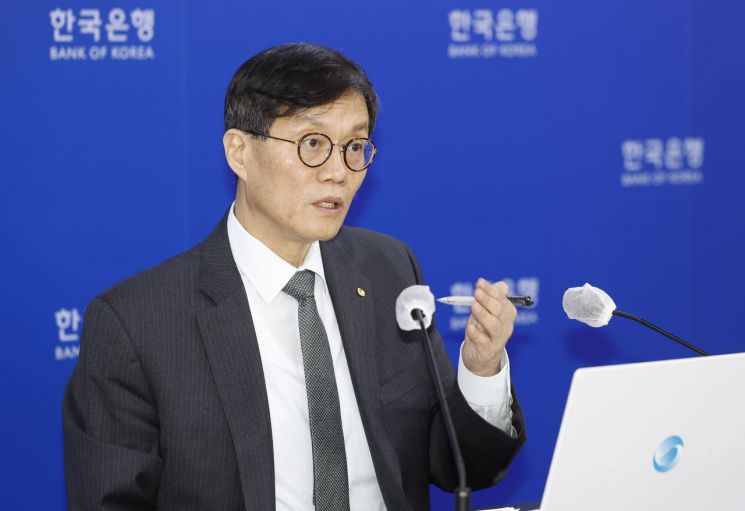 Lee Chang-yong, Governor of the Bank of Korea, is explaining the base interest rate hike at a press conference held on the 13th at the Bank of Korea in Jung-gu, Seoul. [Image source=Yonhap News]
At a press conference held after the Monetary Policy Committee meeting on the 13th, Governor Lee responded to some expectations of monetary easing by saying, "I don't think it should be interpreted as a freeze on interest rates starting now," adding, "The inflation rate was around 5% in January and February, so monetary policy should be operated with a focus on inflation for the time being." Although the Bank of Korea has raised the base interest rate seven consecutive times for the first time in history, and Governor Lee has repeatedly emphasized price stability, which could be read as a signal for continued rate hikes, the market has instead seen growing expectations for a rate freeze.
Jina Kim, a researcher at Eugene Investment & Securities, explained right after the Monetary Policy Committee meeting, "The future path of the base interest rate is more likely to be a freeze rather than a hike," adding, "The most notable change in the January Monetary Policy Committee was that they became serious about 'growth risks'." Despite the Bank of Korea lowering its growth forecast in the economic outlook in November last year, it hinted at further downward revisions this time, and in the monetary policy direction statement, it mentioned growth risks and financial stability risks before inflation as factors to consider in future rate decisions, indicating a shift in sentiment.
Governor Lee said that among the Monetary Policy Committee members, three favored freezing the rate at 3.5%, while the other three were open to raising it to 3.75%, but the members favoring 3.75% were closer to a stance of not ruling out a hike depending on circumstances rather than insisting on a hike, making it difficult to interpret this as hawkish. In particular, the revision in the monetary policy direction statement from the previous phrase "the need to continue the rate hike stance for the time being" to "the need to continue the tightening stance" strengthened expectations for a rate freeze next month.
Inflation is also showing signs of stabilization. According to the Producer Price Index released by the Bank of Korea on the 20th, producer prices in December last year fell by 0.3% compared to the previous month. This marks two consecutive months of decline following November's -0.3%. The decline was especially large in coal and petroleum products (-8.1%) and computers, electronics, and optical equipment (-1.2%). The downward trend in international oil prices and the won-dollar exchange rate, which had been soaring last year, had a significant impact. The Consumer Price Index also shows a somewhat slowed rate of increase since July last year (6.3%).
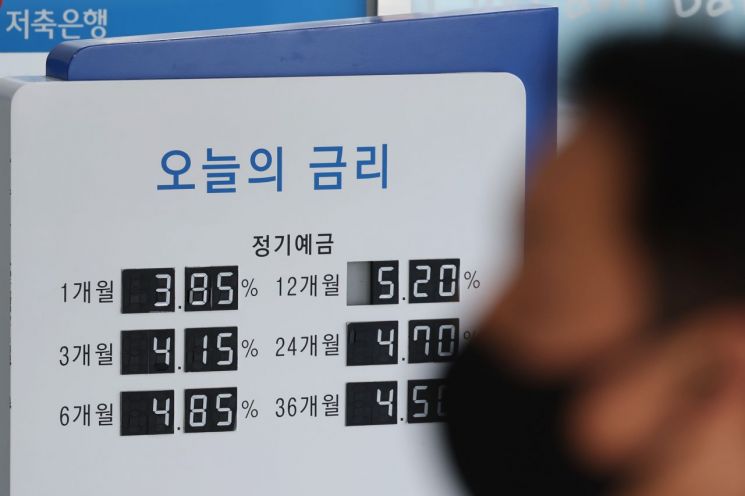
Governor Lee also told foreign journalists recently, "Last year, the inflation rate exceeded 5% and accelerated, so raising interest rates was a priority to reduce negative impacts on the economy and real estate market," but added, "Now that interest rates are already at a high level, we need to observe what effect this has on inflation." This was interpreted by the market as a statement closer to a rate freeze than a hike.
If opinions among Monetary Policy Committee members are split 3 to 3 on a rate hike at next month's meeting, Governor Lee would hold the 'casting vote,' and given his essentially dovish remarks, a freeze has become even more likely. Jaekyun Ahn, a researcher at Shinhan Investment Corp., described Governor Lee's remarks as 'dovish' and explained, "If the future inflation trend stabilizes as currently forecasted, the market's expectation that the monetary policy direction will shift toward easing is not entirely wrong."
© The Asia Business Daily(www.asiae.co.kr). All rights reserved.


















