New Year's and Seollal Greetings: "Congratulations" Instead of "Lots of Luck"
Dumpling Soup Instead of Rice Cake Soup... "No Glass Noodles in Dumpling Filling"
Seollal Money Dominated by Men... Kim Il-sung Father and Son Statue Tribute
[Asia Economy Reporter Jang Hee-jun] North Korea, which shares the same roots as South Korea, also has a 'Seol holiday' (Lunar New Year). In South Korea, people eat rice cake soup (tteokguk) while jokingly saying "You gain a year of age with one bowl," and play noisy yutnori games with relatives they haven't seen in a long time. Bowing to the elders and giving generous sebaetdon (New Year's money) are also heartwarming scenes of Seollal. What is the Seol holiday scene like in the North?
"Happy New Year!"
According to the Ministry of Unification on the 22nd, the North Korean authorities in the past only recognized the solar New Year (January 1st, our New Year's Day) as a holiday. This was because Chairman Kim Il-sung defined folk holidays as 'old' feudal remnants and abolished the customs.
Over time, from 1972, Chuseok (Korean Thanksgiving) was allowed for ancestral rites, and in 1988, Chuseok was recognized as a holiday. Then, under the direction of National Defense Commission Chairman Kim Jong-il, the Lunar New Year (Seollal) was revived from 1989, and from 2003, the lunar New Year was observed instead of the solar New Year. The Lunar New Year officially became the 'Seol holiday' in 2006.
In South Korea, people exchange greetings like "Happy New Year" around the New Year and Seollal holidays. In North Korea, it is said that people greet each other with "Happy New Year." Recently, as South Korean movies and dramas have circulated widely among residents, it is occasionally reported that the expression "Happy New Year" is also used.
South Korea has a three-day holiday starting from the day before Seollal, but in North Korea, the concept of 'holiday = day off' is not institutionalized. This is because the North Korean Cabinet must officially announce each year which folk holidays are designated as days off. It is also hard to imagine substitute holidays occurring when holidays coincide with 'red days' (public holidays) like this Seollal in North Korea.
Instead of Tteokguk, Manduguk... "Bigger than an adult's fist"
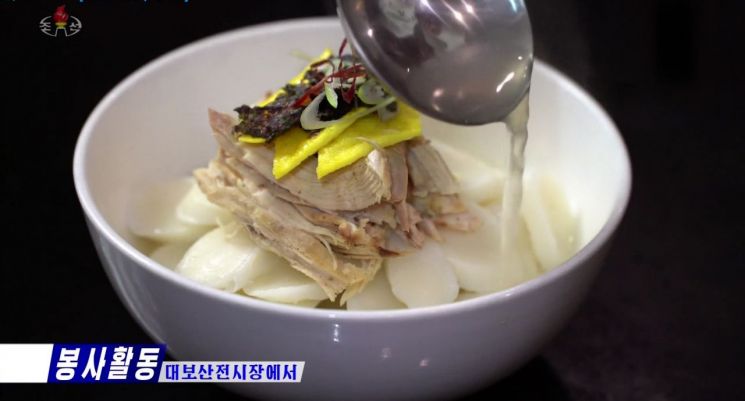
What about holiday food? Unlike South Korea, where tteokguk (rice cake soup) comes to mind when thinking of Seollal, North Koreans reportedly enjoy manduguk (dumpling soup). They also eat tteokguk or tteok-manduguk (rice cake and dumpling soup), but the further north you go, the more common manduguk is. This reflects the cultural history of cultivating millet, sorghum, and potatoes mainly in mountainous areas with a climate unsuitable for rice farming, unlike South Korea, which has many granaries.
In Pyongyang, where supplies are abundant, they sometimes eat tteok-manduguk made with meat broth, and in the Kaesong region, they enjoy tteokguk with small rice cakes called joraengi-tteok. They make broth with pheasant meat, but if pheasant meat is unavailable, they use chicken or onions. Unlike South Korea, where tteokguk can be eaten year-round, in North Korea, tteokguk is considered a winter food.
A North Korean defector, Ms. Kim (38), recalled, "During holidays, we used to sit around my mother and make dumplings." She explained, "In South Korea, dumplings are made about bite-sized, but when I was in the North, they were made bigger than an adult's fist. The filling usually included pork, dried radish greens (siraegi), or tofu. Unlike South Korea, they did not put glass noodles in the dumplings."
In addition, North Korea's representative Seol holiday foods include glutinous rice cakes (chaltteok), white rice cakes (baekseolgi), jeolpyeon (steamed rice cakes), as well as pancakes (jijimi) and grilled meat. Similar snacks like yakgwa (honey cookies), gangjeong (sweet rice puffs), sujeonggwa (cinnamon punch), and sikhye (sweet rice drink) are also considered holiday foods. However, ordinary people suffering from food shortages prepare food according to their means and share it with their families rather than preparing special dishes.
Yutnori is a must during holidays... 'Seol greeting performances' at the government level
Traditional folk games are similar to those in South Korea. The most popular game is yutnori. A North Korean defector, Ms. Shin (49, female), recalled, "On days when relatives gathered, families usually divided into teams and played yutnori. There was even a saying that the year's fortune was decided by the Seollal yutnori game, so the competitive spirit was quite strong."
The North Korean authorities encourage 'national sports' based on traditional folk games. These include ssireum (Korean wrestling), swing riding, neolttwigi (seesaw jumping), taekwondo, and tug-of-war. They hold national ethnic sports competitions with individual, team, and provincial contests. Especially since Kim Jong-un took power, 'making sports a part of daily life' has been emphasized as a major leisure activity.
However, the leisure activity most enjoyed by 'people these days' is watching movies, performances, or TV. Although electricity conditions are poor, it is known that the government supplies electricity during Seollal. Recently, watching TV using batteries or portable devices with external movies and dramas brought in through markets has become popular.
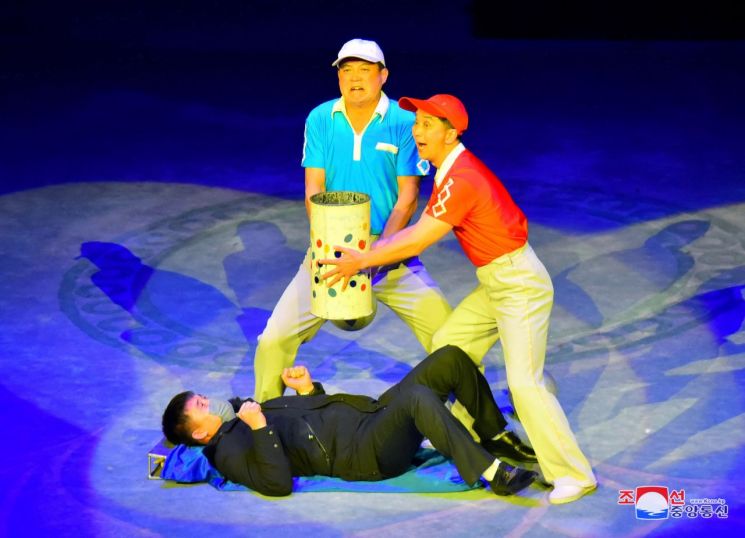
The government also holds 'Seol greeting performances' with large attendance of residents. Last February's Seollal saw celebratory performances at the Pyongyang National Theater and Pyongyang Circus Theater. Under the attendance of party and government officials, a 'Seollal horse racing event' was also held. Especially since Kim Jong-un's rule, large-scale fireworks and drone shows have been organized, offering spectacles that exude a 'capitalist scent.'
In North Korea, where regional travel is difficult, people go to restaurants instead of 'mass migration'
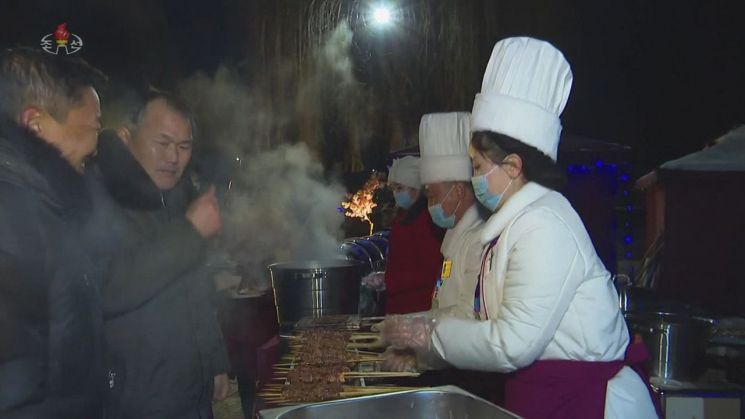 Residents in front of street stalls at the North Korean Lunar New Year equestrian stadium Photo by Yonhap News
The most familiar scene during the holiday is 'traffic jams.' In South Korea, highways are packed with vehicles heading home or traveling, resembling parking lots. In contrast, in North Korea, regional travel is not free, making travel unimaginable. This is because one must obtain a 'travel permit' from the authorities, and transportation conditions are poor.
There are certificates that permit travel: business travel certificates and travel certificates, corresponding to official and personal reasons respectively. After the economic crisis, there was a period when people bribed officials to get travel certificates for business purposes. However, in recent years, due to COVID-19, travel restrictions have tightened, making even short-distance travel difficult.
Because of this, restaurants get crowded during Seollal in North Korea. In South Korea, restaurants close during holidays, but in North Korea, where people cannot travel freely, restaurants become busy with customers coming to eat Seol holiday food. Holiday food prepared at home is considered a 'special meal' eaten at restaurants in North Korea.
Also, being able to go to a restaurant and eat Seol holiday food is regarded among residents as a symbol of lifestyle and wealth. North Korean media routinely show residents enjoying various dishes at representative restaurants such as Okryugwan, Cheongryugwan, and Sinhungwan in Pyongyang and other regions during holidays, reflecting this context.
Bowing to Kim Il-sung and Kim Jong-il statues... Calendars only for the 'wealthy'
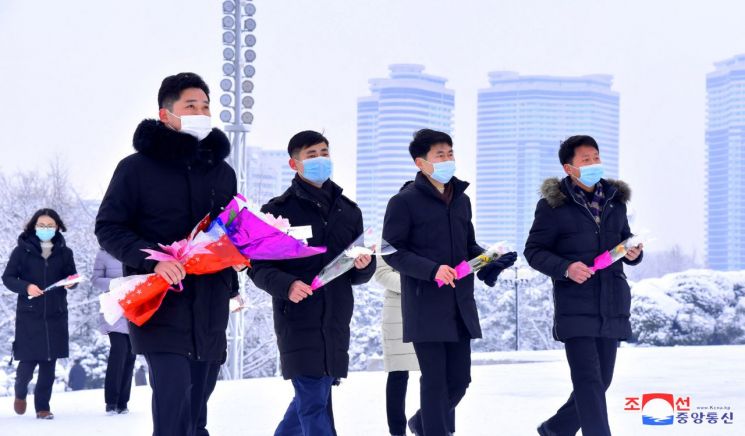 North Korean residents paying tribute at the statues of Kim Il-sung and Kim Jong-il during Seollal (Lunar New Year)
 [Image source=Yonhap News]
A North Korean defector, Ms. Jung (52, female), said, "I don't know much about celebrating the Lunar New Year in the North because we didn't celebrate it, but there was a culture of visiting neighbors during the solar New Year and receiving sebaetdon. However, girls were not allowed to knock on others' doors, so only boys collected sebaetdon. I remember feeling confused and upset about that when I was young."
There is also 'sebae' (New Year's bow) in North Korea. However, unlike South Korea, where people visit ancestors' graves around Seollal, it is customary to visit the Kumsusan Palace of the Sun in Pyongyang, where the bodies of Chairman Kim Il-sung and National Defense Commission Chairman Kim Jong-il are enshrined, or statues of Kim Il-sung and Kim Jong-il erected across North Korea to offer flowers. The Rodong Sinmun emphasizes this custom as "upholding the party's wise leadership, Juche ideology, and national identity."
Another difference in Seol holiday scenes is the calendar. Unlike South Korea, where institutions and companies distribute calendars at the start of the year, calendars in North Korea are precious items owned only by the elite. While calendars are considered unnecessary in South Korea, where smartphone use is common, they are 'a distant dream' for North Korean residents.
Just as wealthy families hang famous paintings in their homes to show off wealth, they flaunt their wealth with luxurious calendars, while ordinary people buy calendars with all twelve months printed on one page. In recent years, due to border closures and quarantine controls, materials like paper and ink have become scarce, causing calendar prices to rise.
© The Asia Business Daily(www.asiae.co.kr). All rights reserved.



















