[Asia Economy New York=Special Correspondent Joselgina] Despite signs that soaring inflation in the United States has peaked and is slowing down, tightening remarks continue to pour out daily from inside and outside the central bank, the Federal Reserve (Fed), indicating that interest rate hikes will continue for the time being. This is because factors that still fuel inflation are scattered at the base, and the overheated labor market is not cooling down easily. Jamie Dimon, chairman of JP Morgan Chase, known as the "Emperor of Wall Street," warned that the terminal rate could exceed 5% and even surpass 6%.
◆Flood of Hawkish Remarks
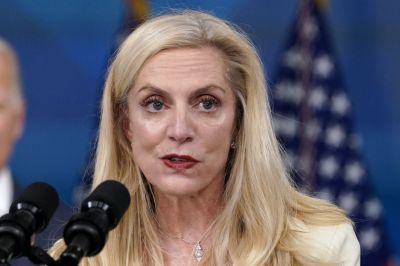
Fed Vice Chair Lael Brainard confirmed on the 19th (local time) during a speech at the University of Chicago Booth School of Business that despite recent signs of inflation indicators slowing, the Fed's monetary tightening policy stance will not change. He emphasized, "Despite recent easing, inflation remains at a high level," and "It is necessary to maintain a restrictive monetary policy for the time being until there is confidence that the 2% target can be reached."
On the same day, Susan Collins, President of the Boston Federal Reserve Bank, also said, "Additional rate hikes are needed to slightly exceed the 5% level," and "After that, rates need to be maintained at that level for some time." She noted that there is "a lot to be done" regarding price stability and predicted that it will take considerable time until the labor market supply-demand imbalance is resolved.
These remarks followed those of James Bullard, President of the St. Louis Fed, and Loretta Mester, President of the Cleveland Fed, who are representative hawks within the Fed, suggesting a terminal rate above 5.25%. This indicates that despite recent easing trends in the Consumer Price Index (CPI) and Producer Price Index (PPI), high interest rates may last longer than initially expected. Currently, the U.S. benchmark interest rate is 4.25?4.5%, and the Fed's year-end rate forecast presented in the December dot plot is 5.0?5.25% (median 5.1%).
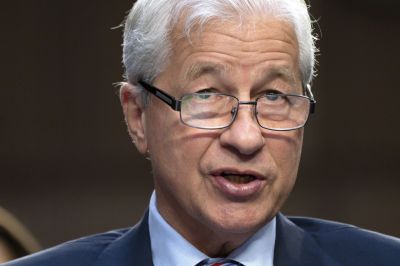
Hawkish remarks also increased on Wall Street. Jamie Dimon, attending the World Economic Forum Annual Meeting (WEF, Davos Forum) in Davos, Switzerland, appeared on CNBC's Squawk Box that day and said, "Interest rates will rise above 5%," explaining, "Because I think underlying inflation will not disappear quickly." In particular, Dimon predicted that if the U.S. experiences a mild recession, rates could exceed 6%.
◆Looking into the Background of Tightening Remarks
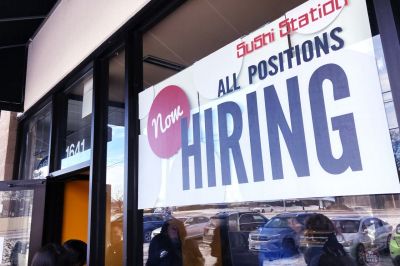
The overheated labor market is the primary reason for the continuous tightening remarks inside and outside the Fed. Although layoffs have accelerated since the second half of last year, especially in interest rate-sensitive sectors such as tech companies and housing, recently released employment data still confirm that the labor market has not cooled down.
The weekly initial jobless claims released that day also added weight to concerns about an overheated labor market. Last week, initial jobless claims in the U.S. dropped to 190,000, the lowest level in four months. This was below the expert forecast of 214,000 and also 15,000 fewer than the previous week. Ed Moya, Senior Market Analyst at OANDA, pointed out, "For the Fed to stop raising rates, the overheated labor market must cool down first."
Concerns about inflation remain as well. Currently, the Fed is cautious about the continued rise in service prices, unlike commodity prices, and the possibility that the overheated labor market will fuel wage increases, prolonging high inflation. This is also why Fed officials continue to voice hawkish opinions despite recent signs of easing in major inflation indicators.
On that day, Dimon pointed out that the recent signs of easing inflation indicators are due to temporary factors such as falling oil prices and China's economic slowdown. He argued, "We have benefited from China's economic slowdown and falling oil prices so far," adding, "Oil prices will rise over the next 10 years, and China will no longer be a factor lowering prices." Brett Ryan, an economist at Deutsche Bank, noted, "Recent inflation indicators show some progress, but some indicators, such as services, point to an overheated labor market, suggesting the Fed still has a long way to go."
Additionally, there is a growing caution among Fed officials that the Fed's current inflation assessment might send the wrong message to the market and hinder the future path, which has contributed to the recent flood of tightening remarks. This acts as a kind of brake to prevent market expectations of a pivot (direction change) from spreading due to eased inflation indicators. Concerns about such overinterpretation were also pointed out in the minutes of the December FOMC regular meeting released earlier.
Fed officials will enter a blackout period starting from the 21st, during which related remarks are prohibited, ahead of the Federal Open Market Committee (FOMC) regular meeting scheduled for January 31 to February 1. The market currently sees a baby step of a 0.25 percentage point rate hike as likely. According to the Chicago Mercantile Exchange (CME) FedWatch, the federal funds (FF) rate futures market reflects a more than 96% probability of a baby step at the February FOMC.
Meanwhile, amid rising tightening concerns, the New York stock market closed lower across the board that day. On the New York Stock Exchange (NYSE), the Dow Jones Industrial Average closed at 33,044.56, down 0.76% from the previous session. The large-cap S&P 500 index fell 0.76%, and the tech-heavy Nasdaq index closed down 0.96%. The Dow and S&P 500 indices continued their decline for the third consecutive trading day.
© The Asia Business Daily(www.asiae.co.kr). All rights reserved.
![Clutching a Stolen Dior Bag, Saying "I Hate Being Poor but Real"... The Grotesque Con of a "Human Knockoff" [Slate]](https://cwcontent.asiae.co.kr/asiaresize/183/2026021902243444107_1771435474.jpg)












