[Asia Economy Beijing=Special Correspondent Kim Hyunjung] Ahead of the Spring Festival (Chunje, the Chinese Lunar New Year), China's internet regulatory authorities have stepped up crackdowns on fake news related to COVID-19. The explanation is to prevent the holiday atmosphere from being dampened by false information and to stop the circulation of incorrect quarantine guidelines. Some view this move as a measure to prevent the spread and organization of dissatisfaction with government policies.
According to the Hong Kong South China Morning Post (SCMP) on the 20th (local time), China's Cyberspace Administration of China (CAC) recently announced on its website that it will strongly respond to rumors related to COVID-19. The CAC emphasized, "This year's crackdown campaign will focus on preventing the spread of social panic," adding, "We will especially focus on cracking down on false information." It further explained, "We will investigate and handle manipulated epidemic trends and quarantine guidelines, fake vaccine information, and incorrect confirmed case experiences," and "Through this, we will ensure that the public is not misled and that social panic does not occur."
This strengthening of censorship by the authorities is interpreted as a response to concerns raised after China effectively abandoned its zero-COVID policy last month and significantly lowered quarantine measures, leading to a sharp increase in COVID-19 cases and deaths. In particular, it appears to be a move to prevent public sentiment from worsening before the Spring Festival period, when exchanges between urban and rural areas are active and entire families gather to converse. The related crackdowns are expected to be concentrated during the special Spring Festival transportation period from the 7th of this month to the 15th of next month.
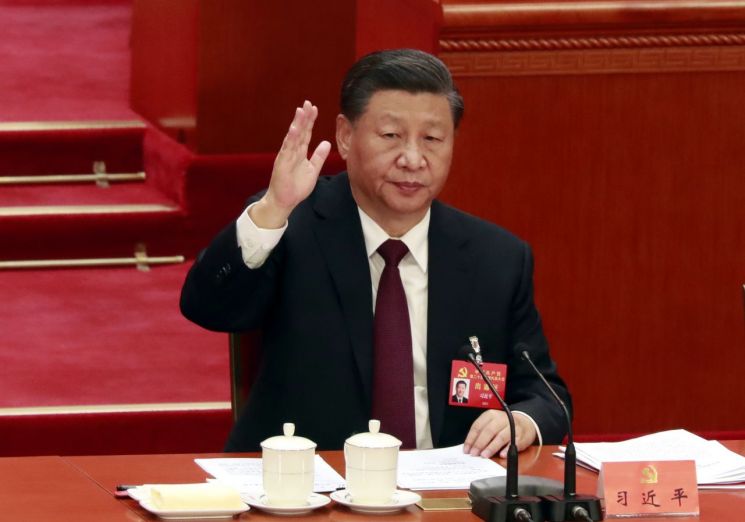
In fact, as the number of COVID-19 confirmed cases has recently surged, issues such as overcrowded medical facilities and overworked medical staff have been raised, and the fact that bodies have piled up at crematoriums or that it has become difficult to obtain emergency medicines like antipyretics has spread mainly on the internet.
Recently, Chinese authorities announced that the nationwide COVID-19 related death toll was 59,938 from the 7th of last month to the 12th of this month, about one month. However, the UK medical data analysis company Airfinity estimated that 584,000 people died during this period. Amid growing distrust of the Chinese authorities' announced data, President Xi Jinping praised the past three years of zero-COVID in a video message, calling it "the right choice" and emphasizing that it "secured valuable time for optimizing epidemic prevention."
According to SCMP, the CAC is also targeting online fan club activities of famous celebrities. This is because they often criticize the personal lives of competing groups and spread false rumors on the internet. The CAC also emphasized that cases where fake stories are spread to solicit donations will be targeted.
In addition, the CAC announced that it will crack down on posts or videos related to flaunting one's luxurious lifestyle, mukbang (eating broadcasts) that encourage overeating, online gambling, fortune-telling and other superstition promotion, and cyberbullying.
© The Asia Business Daily(www.asiae.co.kr). All rights reserved.
![User Who Sold Erroneously Deposited Bitcoins to Repay Debt and Fund Entertainment... What Did the Supreme Court Decide in 2021? [Legal Issue Check]](https://cwcontent.asiae.co.kr/asiaresize/183/2026020910431234020_1770601391.png)
















