Criticism Over Underage Drinking and Sexual Harassment
Responsibility Debate Surrounding Director Koreeda Hirokazu
[Asia Economy Reporter Jeon Jinyoung] As the Netflix drama "Maiko's Happy Table," depicting the lives of Kyoto's geisha apprentices, known as 'Maiko,' gains popularity in Japan, criticism is rising that the drama overly romanticizes the reality of Maiko life.
On the 19th, Weekly Bunshun reported through an interview with former Maiko Kiritaka Kiyoha that despite being minors, Maiko trainees were forced to drink alcohol at gatherings and were exposed to sexual violence before becoming Geiko. The friendly industry atmosphere portrayed in the drama is nowhere to be found in reality.
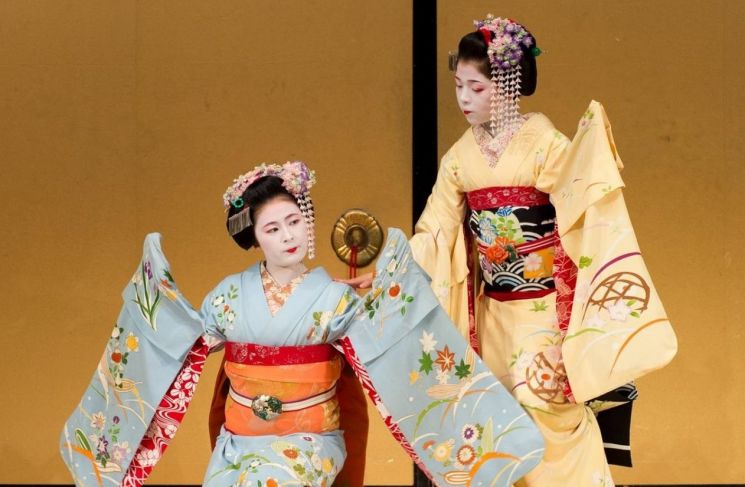
Minors Forced to Drink and Bathe with Customers
Last year, Kiritaka posted on her social media account, stating "This is the reality of Maiko," revealing that underage Maiko were sometimes called to drinking parties and placed in environments exposed to sexual violence. Kiritaka raised her voice, saying, "Despite being minors, Maiko had to participate in events like the Yamazaki 18-year fast drinking contest with customers," and her tweet quickly spread with 130,000 retweets.
Another woman who worked as a Maiko anonymously told Weekly Bunshun, "Every summer, a 'One Shot' contest hosted by companies was held. Maiko and Geiko participated, drinking beer while company executives guessed who could drink the fastest." She emphasized, "Whether the teahouse falsified ages or the companies turned a blind eye is unknown, but it is certain that underage drinking occurred."
They were also easily exposed to the risk of sexual violence. According to Kiritaka’s interview in Weekly Bunshun, incidents of customers sexually harassing Maiko were frequent, and the teahouse proprietress, called 'Mother,' ordered Maiko to bathe with customers. Kiritaka criticized, "Mixed bathing was a process to connect Maiko with patrons called their 'husbands.' Although they could earn a lot of money by spending long hours with customers, the money did not directly go to the Maiko."
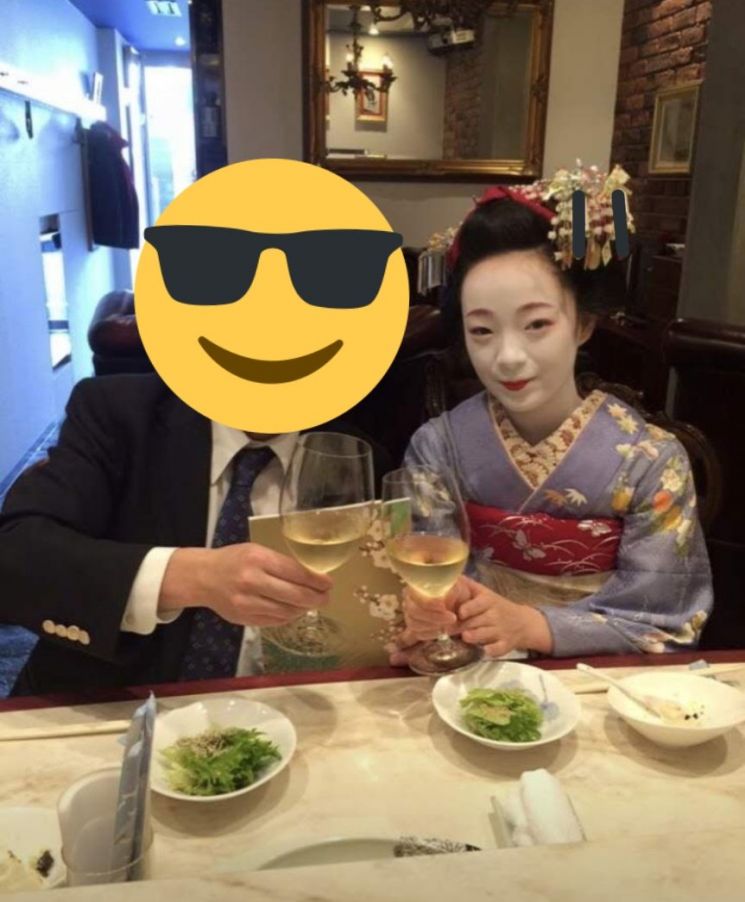 A photo posted on SNS by Kiritaka Kiyoha, stating that she had to drink alcohol with a customer while being a minor. (Photo by Kiritaka Kiyoha, Twitter)
Weekly Bunshun pointed out, "In Japan, this culture is strongly associated with people who are financially well-off. Since many customers are high-ranking executives and social elites, and Maiko and Geiko are silenced and prohibited from external contact, the true circumstances rarely come to light."
In fact, after Kiritaka’s revelations, the "Public Interest Incorporated Foundation Kyoto Traditional Arts Promotion Foundation," responsible for recruiting and dispatching Maiko, responded to the accusations by stating, "Such acts never occurred," and "The photos posted on social media have not been verified."
Weekly Bunshun reported in a follow-up that after the exposure, the industry began strict crackdowns, instructing not to respond to individual interviews or go out. However, some teahouses banned Maiko from drinking altogether and instructed them to return to the dormitory by 10 p.m. even during drinking gatherings, indicating some changes.
Controversy Rekindled by Drama... Responsibility Questioned for Koreeda
With the drama's release reigniting the Maiko controversy, responsibility has also been questioned for director Koreeda Hirokazu. Koreeda, well-known in Korea for winning the Palme d'Or with "Shoplifters," is a prominent figure.
One online media outlet pointed out, "If director Koreeda simply emphasizes the drama as a 'healing drama' as if there are no problems in the industry, it could be seen as ignoring the courage of the Maiko who came forward to expose the truth." In an interview with a film magazine, Koreeda said, "This drama captures the connection between Japanese life and the four seasons, and the richness through familiar Japanese images such as Kyoto and Maiko. I hope this is well conveyed to the viewers."
However, since Koreeda has spoken out against sexual violence within the Japanese film industry, some voices say it is still difficult to make a hasty judgment.
After watching the drama, Kiritaka evaluated on her SNS, "If the world had been as kind as depicted in the drama, I would have worked hard as a Maiko."
© The Asia Business Daily(www.asiae.co.kr). All rights reserved.
![User Who Sold Erroneously Deposited Bitcoins to Repay Debt and Fund Entertainment... What Did the Supreme Court Decide in 2021? [Legal Issue Check]](https://cwcontent.asiae.co.kr/asiaresize/183/2026020910431234020_1770601391.png)