[Asia Economy Reporter Byeon Seon-jin] The National Infectious Disease Crisis Response Advisory Committee held its 12th plenary meeting on the 17th to discuss adjustments to the indoor mask mandate.
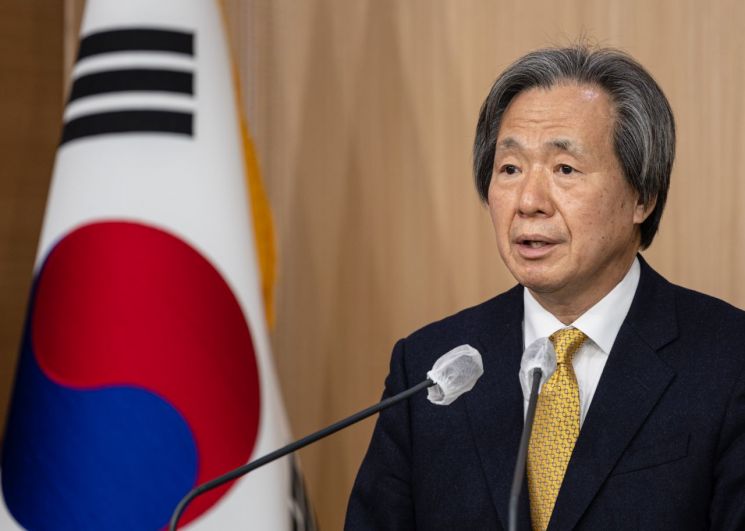
Jung Ki-seok, head of the COVID-19 Special Response Team and chairman of the National Infectious Disease Crisis Response Advisory Committee, stated in his opening remarks that “three out of the four evaluation indicators that can be referenced when adjusting the indoor mask-wearing mandate have been met, including a decrease in patients, severe cases, and deaths, as well as the maintenance of stable medical response capacity.”
Last month, the government presented four indicators as conditions for lifting the indoor mask mandate: ▲weekly patient cases decreasing consecutively for more than two weeks ▲weekly new severe cases decreasing and weekly fatality rate below 0.10% ▲availability of more than 50% of ICU beds that can be mobilized within four weeks ▲additional winter vaccination rates of 50% for the elderly and 60% for infection-vulnerable facilities. It was stated that if two of these are achieved, discussions on adjusting the mandate could proceed. As of midnight on the day, the additional vaccination rate for those aged 60 and above (34.1%) had not been met, but the rate for infection-vulnerable facilities was fulfilled at 60.8%.
However, the COVID-19 outbreak in China remains a variable to consider. Chairman Jung emphasized, “We must also consider the increased risk of domestic importation due to the outbreak in China, the possibility of new variants emerging, and the impact of population movement during the Lunar New Year holiday.”
Firstly, the positivity rate among arrivals from China is on a downward trend. The positivity rate of PCR tests conducted immediately upon entry for short-term foreign visitors from China recorded 20.4% on the first day, the 2nd, and has remained in single digits for four consecutive days (5.5% on the 13th → 8.7% on the 14th → 8.8% on the 15th → 3.5% on the 16th). On the 16th, it showed the lowest positivity rate since the implementation of strengthened measures for arrivals from China.
The advisory committee also believes that the epidemic situations in countries with significant exchanges with Korea, such as Japan and the United States, should be closely monitored. According to the global COVID-19 tracking site ‘Our World in Data,’ Japan recorded 8,181 cases per million population from December 26 to January 1, ranking second highest among the nine major countries after Korea (8,812 cases). The United States is a country where the highly immune-evasive XBB variant is rapidly becoming dominant; domestically, a total of 17 cases (0.2%) have been detected since the 8th of last month.
After the plenary meeting, the advisory committee will gather expert opinions and deliver them to the government. Based on this, the government will discuss and then announce the timing for lifting the mandate through the Central Disaster and Safety Countermeasures Headquarters. Chairman Jung Ki-seok stated at a briefing on the 16th, “If there are no overseas factors, I believe the mask mandate can be lifted immediately.”
© The Asia Business Daily(www.asiae.co.kr). All rights reserved.

















