Short Retirement Age and Low Birthrate Impact... Understaffed for 10 Years
"Reform Must Come Before Securing Funds," Voices Raised
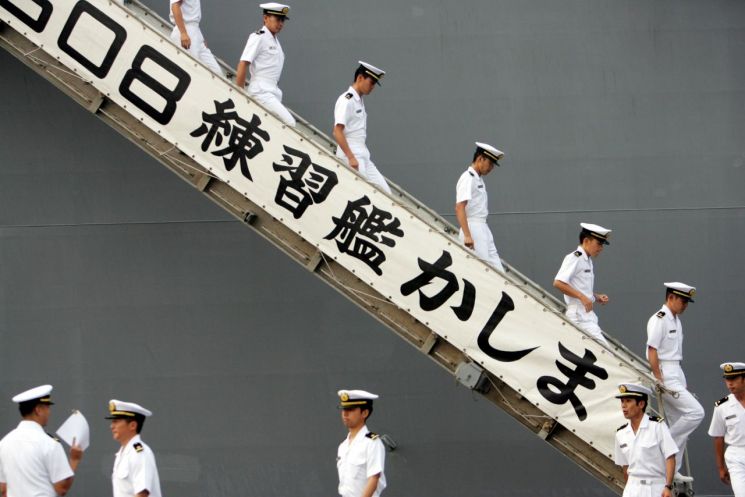
[Asia Economy Reporter Jeon Jinyoung] Japanese media have collectively criticized the Japanese government, stating that the chronic manpower shortage in the Self-Defense Forces (SDF) is becoming severe and urgent countermeasures are needed. They pointed out that although Japanese Prime Minister Fumio Kishida has pledged to strengthen defense capabilities and discussions on funding such as tax increases are underway, the actual recruitment of SDF personnel is not being properly addressed.
On the 16th, Shukan Bunshun reported that the SDF has not met its recruitment targets even once in the past 10 years. Shukan Bunshun stated, "If the manpower shortage is not resolved, there is a possibility that SDF personnel in their 60s will be deployed to the front lines."
According to the Ministry of Defense's "2022 Defense White Paper," out of the authorized strength of 247,154 personnel in 2021, only 230,754 were active, fulfilling just 93.4% of the quota. The situation is more severe for ranks deployed on the front lines, with a fulfillment rate of only 79.8%. By job category, crew members of ships and submarines, as well as personnel in the cyber domain, were particularly understaffed.
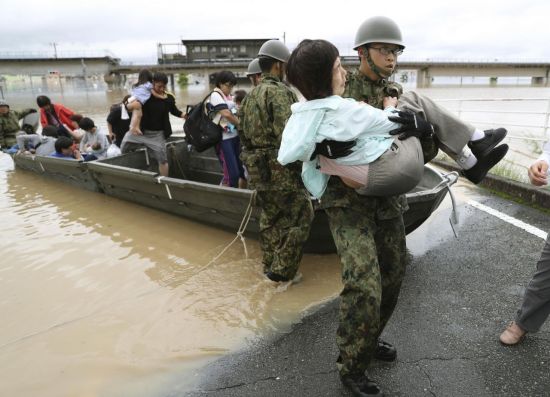
Japanese media are concerned about administrative gaps caused by the SDF's manpower shortage. Although the SDF performs defense duties, it also handles public tasks such as disaster dispatch during earthquakes, COVID-19 medical support, and culling of livestock during infectious disease outbreaks. In fact, reserve SDF personnel deployed during disasters or emergencies currently operate at 70% of their authorized strength of 48,000, while the ready reserve SDF personnel, equivalent to part-time reservists, fill only 52% of their authorized strength of 8,000.
One reason for the manpower shortage is the earlier retirement age compared to other industries. Considering physical fitness and mission performance capabilities, retirement age varies by rank, but SDF personnel typically retire at 54. This retirement age is earlier than the usual 60 or older in other fields.
Additionally, many younger SDF personnel are seeking new careers. Dissatisfied with relatively low treatment, SDF personnel are leaving after retirement to work in other sectors such as transportation, construction, and IT companies.
The low birthrate is also cited as a major cause. A Japanese economic media outlet analyzed that by 2040, the annual number of births is likely to fall below 600,000, and pointed out, "The SDF recruits 14,000 to 15,000 personnel annually, but there is no guarantee that 15,000 out of 600,000, or 1.5 out of every 60 people, will join the SDF." It further argued, "As manpower shortages accelerate, the current SDF system will soon collapse," and called for a "reexamination of the organizational foundation."
 [Image source=Yonhap News]
In response, the Ministry of Defense is taking measures similar to private companies, such as raising the recruitment age limit, promoting female SDF personnel, and extending employment periods. However, there are criticisms that these efforts are ineffective because the number of applicants wishing to join the SDF is declining due to the low birthrate.
Shukan Bunshun commented, "The Ministry of Defense's policies are ultimately like putting a band-aid on a wound. Since private companies are also facing expanding manpower shortages, competition for personnel is expected to intensify," adding, "In an era where war is becoming a realistic threat due to conflicts like the Ukraine war, raising the upper age limit for recruitment will not increase applicants." It emphasized, "If the low birthrate continues as is, there may come a time when SDF personnel in their 60s have to risk their lives to protect elderly people in their 80s and 90s."
Meanwhile, issues such as poor treatment and aging facilities have also been consistently pointed out. Of the approximately 23,000 SDF facilities, 30% have already exceeded their operational lifespan. According to Yomiuri Shimbun, the Ground Self-Defense Force base in Kagawa Prefecture was built 55 years ago, and the Air Self-Defense Force Kanoya Air Base building in Kagoshima Prefecture is over 86 years old, making them vulnerable to disasters such as earthquakes. Yomiuri Shimbun pointed out, "The Ministry of Defense prioritized procurement of equipment such as fighter jets, which may have led to postponing facility maintenance."
© The Asia Business Daily(www.asiae.co.kr). All rights reserved.
![Clutching a Stolen Dior Bag, Saying "I Hate Being Poor but Real"... The Grotesque Con of a "Human Knockoff" [Slate]](https://cwcontent.asiae.co.kr/asiaresize/183/2026021902243444107_1771435474.jpg)
















