AI·ASF Raise "Price Increase" Consumer Anxiety
Government Makes All-Out Effort to Contain Spread Before and After Seol
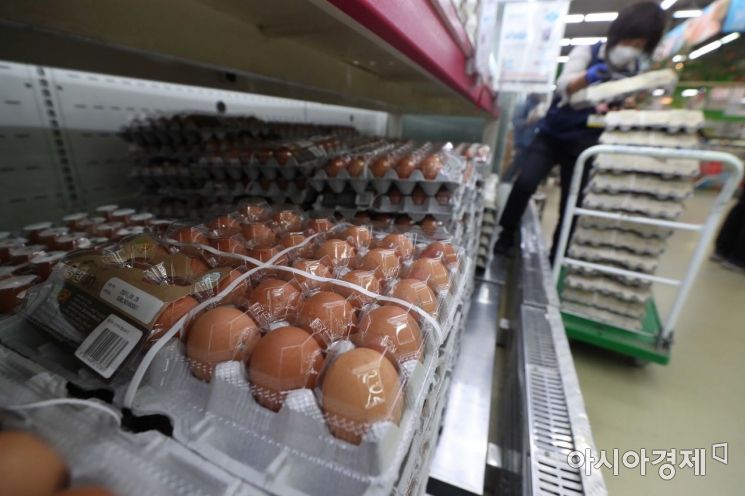
Concerns are growing that prices of meat and eggs may rise once again ahead of the Lunar New Year as infectious diseases transmitted through livestock, such as highly pathogenic avian influenza (AI) and African swine fever (ASF), continue into this year.
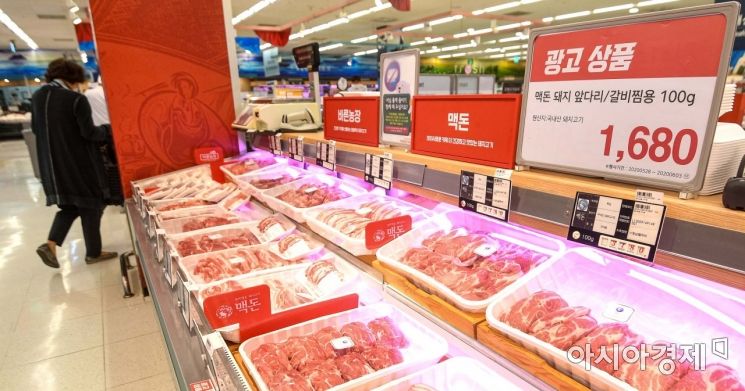
According to the Livestock Products Quality Evaluation Institute's Livestock Distribution Information on the 16th, as of the 13th, the nationwide average consumer price for 1kg of samgyeopsal (pork belly) was 24,480 won, significantly lower than the peak of around 29,000 won in June last year, and similar to the previous year's price of 25,570 won. Typically, prices tend to rise as demand increases approaching holidays, so a slight increase is expected before the Lunar New Year.
The industry views that the impact of the infectious diseases on prices will be minimal since the ASF outbreak is localized and there are currently no supply and demand issues. However, if the spread intensifies beyond the current level, consumer price anxiety may be reflected. This ASF outbreak is unusual in that it occurred in January, a winter month, breaking the common belief that ASF mainly occurs in spring and autumn. It started in the Gyeonggi and Gangwon provinces, showed a southward spread pattern, and then moved back north, raising concerns about a large-scale outbreak.
Egg prices are also not dropping easily. As of the previous day, the nationwide average consumer price for one carton of eggs was 6,628 won, slightly down from 6,715 won a month ago but 280 won higher than 6,435 won a year ago. Compared to the average level of around 5,500 won, this represents an increase of over 20%. The main reason for the rise in egg prices is supply anxiety caused by the spread of AI infections. The government and industry report that the culling rate of laying hens due to AI is not high, there are no supply issues, and compared to the past, the disease's impact on egg supply is not significant, so a sharp surge in egg prices is unlikely. However, since AI has spread faster than last year and migratory winter birds, identified as a major cause of AI, will be moving north until March next year, vigilance cannot be relaxed.
The government plans to make every effort to prevent the spread ahead of the Lunar New Year. Nationwide disinfection and inspections will be intensified before and after the holiday, and an emergency duty system will be implemented. Livestock product prices and supply and demand situations will also be strictly managed.
© The Asia Business Daily(www.asiae.co.kr). All rights reserved.
![Clutching a Stolen Dior Bag, Saying "I Hate Being Poor but Real"... The Grotesque Con of a "Human Knockoff" [Slate]](https://cwcontent.asiae.co.kr/asiaresize/183/2026021902243444107_1771435474.jpg)

















