'Government Debt Ceiling' Increase Controversy
Republicans: "Cannot Raise National Debt Without Cutting Fiscal Spending"
Concerns Over Financial Market Turmoil Intensify
[Asia Economy Reporter Haeyoung Kwon] The government debt ceiling increase has become a hot potato in the US Congress. The national debt has nearly reached the limit, bringing the US administration close to a situation where it can no longer borrow more, but the Republican hardliners are opposed to raising the debt ceiling. Meanwhile, it was revealed that the US government created about 5 trillion won in new debt daily last month, raising concerns that the political clash between the Republicans and the White House/Democrats over the debt ceiling increase could intensify. If the conflict between both sides prolongs, there are fears that the 'default (debt default)' crisis could escalate and become a trigger for financial markets.
If the US fails to raise the debt ceiling, issuing government bonds will be blocked
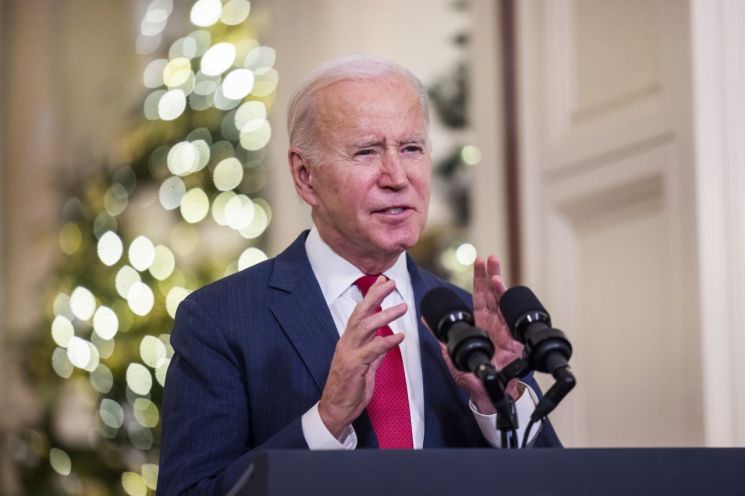
According to major foreign media on the 15th, the issue of raising the US debt ceiling has become more controversial recently after the election of Republican Kevin McCarthy as Speaker of the House. The Biden administration is requesting Congress to raise the government debt ceiling, but Republican hardliners are opposing compromise and pressuring Speaker McCarthy.
The US government debt has now exceeded $31 trillion. The government debt ceiling ($31.4 trillion) is nearly reached, and exceeding it would block the issuance of government bonds. Since the US government introduced the national debt ceiling system in 1939, it has never defaulted. This is because the ceiling has been raised more than 90 times to overcome default crises. While the prevailing opinion is that this will end as a 'political show,' there are also many views that this time is different. The US broadcaster CNN cautiously mentioned the possibility of default and reported that a 'financial Armageddon' causing market chaos could occur.
Republican hardliners stand firm... McCarthy's unstable position
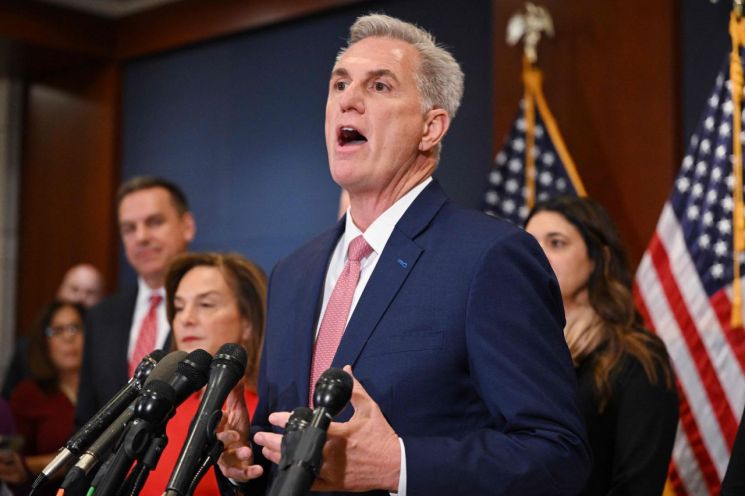
The reason US local media mention the default crisis is that Speaker McCarthy's position within the party is not solid. Although McCarthy was elected Speaker of the House, the third in the US presidential line of succession, the process was not smooth. Due to opposition from Republican hardliners, he was elected after 15 rounds of re-voting, the most since the Civil War (44th Congress). Considering that the election of the US House Speaker is usually a formality, doubts about his standing within the party have arisen.
It is expected to be difficult to persuade the hardline members of the party who oppose raising the debt ceiling. In fact, Republican Congressman Chip Roy stated that the debt ceiling increase should be linked to government spending cuts and threatened to submit a motion to remove Speaker McCarthy immediately if he compromises with the Democrats. There is even a view that if fiscal spending can be reduced, Republican hardliners will not budge even if a default crisis occurs.
Jaret Seiberg, an analyst at Cowen Washington Research Group, said, "The problem is that the Freedom Caucus, a group of hard-right Republican House members, does not view default as a negative," adding, "In the past, both parties did not want default, but this time it is different." He also said, "It is almost a relief that the market has become numb to default warnings surrounding the debt ceiling."
US fiscal deficit surges... prolonged conflict could disrupt financial markets
To make matters worse, the US fiscal deficit has also surged. The US Treasury announced that it recorded a fiscal deficit of $85 billion (about 105.7 trillion won) in December last year. This is a fourfold increase compared to the same period a year earlier ($21.3 billion). The increase is attributed to rising interest costs on government bonds due to interest rate hikes. Accordingly, the total US government debt surpassed $31.3 trillion as of the 10th. About $100 billion remains until the government debt ceiling ($31.4 trillion). The US 'Committee for a Responsible Federal Budget (CRFB)' criticized this as debt addiction.
The Republicans are demanding spending cuts as a precondition for raising the debt ceiling, making the White House's position even more difficult. In particular, there are considerable criticisms inside and outside the Republican Party regarding the expansionary fiscal policy implemented early in the Biden administration. President Biden proposed a $1.9 trillion stimulus package to overcome COVID-19, but this large-scale fiscal injection has been criticized for worsening inflation.
While the market sees almost no possibility of a US government default, there are concerns that if the two parties fail to reach an agreement or if the deadlock prolongs, the US stock market could plunge and a repeat of the 2011 incident, when the national credit rating was downgraded, could occur. If the national debt ceiling is not raised by August, it is expected that financing through government bond issuance will become difficult. US investment bank Goldman Sachs said, "The deadline will be no later than October," and predicted, "The government debt ceiling issue will pose a greater risk this year than in the past decade."
© The Asia Business Daily(www.asiae.co.kr). All rights reserved.
![Clutching a Stolen Dior Bag, Saying "I Hate Being Poor but Real"... The Grotesque Con of a "Human Knockoff" [Slate]](https://cwcontent.asiae.co.kr/asiaresize/183/2026021902243444107_1771435474.jpg)

















