Hwastory Unifies Salary System to Global Standards
Hitachi Expands Job-Based Pay Company-Wide
Talent Recruitment Challenged by Cross-Country Wage Gaps
Employee Turnover Reduces Corporate Productivity
[Asia Economy Reporter Lee Ji-eun] Japanese global companies have begun to abolish the employment practice centered on mass hiring of new employees and have embarked on a major overhaul of their compensation systems. This is because productivity has been declining day by day due to stagnant wage growth and rigid employment systems that have remained unchanged for 30 years, signaling a red light for corporate management. Japanese companies are seeking measures to prevent the outflow of domestic talent by raising wages, which are lower compared to Europe and the United States, and introducing ability-based evaluation systems.
◆Fast Retailing raises salaries by 40%... Aligning with global standards
According to Nihon Keizai on the 15th, Fast Retailing (Fast Retailing), which operates Uniqlo, has decided to unify the salary systems for employees at domestic and overseas branches starting this March. Since the annual salaries of employees in Europe and the United States are higher than those of employees in Japan, the goal is to align the salary levels of the Japanese branches with global standards.
With the wage system overhaul, the annual salaries of about 8,400 Japanese employees working at Fast Retailing headquarters and Uniqlo are expected to increase by up to 40%. Accordingly, the monthly salary of new employees will rise from 255,000 yen (approximately 2.4 million KRW) to 300,000 yen (approximately 2.83 million KRW). New store managers in their first to second year will see their monthly wages increase from 290,000 yen to 390,000 yen.
This is the first time in about 20 years that Fast Retailing has completely revamped its wage system. Until now, the company had a system of paying allowances based on job roles or work locations in addition to the base salary, but from March, it plans to pay performance bonuses based on ability and results. Fast Retailing expects domestic labor costs to increase by 15% due to this wage system reform but anticipates that the increase can be offset by promoting digitalization of manufacturing processes.
◆Changing seniority and mass hiring-centered employment system... Introducing job-based pay
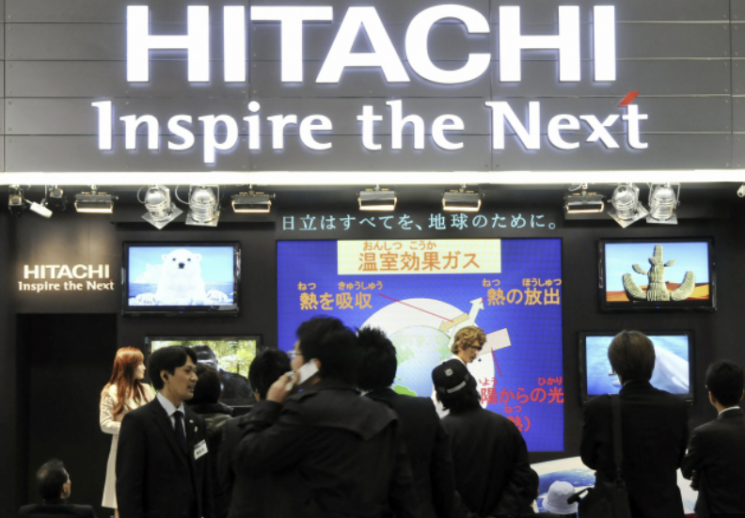
In addition, Japanese global companies are changing the long-standing employment system centered on seniority and mass hiring of new employees. Hitachi, Japan's largest electronics manufacturer, announced on the 1st that it will expand the job-based employment system to the entire group.
Hitachi plans to specify 450 types of job roles and recruit talent accordingly. More than 620 overseas subsidiaries of Hitachi have already implemented this system.
Nihon Keizai explained, "Hitachi probably judged that having the same employment system makes it easier to bring in excellent talent from overseas subsidiaries." When transferring employees from the U.S. branch, where wages are higher than in Japan, to the Japanese branch, Hitachi will pay salaries according to the employee's home country level.
Japanese pharmaceutical company Astellas Pharma also introduced a global common salary system for employees at the manager level and above starting in 2021. From this month, wages will increase by 2% in Japan and 6% in some European branches according to local inflation rates. Astellas Pharma explained that the wage system reform has enabled free personnel transfers between overseas branches.
◆Difficulty recruiting talent due to low wages... Leading to productivity decline

The reason Japanese companies made these decisions is that stagnant wage growth over 30 years has widened the pay gap with overseas, making talent recruitment difficult. Fast Retailing has operated a system since 2016 to dispatch university students hired as interns to overseas stores such as in the U.S., but the rate at which they actually decide to join the company has been low. According to Nihon Keizai, the average salary of Fast Retailing employees working in Japan is 9.59 million yen, the highest in Japan's distribution industry, but it is still below the wages of Japanese general trading companies and foreign-affiliated firms.
In this situation, last year the yen's value fell to an all-time low, making it even harder to attract overseas talent. Due to the weak yen, when salaries earned in Japan are converted to dollars, the amount decreases, reducing the number of talents choosing to work in Japan.
Due to the rigid wage system and resulting difficulties in personnel allocation, the productivity of Japanese companies is steadily declining. According to 2021 statistics on labor productivity in Japan, Japan's hourly labor productivity ranked 27th out of 38 OECD countries, placing it in the lower tier.
Therefore, Japanese companies are putting all their efforts into competing globally to secure talent in order to improve declining productivity. Nihon Keizai stated, "Compared to major countries worldwide, Japan's wage and evaluation systems are rigid, resulting in failure to attract excellent talent and falling behind in smooth personnel allocation," and added, "To acquire good talent, wage levels must be aligned with global standards to win in international competition."
© The Asia Business Daily(www.asiae.co.kr). All rights reserved.



















