[Asia Economy Reporter Lee Gwan-ju] Domestic clinical results on the efficacy and safety of Nusinersen (product name Spinraza), a treatment for the rare genetic disease spinal muscular atrophy (SMA), have been released. It was found that the earlier the treatment is administered after onset and the longer the treatment continues, the more substantial the improvement in motor function.
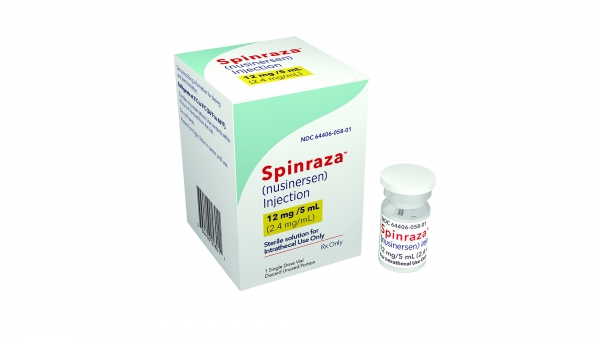
The research team led by Professors Lee Young-mok, Na Ji-hoon, and Lee Hyun-joo from the Department of Pediatrics and Adolescents at Gangnam Severance Hospital, along with Clinical Instructor Shin Hee-jin from the Department of Pediatrics and Adolescents at Severance Hospital, announced on the 13th that they conducted a study on the clinical characteristics and treatment progress of domestic patients diagnosed with SMA and treated with Nusinersen.
Nusinersen is administered via intrathecal injection 3 to 4 times a year. While its efficacy and safety have been demonstrated through overseas studies, no research had been conducted on domestic patients. In particular, studies on severe SMA patients commonly accompanied by scoliosis and those requiring respiratory support had not been performed.
The research team analyzed data from 30 patients with SMA types 2 and 3 who received Nusinersen treatment at Gangnam Severance Hospital over approximately three years, from March 2019 to April last year. The patients showed symptom onset at an average age of about 1.2 years, and the average age at treatment initiation was 22.9 years. All but one patient had scoliosis, and 73% of them had undergone scoliosis surgery. More than half of the patients used respiratory support devices for certain periods during the day.
 Professor Lee Youngmok (left) and Professor Na Jihoon, Department of Pediatrics and Adolescents, Gangnam Severance Hospital.
The medical team administered 12 mg of Nusinersen every 14 days for a total of three doses, followed by one additional dose 30 days later. Thereafter, maintenance doses were given every four months. Motor function was assessed using the Hammersmith Functional Motor Scale Expanded (HFMSE) at 6, 14, 22, and 26 months after treatment initiation.
As a result, at the 6-month follow-up, 72% of patients showed improvement in HFMSE scores (an increase of 2.1 points). At 14 months, 71% showed improvement (an increase of 2.88 points), and at 22 and 26 months, 88% (4.21 points increase) and 86% (5.29 points increase) of patients, respectively, demonstrated enhanced motor function. Side effects included back pain, headache, sensory abnormalities, and nausea, but most resolved within 1 to 2 days.
Professor Lee Young-mok stated, "This study is the first domestic research to confirm the efficacy and safety of Nusinersen in a comprehensive patient group with severe scoliosis or requiring mechanical respiratory support. Attention should be paid to the fact that the proportion of patients with improved motor function increased with longer treatment duration, and more accurate motor function assessment methods that reflect patients' motor abilities are needed."
This study was published in the international pediatric journal 'World Journal of Pediatrics.'
© The Asia Business Daily(www.asiae.co.kr). All rights reserved.


















