Rapper Noel's New Album Lyrics Spark Vocabulary Debate
Confusion Over "Sah-eul" Suggests Mistaking It for Four Days
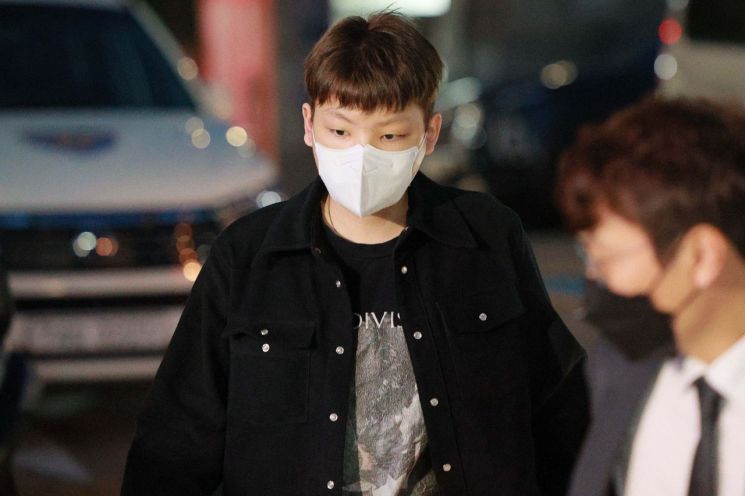
Noel (real name Jang Yongjun), the son of People Power Party lawmaker Jang Jeewon and a rapper, has once again sparked debate over Korean vocabulary skills by writing "one day, two days, three days, sah-eul" in the lyrics of a track from his new album.
On January 3, Noel revealed lyrics containing such expressions through his social networking service (SNS). Some internet users pointed out that Noel may have confused "sah-eul" (the third day) with "nah-eul" (the fourth day). In Korean, "sah-eul" refers to the third day, while "nah-eul" refers to the fourth day. However, because "sah-eul" and "four days" sound similar, confusion between "sah-eul" and "nah-eul" is common.
In fact, in 2015, when the government designated August 14 as a temporary holiday to boost the economy during the MERS outbreak, a three-day holiday was given. At that time, some internet users also expressed confusion in article comments and online communities.
The same is happening now. While some criticize Noel, saying, "How can you not know the meaning of 'sah-eul'?" others have commented, "I thought 'sah-eul' meant four days because it starts with 'sah' (four in Korean)," reflecting a range of opinions.
This is not the first time there has been controversy over the literacy of younger generations who are accustomed to digital media.
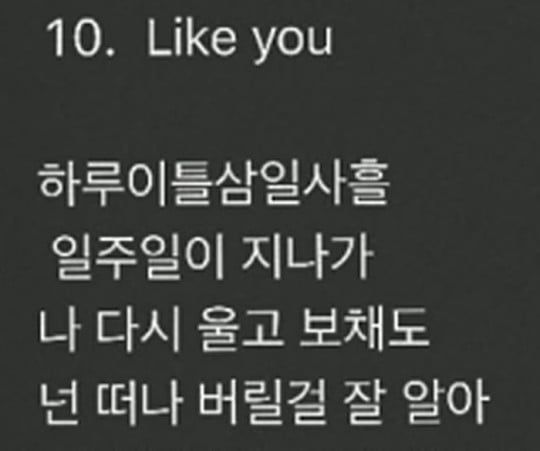 Noel revealed lyrics containing such expressions through his social networking service (SNS) on the 3rd.
 [Image source=Noel Instagram capture]
Last year, an incident occurred online when a cafe in Seoul posted an apology on Twitter for a reservation error at a webtoon artist's signing event, using the word "sim-sim-hada" (甚深, meaning "very deep and earnest" in expressing one's feelings). Some internet users misunderstood it as "sim-sim-hada," meaning "bored and uninteresting."
In fact, they left comments such as, "I'm not bored...", "What does 'deep apology' mean? Does it mean you're apologizing because you're bored?", and "What? Why is a fresh apple ('sa-gwa' in Korean) talking?" The post became a hot topic, and the keyword "deep apology" even trended on Twitter for a while.
Other cases include a university student who misunderstood "geum-il" (meaning "today") as "Friday" and complained to a professor about a report deadline, and a story where a student responded to a teacher's use of "ijijeok" (meaning "rational") by saying, "Do I look that easy to you?" There was also a case where someone thought "gojisikhada" (meaning "stubborn") meant "knowledgeable."
Amid growing concerns that teenagers familiar with YouTube or TikTok struggle to read text-based books or news articles, an OECD survey found that the functional illiteracy rate in Korea-meaning the percentage of people who cannot accurately understand the meaning of sentences they read-reaches as high as 75%.
© The Asia Business Daily(www.asiae.co.kr). All rights reserved.


















