Legislative Research Service Report
Assuming Income-Proportional Pension Conversion After 70 Years
Calculated with Goal of Maintaining 2x Accumulation Ratio
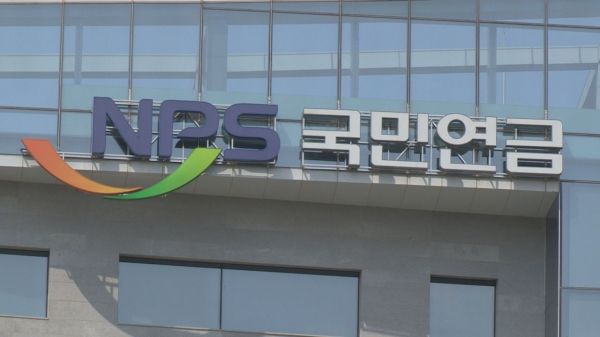
[Asia Economy Reporter Moon Chaeseok] There has been a claim that the insurance premium rate should be raised to more than twice the current rate to stabilize the National Pension Fund.
The Korea Institute for Health and Social Affairs wrote in a research report submitted to the National Assembly Legislative Research Office titled "Public Pension System Reform Measures for National Pension Financial Stabilization" that the insurance premium rate of 9% needs to be increased to at least 21.33%.
This is to maintain a funding ratio of 2 times by the end of 2093, 70 years from now. The funding ratio refers to the multiple of the reserve fund size relative to the required expenditure.
The report suggested that from next year, the income redistribution component of the National Pension system should be abolished and converted to an income-proportional pension (maintaining an income replacement rate of 40%). It assumed reforms to narrow the basic pension recipients to low-income groups (long-term bottom 30% income bracket) and raise the benefit level to the maximum livelihood benefit level.
According to the reform plan, the basic pension benefit expenditure will increase from this year's 1.1% of Gross Domestic Product (GDP) to 3.2% in the long term.
The report proposed that due to the large increase in the insurance premium rate, an "automatic adjustment mechanism" linked to the 'expected remaining life expectancy' should be introduced in the early stages of reform to adjust benefit levels and other factors.
The reform measures proposed in the report include ▲ encouraging low-income groups to join the National Pension through higher income replacement rates ▲ extending the subscription period through labor market reforms ▲ raising the applicable income for the National Pension to the level of civil servant and private school pensions ▲ integrating the operation of the National, Civil Servant, Private School, and Military Pensions.
For effective pension reform, it argued that meeting minutes should be disclosed and the financial projection period extended by at least 10 years to a minimum of 80 years. It also claimed that the current 5-year public pension financial projection cycle should be shortened to 3 years.
Last October, the Korea Institute for Health and Social Affairs presented multiple options in a report titled "Study on Public Pension Restructuring Measures," including ▲ raising the income replacement rate while narrowing the basic pension target and introducing a 'Guaranteed Income Supplement (GIS)' to provide additional benefits to impoverished elderly ▲ strengthening the basic pension while lowering the income replacement rate of the National Pension and abolishing its income redistribution role to convert it to an income-proportional method.
© The Asia Business Daily(www.asiae.co.kr). All rights reserved.












