Ministry of Foreign Affairs Work Report... The First Year of Implementing South Korea's Indo-Pacific Strategy
70th Anniversary of the ROK-US Alliance, Developing into an Alliance in Action
Solution for Japan's Forced Labor Issue... Principle of Mutual Respect with China
[Asia Economy Reporter Jang Hee-jun] The Yoon Suk-yeol administration is marking its second year in office as the inaugural year for implementing the 'Indo-Pacific Strategy,' aiming to forge strong alliances with countries that share common values. This signifies a shift from diplomacy fixated on specific issues like inter-Korean relations to pursuing national interests through evolving alliances.
On the occasion of the 70th anniversary of the Korea-US alliance, the administration plans to expand cooperation into an 'active alliance' through President Yoon Suk-yeol's visit to the United States. In diplomacy with Japan, while directly addressing the pressing issue of resolving forced labor, efforts will be made to restore relations. Meanwhile, diplomacy with China will maintain a stance of 'dignified diplomacy' based on mutual respect.
On the 11th, at the Blue House State Guest House, the Ministry of Foreign Affairs reported its work plan centered on these points during the 2023 Ministry of Foreign Affairs annual briefing presided over by President Yoon Suk-yeol.
The inaugural year of Indo-Pacific strategy implementation: "Revitalizing national interest diplomacy"
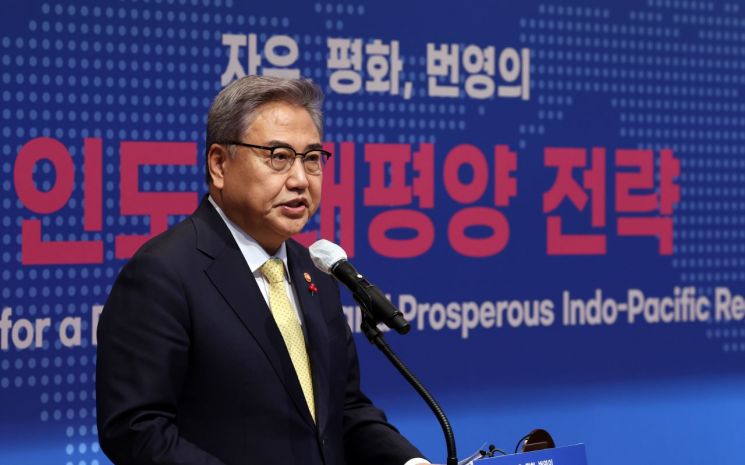
Foreign Minister Park Jin emphasized in the report, "This year marks the inaugural year of implementing the Indo-Pacific Strategy, Korea's first comprehensive regional strategy that aligns with our national power," adding, "This is a declaration that Korea will no longer be confined to the geopolitical framework of the Korean Peninsula and Northeast Asia."
First Vice Foreign Minister Cho Hyun-dong stated at a pre-briefing the day before, "We will move away from diplomacy fixated on inter-Korean relations and deepen solidarity with allies and partners who share our values," and added, "Through this, we will strengthen the momentum of our diplomacy and broaden its horizons."
This policy indicates that the government is shifting the central axis of Korean diplomacy from the Korean Peninsula to the Indo-Pacific stage, marking a turning point with the 'Korean-style Indo-Pacific Strategy' announced at the end of last year.
Previous administrations focused on overcoming the Northeast Asian Cold War structure to resolve issues on the Korean Peninsula, such as North Korea's nuclear and missile threats. However, with the intensification of US-China hegemonic competition and the Ukraine war, the international order is undergoing significant changes. Accordingly, Korea intends to expand beyond the Korean Peninsula framework and build solidarity with countries sharing common values.
The Ministry of Foreign Affairs' new slogan reflecting this resolve is 'Revitalizing national interest diplomacy.' The core tasks include ▲ the inaugural year of Indo-Pacific strategy implementation ▲ principled approach to North Korea ▲ economy-centered diplomacy.
Active Korea-US alliance: Strategic alliance encompassing all fields
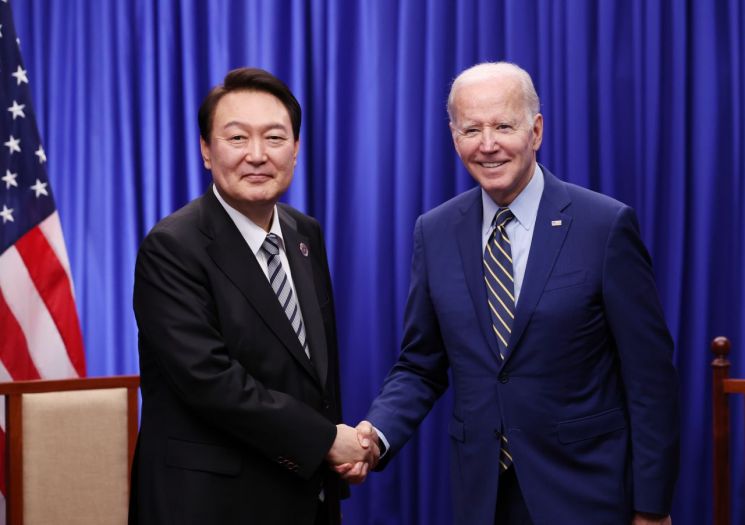
For a government aspiring to be a global pivotal state, the most important partnership is the Korea-US alliance. Marking the 70th anniversary of the alliance this year, plans are underway for President Yoon's first visit to the US, aiming to develop a substantive strategic alliance across all fields including security, economy, technology, and human exchanges.
The Ministry of Foreign Affairs' emphasis on an 'active alliance' with the US suggests that close cooperation will become even more pronounced in areas such as economic security, including supply chains.
The ministry plans to strengthen the pro-Korea network within the US Congress to resolve issues such as discrimination against Korean-made electric vehicles under the Inflation Reduction Act (IRA). Additionally, following last year, the Korea-US High-Level Expanded Deterrence Strategy Committee (EDSCG) meeting will be held again this year to further solidify the cooperative system based on the US's extended deterrence provision.
'Facing the forced labor solution'... Progressing toward improved Korea-Japan relations
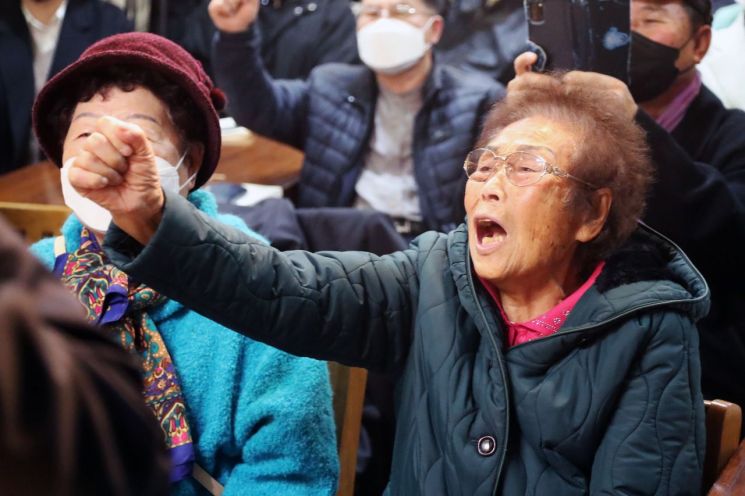
Korea-Japan relations aim for a future-oriented partnership under the principle of confronting the 'past.' The administration plans not to avoid the most sensitive issue of resolving forced labor but to comprehensively address the challenge of improving relations through the resolution process.
Previously, Japan imposed export restrictions in response to South Korea's Supreme Court rulings on forced labor compensation. Although South Korea suspended the effect, it also threatened to terminate the General Security of Military Information Agreement (GSOMIA). Therefore, resolving the forced labor issue could naturally untangle other intertwined matters.
The government is expected to conclude public opinion gathering with a public forum at the National Assembly on the 12th and soon announce a solution to the forced labor issue. However, since participation in compensation or apologies from Japanese companies remains uncertain, it is difficult to predict whether the content will be acceptable to the victims.
Nevertheless, there is hope that resolving the forced labor issue will restore shuttle diplomacy between the two countries' leaders. First Vice Foreign Minister Cho Hyun-dong said, "If issues like forced labor are resolved, Korea-Japan relations will naturally progress, and in that process, we can expect the restoration of shuttle summit diplomacy as we had in the past."
Dignified Korea-China diplomacy: "Cooperation despite differing shared values"
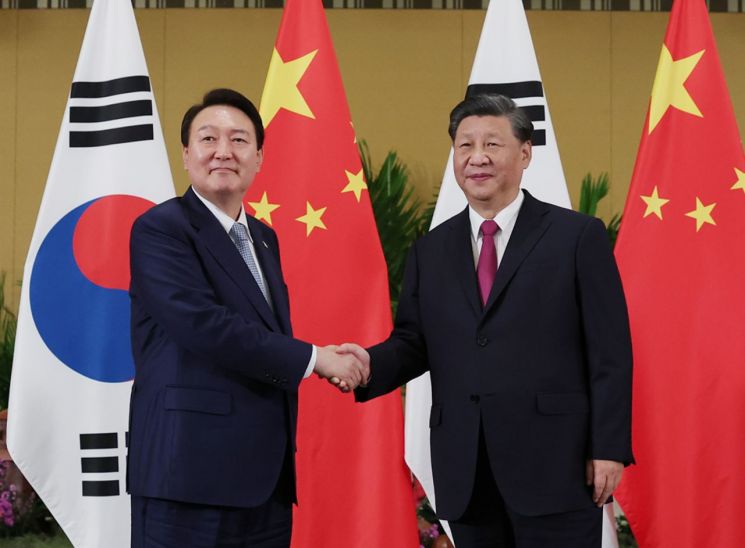
The fundamental principle of Korea-China relations is 'dignified diplomacy.' This reaffirms the policy to manage risks that could arise from US-China conflicts affecting Korea-China relations stably based on mutual respect. To this end, mutual visits by the two countries' leaders, including Chinese President Xi Jinping's visit to Korea, practical cooperation enhancement, and expansion of friendly sentiments will be pursued.
However, concerns have arisen regarding Korea-China relations after China retaliated against Korea's strengthened quarantine measures due to COVID-19 spread by suspending short-term visa issuance.
Regarding this, First Vice Foreign Minister Cho Hyun-dong emphasized, "Cooperation with China is undoubtedly important in resolving Korean Peninsula issues," and added, "Even if there are differences in shared values with China, we will continue to pursue strategic cooperation."
On China's visa issuance suspension, he explained, "Of course, it is not good news, but I consider this a very small part in the bigger picture of Korea-China relations. After Qin Gang's inauguration as the new Foreign Minister, Korea was among the first countries to contact their counterparts. This indicates that China also values Korea-China relations and places importance on future progress."
Park Jin: "Korea-China cooperation leads to mutual development"
Minister Park Jin evaluated during the afternoon briefing, "I believe Korea-China relations have now entered a stable phase."
He continued, "Korea and China must strategically communicate and cooperate in economic trade and for peace and stability on the Korean Peninsula," emphasizing, "There are many areas where cooperation is needed for peace and prosperity in the Indo-Pacific region." He further added, "Since both countries share common interests in climate change, health security, and global supply chains, it is in both sides' interests to develop and cooperate well in these areas."
Additionally, the Ministry of Foreign Affairs has set stable management based on international norms as the top priority in Korea-Russia relations, considering the Ukraine situation. In the Middle East region, efforts will be made to expand energy and infrastructure economic cooperation.
Furthermore, diplomatic efforts to attract the 2030 Busan World Expo will be intensified through various bilateral and multilateral meetings. Since an on-site inspection is scheduled for April, a large-scale special envoy will be dispatched mainly to countries with a high likelihood of early support within the first quarter. In particular, negotiations will be conducted on a one-on-one basis, proposing cooperation packages tailored to each country's needs.
© The Asia Business Daily(www.asiae.co.kr). All rights reserved.



















