Medical School Freshman Quotas Frozen for 17 Years
Government Likely to Begin Practical Talks on Expanding Medical School Quotas
'Strong Opposition' Medical Community Negotiations Key
[Asia Economy Reporter Hyunju Park] The discussion on expanding medical school admission quotas, which had sparked strong opposition from the medical community, has returned after about two and a half years. This comes as the shortage of personnel has become serious, with 662 youth centers closing in the past five years.
According to the Ministry of Health and Welfare, the nationwide medical school freshman quota has been frozen at 3,058 students from 2006 to this year. While the nationwide nursing college freshman quota has more than doubled from 11,206 in 2007 to 23,183 this year, the medical school freshman quota has remained unchanged for 17 years during the same period.
The basis for promoting the expansion of medical school admission quotas is the number of doctors per population by country. As of the end of last year, the number of doctors per 1,000 people in Korea (excluding oriental medicine doctors) was 2.1, which is 56.8% of the OECD member countries' average of 3.7. Furthermore, the Korea Institute for Health and Social Affairs projects in its "Study on the Supply and Demand of Specialist Doctors" report that by 2035, ten years from now, there will be a shortage of 27,232 doctors.
The expansion of medical school admission quotas was also pursued by the previous government. In August 2020, the Moon Jae-in administration attempted to increase medical school admission quotas and introduce the “Regional Doctor System,” which would require doctors to work mandatorily in regional public healthcare and critical/essential medical fields. However, the policy was derailed due to strong opposition from the medical community, including collective strikes by residents and medical students refusing the national licensing exam. Notably, this was during a period when COVID-19 cases were rapidly increasing, and both sides agreed to postpone related discussions until after the COVID-19 situation stabilized.
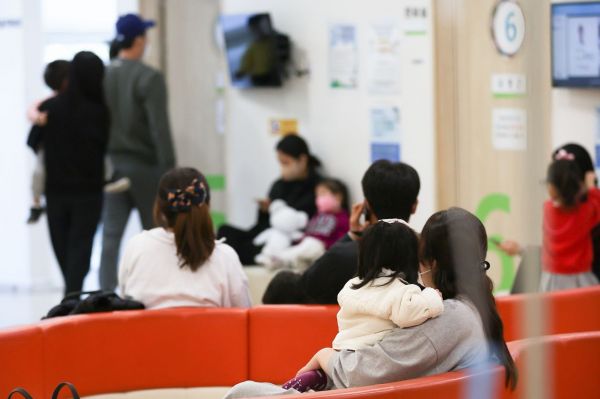 On the morning of October 18 last year, citizens are waiting at Uri Children’s Hospital in Seongbuk-gu, Seoul.
 [Image source=Yonhap News]
As the pediatric workforce shortage issue surfaced, discussions on increasing medical school quotas have reemerged. According to the Korean Hospital Association’s 2023 first half resident recruitment results, only 16.4% (33 people) of the pediatric quota was filled. Especially with the twin-demic of COVID-19 and influenza (seasonal flu) simultaneously spreading during winter, the demand for pediatric care surged, intensifying concerns about gaps in pediatric medical services.
However, since the current pediatric workforce shortage is largely influenced by decreased demand and avoidance of the specialty, some view that merely increasing medical school quotas is insufficient. Accordingly, the Ministry of Health and Welfare plans to prepare additional support measures for essential medical services in the second half of this year.
The government is expected to soon begin practical consultations regarding the expansion of medical school admission quotas. On the 9th, Minister of Health and Welfare Cho Kyu-hong stated in the 2023 work plan, "We will promptly start consultations with the medical community on key healthcare policies such as institutionalizing telemedicine and expanding medical personnel."
However, as two years ago, the key issue will be reconciling opinions with the medical community, which has once again expressed opposition. On the 10th, Lim Hyun-taek, president of the Korean Pediatric Society, held a one-person protest in front of the Ministry of Health and Welfare building in Sejong City, criticizing the plan as "an utterly incompetent measure for collapsing essential medical services."
© The Asia Business Daily(www.asiae.co.kr). All rights reserved.

















