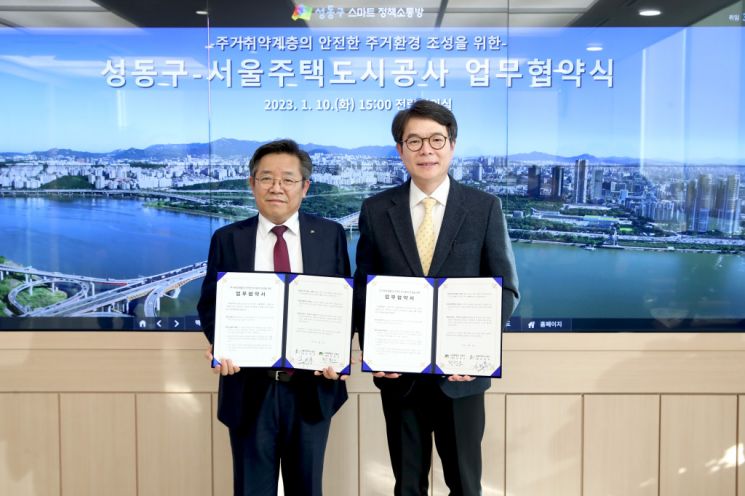
 The signing ceremony between Seongdong-gu and Seoul Housing and Communities Corporation (Jung Won-oh, Mayor of Seongdong-gu, on the right in the photo)
Seongdong-gu and Seoul Housing & Communities Corporation (SH) Sign Comprehensive MOU to Create Safe Residential Environments for Vulnerable Housing Groups
Complete Survey of Vulnerable Housing Since September Last Year and Enactment of Basic Housing Ordinance in December Mark Full-Scale Promotion of Housing Welfare Policies
[Asia Economy Reporter Park Jong-il] Seongdong-gu (Mayor Jung Won-oh) signed a Memorandum of Understanding (MOU) on the 10th with SH Seoul Housing & Communities Corporation (President Kim Heon-dong) to create safe residential environments for vulnerable housing groups.
Under this agreement, the two organizations will ▲lead housing upgrade support projects such as relocation support to public rental housing for vulnerable groups living in semi-basements, rooftop rooms, and goshiwon (small dormitory rooms) ▲consult and establish plans for supplying public rental housing reflecting the characteristics of Seongdong-gu ▲strengthen information and resource linkage to build a community housing welfare system.
Seongdong-gu formed a Housing Safety Task Force (TF) in October last year and has been operating it since. The Housing Safety TF conducted a full survey over three months on 5,278 semi-basement households and 72 goshiwon units to collect data for accurately understanding the housing conditions of vulnerable groups in the area.
Based on this, the district plans to launch a comprehensive housing safety plan starting in March to strengthen actual housing safety. In this process, it will actively cooperate with Seoul City and the Ministry of Land, Infrastructure and Transport projects, complementing them while also promoting Seongdong-gu’s specialized projects for creating safe and healthy residential environments, such as improving air quality.
Seongdong-gu has also laid the foundation for continuous and inclusive housing policy implementation rather than one-time policies. Following the enactment of the Seongdong-gu Basic Housing Ordinance in December 2022, the district reorganized the Apartment Division into the Housing Policy Division in January this year to strengthen management and support for various housing types. The Housing Policy Division serves as the control tower for overall housing policy.
Kim Heon-dong, President of SH Seoul Housing & Communities Corporation, who attended the signing ceremony, said, “We will spare no support to cooperate with Seongdong-gu to supply quality housing in the district.”
Seongdong-gu Mayor Jung Won-oh responded, calling the agreement “a meaningful occasion where a local government and a public corporation collaborate to realize housing welfare,” and expressed his determination, saying, “We will do our best to make Seongdong-gu a successful representative city for housing welfare.”
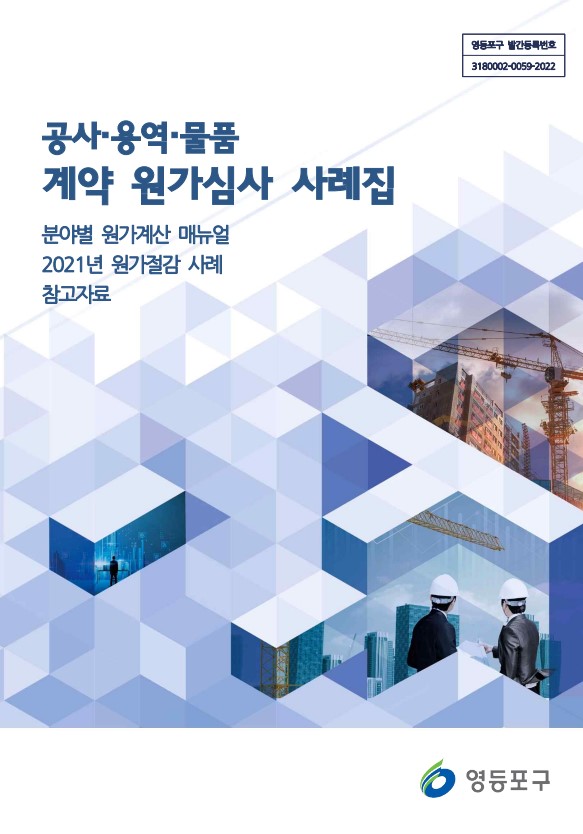
Yeongdeungpo-gu Saves 800 Million KRW in Budget Through Contract Review
Saved 800 Million KRW from 818 Contract Reviews in 2022, Total Savings of 3 Billion KRW Over the Past 3 Years
Yeongdeungpo-gu (Mayor Choi Ho-kwon) announced that it saved a total of 800 million KRW last year through contract reviews conducted before signing contracts for construction, services, and supplies.
Contract review is a system that pre-examines cost estimation and the appropriateness, suitability, and validity of contracts before bidding or contracting for construction, services, and supplies to prevent budget waste in advance.
The contract review targets include construction and service contracts over 10 million KRW, supply contracts over 5 million KRW, and design changes increasing contract amounts by more than 10%.
Last year, the district reviewed 318 construction cases, 308 service cases, and 192 supply cases, saving a total of 800 million KRW. Over the past three years, the total budget saved through contract reviews amounts to 3 billion KRW.
In particular, to prevent budget waste, the district conducted practical cost calculation training for employees lacking experience in construction ordering and created and distributed related work manuals.
Mayor Choi Ho-kwon said, “The saved budget will be reinvested in major district projects to enhance residents’ convenience and revitalize the local economy. We will carefully review cost calculations from the initial stage to ensure that residents’ valuable taxes are used wisely.”
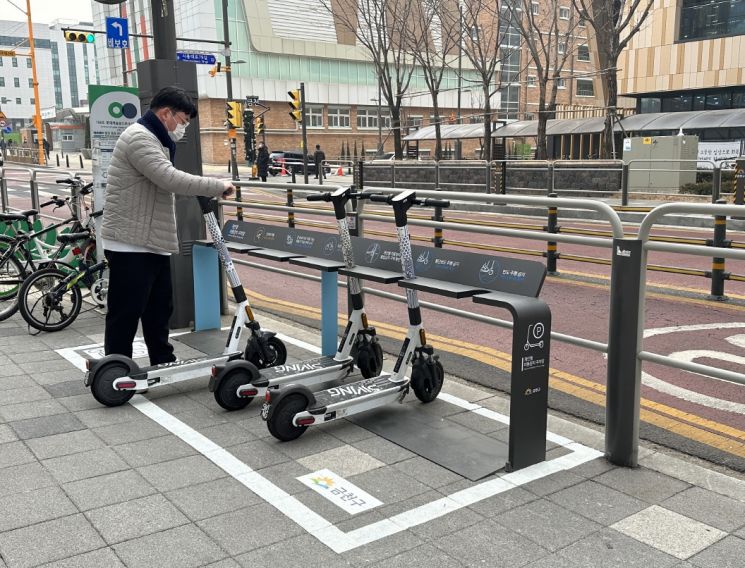
Geumcheon-gu Installs Seven Dedicated Electric Scooter Parking Stands
Geumcheon-gu (Mayor Yoo Sung-hoon) installed dedicated parking stands for personal mobility devices (PM), including electric scooters, at seven locations including Gasan Digital Complex Station and Doksan Station through a public design discovery project.
As electric scooter use has increased recently as a new personal transportation means, problems such as illegal parking (abandonment) have continuously caused urban aesthetic degradation, pedestrian inconvenience, and safety issues.
Especially in G-Valley (Seoul Digital Industrial Complex), a region with concentrated movement of young office workers, numerous complaints have arisen due to abandoned electric scooters around Gasan Digital Complex Station and Doksan Station.
To solve these problems, Geumcheon-gu developed a design for electric scooter parking stands. Installation sites were selected based on demand surveys and usage patterns, focusing on areas with frequent towing requests from the shared electric scooter reporting system, locations near shared bicycle (Ddareungi) stands, and places where an effective sidewalk width of over 2 meters is secured to avoid pedestrian obstruction.
The district plans to monitor the seven locations to understand actual usage and will consider additional installations at locations requested by residents and users.
Mayor Yoo Sung-hoon said, “By providing parking spaces for electric scooter users, we expect to prevent disorderly sidewalk abandonment, ensuring pedestrian safety and improving the pleasantness of the surrounding environment.”
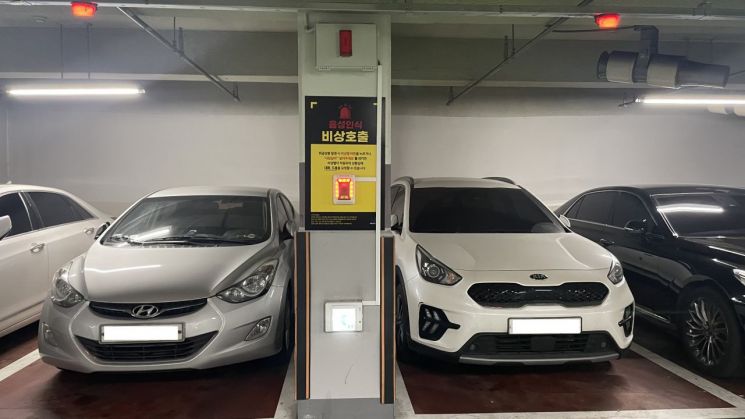
Seocho District Establishes Integrated Safety System for Public Parking Lots
District Prepares Integrated Safety System for Public Parking Lots to Enable Rapid Response in Emergencies
Seocho-gu has rolled up its sleeves to enable residents to use public parking lots more safely.
Seocho-gu (Mayor Jeon Sung-soo) announced that it has established an integrated safety system for public parking lots by installing voice recognition emergency bells at 10 district-operated public parking lots to enable rapid response in emergencies.
The newly established ‘Integrated Safety System for Public Parking Lots’ mainly includes ▲installation of voice recognition emergency bells ▲integrated CCTV monitoring system for public parking lots ▲installation of automated external defibrillators (AEDs).
First, the voice recognition emergency bell automatically connects to the Seocho Smart Hub Center via voice call when someone shouts emergency phrases such as “Help me” or “Save me.” The district installed these bells to overcome the limitations of existing button-type emergency bells, which require physically pressing the button and have poor accessibility in emergencies. Additionally, pressing the bell previously required passing through the underground parking management office, causing significant delays before police dispatch. The bells are installed in underground or above-ground building-type parking lots, with one or two bells per floor in multi-level parking lots to minimize blind spots.
Along with this, the integrated CCTV monitoring system for public parking lots, installed in August last year, links high-definition CCTV footage to the emergency bell location when it rings. This allows immediate monitoring and, if necessary, quick police dispatch by contacting the police station.
Furthermore, in December last year, the district installed automated external defibrillators (AEDs) at 20 district-operated public parking lots to enable quick use in case of emergencies, as these parking lots are frequently used and always open.
Mayor Jeon Sung-soo said, “We hope that the integrated safety system for public parking lots will allow residents to use the facilities with greater peace of mind. We will continue to implement various safety policies that residents can feel to protect their safety.”
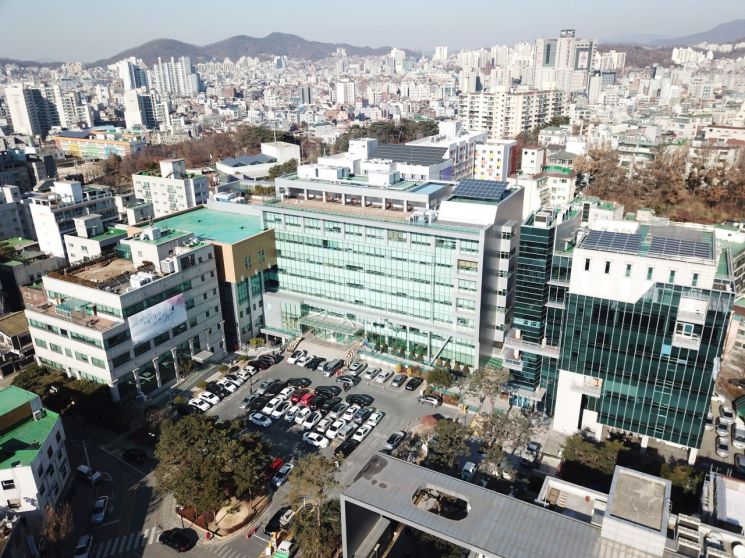
Eunpyeong-gu Provides Loans from Small and Medium Enterprise Development Fund and Special Credit Guarantee Support
Support Up to 100 Million KRW Per Company for Registered SMEs and Small Business Owners in the District
Low Interest Rate of 1.5% Per Year to Promote Business Stability and Regional Economic Revitalization... Special Credit Guarantee Recommendation Up to 50 Million KRW for Small Business Owners Lacking Collateral
Eunpyeong-gu (Mayor Kim Mi-kyung) announced the launch of the ‘2023 Small and Medium Enterprise Development Fund Loan Support Project.’
The loan targets are small and medium enterprises and small business owners who have had a business place in Eunpyeong-gu and have been registered for over one year. The total support scale is 5 billion KRW. Excluded industries include lodging and restaurants, bars, tobacco and liquor wholesale, real estate, finance, and insurance.
The loan limit is up to 100 million KRW for SMEs and 50 million KRW for small business owners, provided the company has collateral ability such as real estate or credit guarantee. The interest rate is 1.5% per annum, with repayment options including a 2-year grace period followed by 2 years of equal installments or a 1-year grace period followed by 3 years of equal installments.
Applications are accepted on a rolling basis until the budget is exhausted. Interested companies must go through collateral evaluation at Shinhan Bank’s Eunpyeong-gu branch and then submit application documents to the district’s Job and Economy Division. Required documents include the application form, business plan, business registration certificate, and financial plan. Detailed information on loan conditions and required documents can be found on the Eunpyeong-gu website’s public notices.
Additionally, the district supports ‘Special Credit Guarantee Recommendations’ with a guarantee scale of 21.2 billion KRW for small business owners and lodging and restaurant operators lacking collateral. However, entertainment bars, liquor wholesalers, and real estate businesses are excluded from guarantees. The Seoul Credit Guarantee Foundation’s Eunpyeong branch offers special credit guarantees up to 50 million KRW, which can be increased up to 200 million KRW through separate screening. Companies with credit guarantees can apply for loans at commercial banks.
Mayor Kim Mi-kyung said, “In these difficult times of high interest rates, we hope this loan support will help stabilize management for SMEs and revitalize the local economy even a little.”
© The Asia Business Daily(www.asiae.co.kr). All rights reserved.
![From Hostess to Organ Seller to High Society... The Grotesque Scam of a "Human Counterfeit" Shaking the Korean Psyche [Slate]](https://cwcontent.asiae.co.kr/asiaresize/183/2026021902243444107_1771435474.jpg)


















