Itaewon National Disaster Experts Hold Public Hearing
Criticism of Issues in All Stages from Incident Occurrence to Response and Recovery
"The on-site support team does not have a structure that allows for medical opinions and judgments."
"We are focusing on singular risk events like the Itaewon disaster."
"If there had been police measures to reduce crowd density."
The Special Committee for the National Investigation into the Itaewon Disaster held an expert public hearing at the National Assembly on the afternoon of the 10th to discuss measures to prevent recurrence. On this day, experts analyzed problems at each stage from immediately after the disaster to post-disaster recovery and proposed alternatives to prevent large-scale disasters like the Itaewon tragedy.
Demand for Improvement of On-site Medical Response System
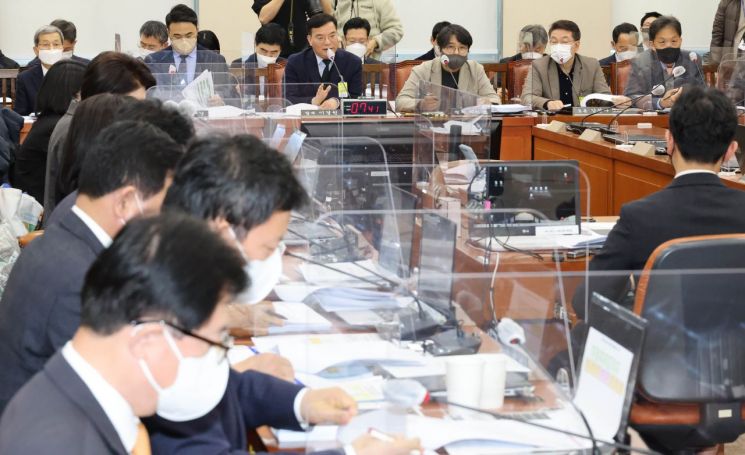
Professor Lee Kyung-won of Yonsei University College of Medicine, Yongin Severance Hospital, who gave the first presentation, cited the DMAT (Disaster Medical Assistance Team) systems of the United States and Japan as examples and explained the need to improve the mobile severe emergency patient transport system. Professor Lee pointed out, "When dispatched on-site, each DMAT doctor should be able to provide medical opinions and judgments regarding disaster emergency medical care, but currently, such a structure does not exist. They just go out and look after one patient," he said.
He also mentioned the emergency medical information management system, saying, "Emergency medical information manages bed availability, emergency surgery, procedure availability, and medical equipment such as ventilators, but it does not manage morgue information. So, in disaster situations, although they inevitably tried to check, without morgue information, there is confusion about where to send patients," he explained.
The issue of insufficient response to crush disaster situations was also pointed out. Professor Kim Hak-kyung of Sungshin Women's University’s Department of Convergence Security Engineering, who specializes in disaster prevention theory, said, "Two key factors in crush disasters are crowd density and crowd flow. The lack of risk awareness among related agencies such as police and fire departments led to the absence of management policies, which accelerated crowd collisions and directly influenced the crowd collapse." He added, "Personally, the most regrettable point is that as crowd density increased, a significant number of people moved onto the road, and if the police had taken measures to use this road to reduce crowd density, the Itaewon disaster might have been prevented."
Improvement of Crisis Response Control Tower Role and Inter-Ministerial Collaboration System
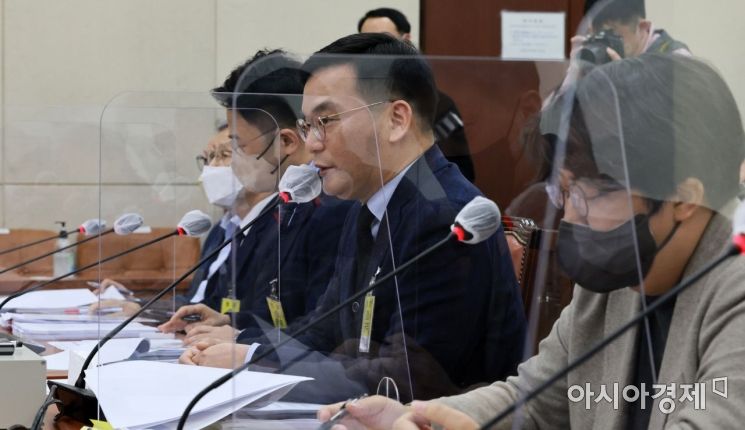 Professor Lee Kyung-won of the Department of Emergency Medicine at Yonsei University is attending the expert public hearing on the Itaewon disaster national investigation held at the National Assembly on the 10th, delivering a presentation and participating in the discussion. Photo by Yoon Dong-joo doso7@
Former Senior Administrative Officer Kang Jeong-gu of the Blue House National Crisis Management Center emphasized the role of the presidential office as a control tower, saying, "These are not gradual disasters but explosive disasters such as collapses, fires, radiation leaks, ship capsizes, and crushes. It is essential to mobilize national capabilities swiftly without missing the golden time and for disaster-related ministries to collaborate to overcome the disaster."
Former Officer Kang advocated for the establishment of a dedicated secretary for disaster management within the presidential office. He said, "The National Situation Room is very busy dealing with policy issues and urgent matters, so there must be an organization within the presidential office that thinks about disaster prevention, response, and preparedness 24/7, 365 days a year, so that the president can perform the role of a disaster control tower. It is also necessary to actively consider establishing a senior-level organization in the Office of National Crisis Management."
He explained that it is important for the crisis management officer in the presidential office to establish a command system while watching real-time video. He also emphasized the role of the Ministry of the Interior and Safety, analyzing, "Currently, neither the Ministry of the Interior and Safety, the National Police Agency, the Seoul Metropolitan Police Agency, nor the Yongsan District Office properly managed the situation. The Ministry of the Interior and Safety, which is the main disaster management agency, did not issue alerts, the Central Disaster and Safety Countermeasures Headquarters was not established, and the Central Disaster Management Headquarters was set up late."
Additionally, disaster expert Jeong Sang-man, President of the Korea Disaster Safety Technology Institute, stressed strengthening the collaboration system among related agencies along with a 'capability-based disaster management system.' He said, "Central ministries, local administrative agencies, the National Police Agency, fire stations, Seoul Metro, and others did not collaborate well at all. There should be measures through methods such as integrating or sharing whether the incident is handled by 112 or 119."
"An Approach Needed Before the Disaster, Not After"
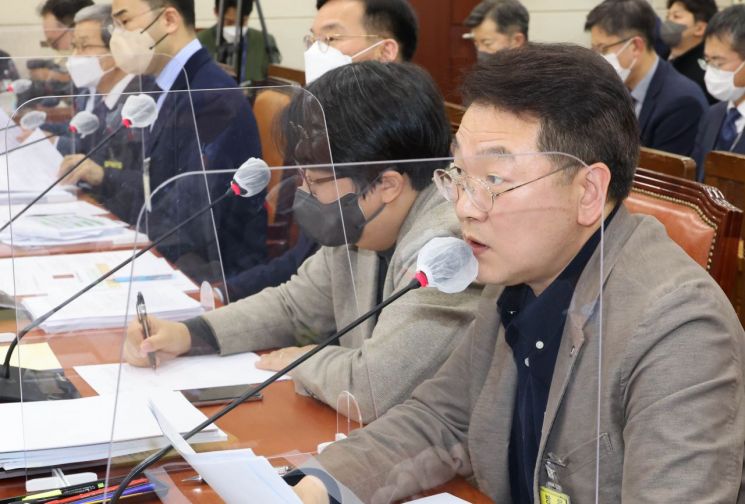
Professor Cha Ji-ho of KAIST MoonSoul Graduate School of Future Strategy criticized the traditional disaster response approach for focusing on 'individual incidents.' He also said that it concentrates only on holding specific groups in each ministry accountable. Professor Cha stated, "It is not about approaching after a disaster occurs, but about predicting disasters that will happen and analyzing and approaching those situations in advance."
He also pointed out the absence of victims at the public hearing and added the need for 'community recovery.' He said, "Those who know the impact on the community after this situation are the bereaved families and members of the local community. They are essential to understand what we can learn from this disaster to prepare for the next one."
The need to strengthen communication networks and establish an education system for disaster response was also raised. Firefighting expert Professor Byun Soo-nam of Dong-Eui University’s Department of Fire and Disaster Administration pointed out the need to improve the disaster safety communication network, saying, "I checked whether the disaster safety communication network was used on the day of the disaster, and Seoul City never used the devices nor conducted similar drills. It would be faster if the Ministry of the Interior and Safety directly secures the budget for the disaster communication network and distributes it, even if only to cities or emergency rescue agencies." He also emphasized the need for national-level disaster preparedness drills equivalent to the Eulji training and mandatory disaster safety professional education for local government heads to strengthen the disaster education system.
Furthermore, disaster expert Professor Jeong Jong-su of Soongsil University’s Department of Disaster Safety Management criticized, "There are not many disaster management experts in local governments. In Korea, local governments operate with only one disaster safety officer who lacks expertise." Using this disaster as an example, he said, "The period when leaders are replaced is very risky. Continuity of work is necessary." He also noted the need for detailed discussions on whether to fully or partially revise the law.
© The Asia Business Daily(www.asiae.co.kr). All rights reserved.



















