Conservative 'Opening Policy'... "Not Feasible at This Point"
Conflict with National Security Law... Low Possibility of North Korea's Response
Ministry of Unification "Pursuing What Is Possible Within Current Law"
[Asia Economy Reporter Jang Hee-jun] The Yoon Suk-yeol administration's initiative to 'open North Korean broadcasts' as part of its North Korea policy is facing practical obstacles, including legal amendments, and is at a standstill. Unlike previous conservative administrations, which relied on sanctions and pressure, this administration ambitiously advocated 'opening,' but with the ongoing strong standoff between the South and North, it is evaluated to have effectively lost momentum.
A Ministry of Unification official said in a phone interview with Asia Economy on the 9th regarding the 'promotion of opening North Korean broadcasts,' "We are working to build national consensus and are gathering opinions from experts in various fields," adding, "We plan to proceed with what is possible within the current law." This reaffirms the existing policy promotion stance and can be interpreted to mean that six months have passed since it was first mentioned in the Ministry of Unification's work report in July last year without any visible results.
President Yoon Suk-yeol made opening North Korean broadcasts one of his presidential campaign pledges. Currently, if one pays and installs a satellite receiver, they can watch North Korea's satellite broadcasts, but the plan is to enable viewing North Korean broadcasts on regular TVs without a separate receiver. Minister of Unification Kwon Young-se presented 'restoring ethnic homogeneity through opening and communication' as one of the five core tasks of unification policy in the first work report after the government took office and specified opening North Korean broadcasts as a detailed promotion plan.
Yoon Suk-yeol's Conservative Confidence... Realization Possibility is 'Zero'
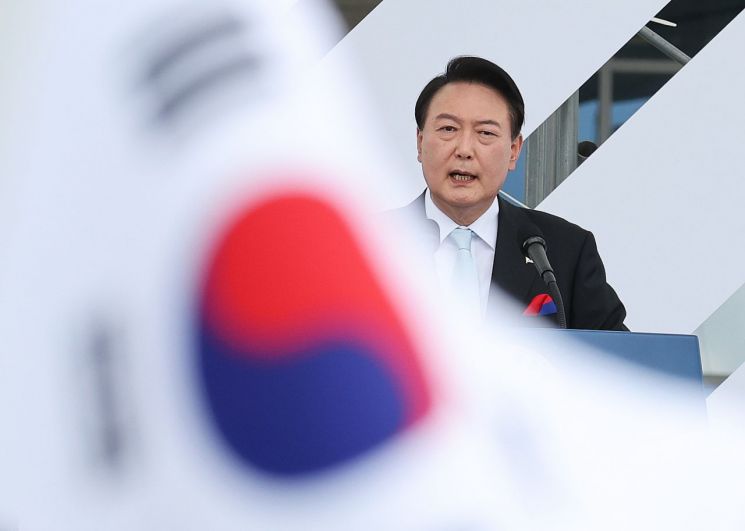
The North Korean broadcast opening policy attracted attention because it held significance beyond simple cultural exchange. Former People Power Party leader Lee Jun-seok emphasized at a press conference in August last year, "(Opening North Korean broadcasts) is a systematic policy series regarding the value of 'freedom' mentioned in the presidential inaugural address," calling it a new strategy of the 'changing conservative party.'
While previous conservative administrations implemented policies based on sanctions and pressure toward North Korea and progressive administrations approached with dialogue and engagement, this government showed the will and confidence to present an 'open' conservative administration toward North Korea.
However, the policy stance changed from 'mutual opening' during the presidential campaign to 'preemptive opening' after the government took office. Minister Kwon explained at the Ministry of Unification's parliamentary audit in October last year, "Considering the reality that mutual opening between the South and North is difficult in the short term, we will 'first' promote opening North Korean broadcasts and continue efforts for exchanges toward mutual opening."
The plan is to open North Korean broadcasts first and then demand reciprocal measures from the North, namely opening South Korean broadcasts. However, this is criticized as a unilateral push that significantly diverges from the original goal and has a considerable practical gap. Even if South Korea opens North Korean broadcasts, the possibility that North Korea will allow general residents to watch South Korean broadcasts is virtually 'zero.'
The influx of external culture that could undermine the armed ideology of North Korean residents is the point most feared by the North Korean regime. In December 2020, they even enacted the Anti-Reactionary Thought and Culture Expulsion Law, which punishes distributors of external videos with the death penalty. In fact, news surfaced last October that two teenagers who watched South Korean dramas were publicly executed. It is safe to say that North Korea has no intention of allowing South Korean broadcasts to be aired to the public.
Conflict with the National Security Act... "Might be excluded from New Year's work report"
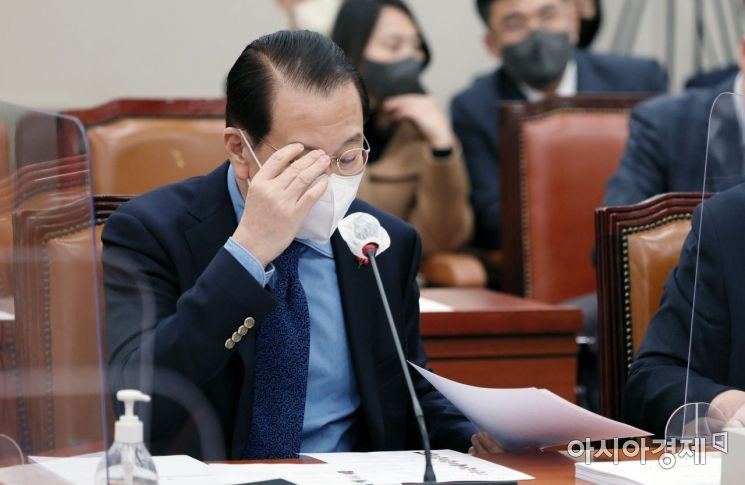
The immediate challenge is the conflict with the National Security Act. According to Article 7 of the Act, praising, encouraging, or propagandizing activities of anti-state organizations is punishable by up to seven years in prison. Watching North Korean broadcasts with the purpose of anti-state struggle violates the law, but this clause, created in 1991, is ambiguous in interpretation. Even if there is an attempt to amend the law, it is not easy because the Ministry of Unification is not the competent authority.
The Ministry of Unification plans to attempt opening first within the bounds of the current law. Regarding this, Minister Kwon stated at the National Assembly Foreign Affairs and Unification Committee work report in August last year, "We need to review it, but if it is a factual reporting medium rather than a propaganda medium, I think it can be done without amending the National Security Act."
However, in North Korea, even the media is thoroughly armed with ideology and propaganda. Even if not a North Korean propaganda medium like Uri Minjokkkiri, state-run media such as Korean Central TV and Rodong Sinmun refer to Chairman Kim Jong-un's activities as 'revolution' and report North Korea's military provocations as 'self-defense.'
Cost issues are also cited as variables. To enable watching North Korean broadcasts on regular TVs without satellite receivers as planned by the government, retransmission or citation reporting is necessary, and North Korea may demand copyright fees during the retransmission process.
There are also speculations that opening North Korean broadcasts might be excluded from the Ministry of Unification's New Year's work report. Due to ongoing military confrontations, from missile launches to unmanned drone provocations, the government is reportedly burdened by opposing public opinion. The Ministry of Unification plans to hold the New Year's work report as early as next month.
Meanwhile, North Korea has four representative TV channels. The oldest is Korean Central TV, which originated from Pyongyang TV, established in February 1963. Korean Central TV targets all North Korean residents, while the others?Mansudae TV, Ryongnamsan TV, and Sports TV?are limited to the Pyongyang area. Mansudae TV broadcasts culture and sports-related programs to Pyongyang residents and foreigners, Ryongnamsan TV is an educational broadcast for university students in Pyongyang, and Sports TV, launched most recently in August 2015, airs North Korean football matches and other sports broadcasts.
© The Asia Business Daily(www.asiae.co.kr). All rights reserved.


















